
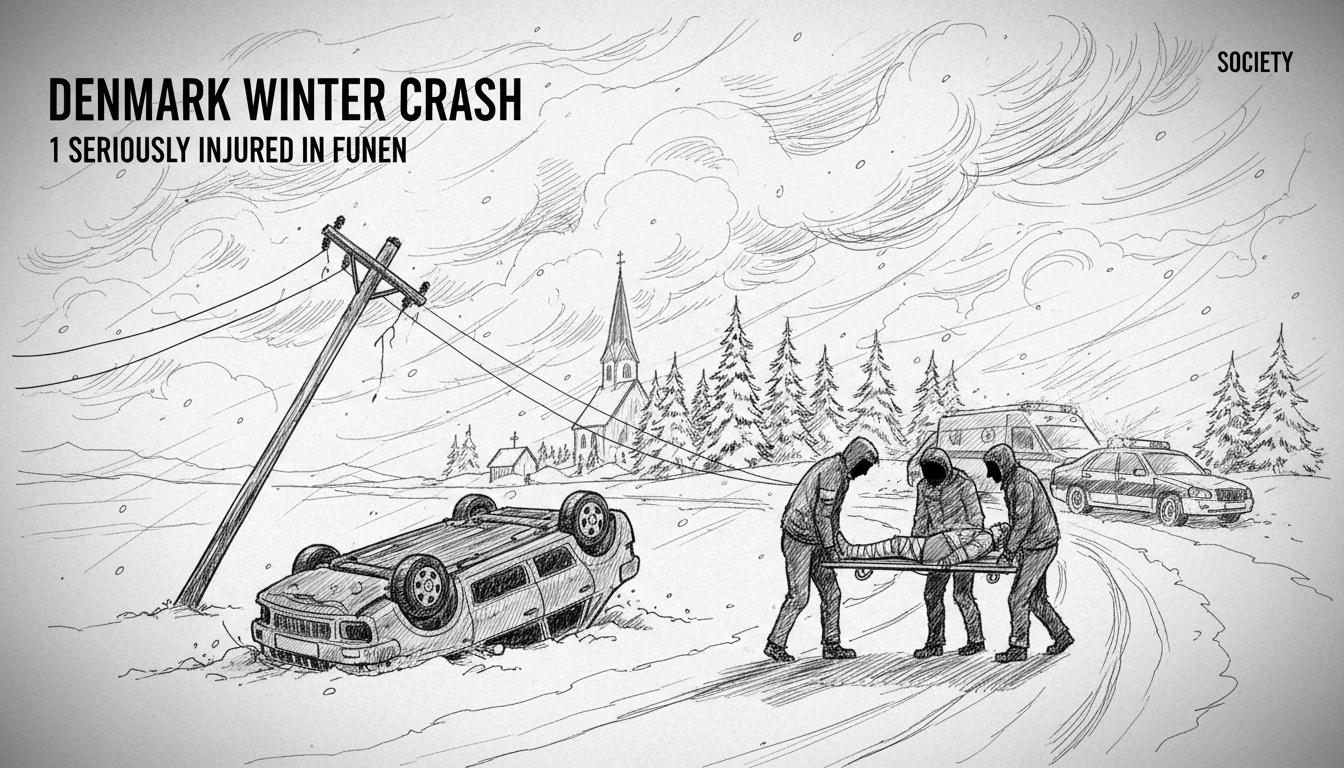
Denmark road accidents spike during winter months, a grim reality underscored by a serious crash in North Funen this weekend. A man was seriously injured in a single-vehicle accident on the icy Vestergade in Særslev. The incident occurred at 4:17 AM on Saturday, requiring emergency services to free the driver from his car before he was transported to Odense University Hospital for treatment. This event is not an isolated incident but part of a recurring seasonal pattern that challenges Denmark's otherwise strong road safety record.
The Early Morning Incident in Særslev
Police Vagtchef Henrik Strauss confirmed the details of the crash on Vestergade. Beredskab Fyn, the regional emergency service, was called to the scene to extricate the male driver from his vehicle. The operation highlights the critical role of specialized rescue teams during traffic accidents, especially when victims are trapped. The driver's subsequent transfer to Odense University Hospital, a major trauma center, indicates the severity of his injuries. Such early morning accidents in winter often involve factors like fatigue, reduced visibility, and rapidly changing road conditions that catch drivers off guard.
Icy Roads: A Persistent Danish Winter Hazard
The term 'glatføre' is a familiar and dreaded one in the Danish lexicon from late autumn through early spring. Icy conditions create a thin, nearly invisible layer on asphalt that drastically reduces tire grip. These conditions are a contributing factor in a significant percentage of Denmark's winter accidents, though exact annual figures fluctuate with weather patterns. Road safety experts consistently stress that black ice can form even when air temperatures are slightly above freezing, particularly on bridges and shaded rural roads like those found across Funen. This makes pre-trip planning and constant vigilance non-negotiable for drivers.
Analyzing Denmark's Road Safety Landscape
Denmark generally maintains a good road safety record compared to global averages, but winter presents a persistent vulnerability. In 2022, Statistics Denmark recorded 155 road fatalities. While not all were winter-related, a consistent spike in collisions occurs during icy periods. The Danish Road Directorate and police run annual campaigns focused on winter tire use, speed adaptation, and increased following distances. The core message is always adaptation—drivers must adjust their behavior to the conditions, not the posted speed limit. This accident in Særslev serves as a stark reminder that despite public awareness, the message does not always translate into safe practice on every journey.
The Human and Systemic Cost of Winter Crashes
Beyond the immediate trauma for victims and their families, accidents like this strain public resources. The response involves police officers, specialized rescue crews, and hospital trauma teams. Odense University Hospital, where the driver was taken, is the central hospital for the region, dealing with the most serious cases. Each serious accident triggers a chain of costly medical and emergency service interventions. From a societal perspective, preventing these crashes is not just a moral imperative but also an economic one, preserving both lives and the capacity of the welfare system to function effectively.
Expert Advice for Navigating Danish Winters
Road safety organizations have clear, repeated advice for driving in Danish winter conditions. Mandatory winter tires are a legal requirement from November to April, but experts note that tires alone are not a magic solution. Reducing speed is the single most effective action a driver can take. Sudden maneuvers, harsh braking, or aggressive acceleration can easily lead to a loss of control on ice. Drivers are advised to plan for longer travel times, check road condition reports via apps like Vejr og Veje, and consider whether a trip is absolutely necessary during severe weather warnings. The goal is defensive driving, anticipating hazards before they become emergencies.
A Community Reminder as Temperatures Drop
The serious accident on Vestergade is a somber news item for the local community in Særslev and across Funen. It acts as a communal reminder of shared vulnerability when the weather turns. For newcomers to Denmark, understanding and respecting 'glatføre' is a crucial part of integration into daily life and personal safety. Danish driving culture typically shifts to a more cautious mode in winter, and failing to adopt this mindset increases risk for everyone on the road. This incident underscores that safety is a personal responsibility with collective consequences.
The Path Forward: Vigilance Over Complacency
As Denmark moves deeper into the cold season, this crash near Særslev is a tragic but preventable template. The response by Beredskab Fyn and the hospital was swift and professional, addressing the consequence of the crash. The greater challenge lies in preventing the next one. It requires every driver to make conscious choices before turning the key. The data on annual fatalities and the expert warnings are clear. The final question each motorist must ask is whether the urgency of their journey truly outweighs the demonstrable risks posed by an icy patch on a dark, quiet road like Vestergade in the early hours of a Saturday morning.