
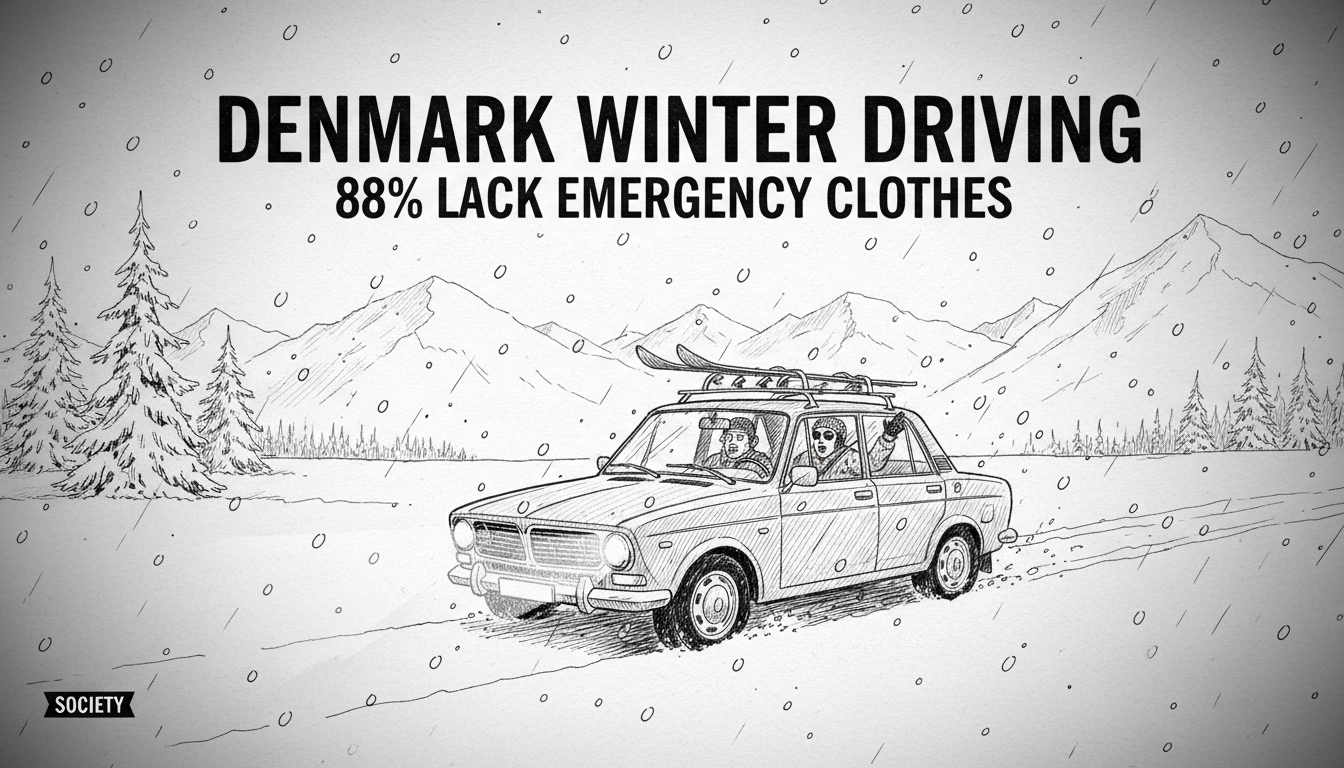
Denmark winter driving survey reveals that only 12 percent of drivers carry extra clothing for emergencies, highlighting a critical preparedness gap as harsh weather arrives. This startling statistic from a YouGov study commissioned by insurance company Gjensidige exposes widespread complacency among motorists. With winter weather firmly settling in during the first weekend of the year, many Danes are dangerously under-equipped for potential breakdowns or delays. The data shows a disconnect between official advice and public behavior, risking safety on roads that can quickly become treacherous.
Survey Exposes Alarming Gaps in Preparedness
The YouGov survey paints a clear picture of neglect. Only 45 percent of Danish drivers have a blanket in their vehicle, a basic item for retaining warmth if stranded. Just one in ten has packed snacks or food, and the same low proportion carries a power bank to keep phones charged. These figures are concerning given that Danish authorities consistently urge drivers to prepare for winter contingencies. Lene Rasmussen, Skadedirektør at Gjensidige, emphasizes the seriousness of the situation. "Warm clothing and food and drink are absolute necessities if you are unlucky enough for your journey to take longer than planned due to harsh winter weather," Rasmussen said in a statement. She hopes people will listen to authorities and take precautions before heading out.
The recommended emergency kit extends beyond blankets and snacks. Rasmussen also points to the importance of a shovel for digging out of snow and a warning triangle for visibility during dark hours. These items are crucial for self-reliance, especially on rural roads or during severe storms where help may be delayed. Danish winters, while milder than in Norway or Sweden, still bring icy patches, sudden snowfalls, and strong winds that can lead to accidents and long traffic queues. The Danish Road Directorate prioritizes clearing major routes, but secondary roads and unexpected events can leave drivers waiting for hours.
Expert Analysis: Why Are Danish Drivers Unprepared?
Experts in road safety and insurance attribute this lack of preparedness to several factors. Many Danes have high trust in the country's efficient infrastructure and rapid emergency response, leading to overconfidence. Martin Sørensen, a traffic safety analyst formerly with the Danish Council for Safe Traffic, explains this societal trend. "There's a common perception that serious winter incidents won't happen to you, especially on short trips within well-connected areas like Copenhagen or Aarhus," Sørensen notes. "This optimism bias is dangerous. It only takes one black ice patch or a multi-car collision to strand hundreds." He adds that Denmark's reliable welfare system and strong social safety net might inadvertently reduce personal urgency for emergency planning.
From my perspective as a reporter focused on Danish society, this issue intersects with broader social policy and integration. New residents arriving from warmer climates may lack experience with winter driving, yet municipal integration programs often overlook practical road safety education. Community centers in cities like Copenhagen could play a larger role in disseminating this information. Furthermore, the data suggests a need for targeted public campaigns. Past initiatives have focused on tire checks and speed reduction, but less on in-car emergency supplies. Insurance companies like Gjensidige are stepping in, but a coordinated effort from municipalities and the Transport Ministry could improve outcomes.
The Real-World Consequences of Being Unprepared
The implications of poor preparation are tangible. In January 2023, a sudden snowstorm on the E45 motorway in Jutland stranded drivers overnight, with many reporting hypothermia risks due to inadequate clothing. Emergency services were overwhelmed, underscoring the need for personal responsibility. Car emergency kits are not just about comfort; they are about survival. Medical experts stress that cold stress can set in quickly, especially for children, the elderly, or those with health conditions. Having extra layers, thermal blankets, and high-energy food can prevent minor inconveniences from becoming medical crises.
Danish driving culture also plays a role. The country has high car ownership rates, and many use vehicles daily for commuting. However, the compact geography leads to short average trip distances, which may discourage thorough preparation. Contrast this with Norway, where winter car kits are often mandatory and culturally ingrained. Danish authorities issue warnings through apps and media, but compliance is voluntary. This reliance on individual choice highlights a tension within the Danish welfare model—balancing state responsibility with personal accountability. The survey results suggest that current messaging is not resonating enough to change habits.
Practical Steps and Policy Recommendations
Improving winter driving readiness in Denmark requires a multi-faceted approach. Experts recommend that drivers assemble a comprehensive kit including: a warm blanket or sleeping bag, extra winter clothing (gloves, hat, jacket), non-perishable food and water, a power bank, a shovel, a warning triangle, a first-aid kit, and a fully charged phone. Checking tire tread and pressure before winter is also critical, as is monitoring weather forecasts. From a policy standpoint, there is room for innovation. Some suggest linking preparedness to insurance discounts or incorporating it into driver's education courses. Municipalities could partner with local insurers to distribute checklists at libraries or citizen service centers.
Lene Rasmussen from Gjensidige reiterates that taking advice seriously can save lives. "It's about basic common sense that we sometimes forget in our daily routines," she says. Insurance data shows that claims related to winter weather often involve secondary incidents due to prolonged exposure, not just the initial accident. This adds financial cost to human risk. For families, especially those with children, packing an emergency bag should become as routine as buckling seat belts. In a society priding itself on foresight and social care, this survey is a wake-up call to align personal behavior with collective safety standards.
A Societal Reflection on Risk and Readiness
As winter tightens its grip, the preparedness gap reveals deeper themes in Danish society. Trust in systems is high, but personal responsibility for unforeseen events needs bolstering. This mirrors discussions in integration policy, where newcomers are encouraged to adapt while Danes reassess their own practices. The low percentage of drivers with power banks—10 percent—is telling in an increasingly digital world where a dead phone can mean no access to help or information. Social centers in cities like Odense and Aalborg could host workshops on winter readiness, bridging community gaps.
Looking ahead, climate change may bring more erratic winter weather, with sudden freezes and storms. Preparedness is not a seasonal afterthought but a year-round priority. Will Danish drivers rise to the challenge, or will emergency services face growing strain? The answer lies in education, policy nudges, and a cultural shift toward proactive safety. For now, the message is clear: check your car, pack your kit, and respect the winter. It’s a small effort that could make all the difference when the unexpected happens on a dark, cold road.