
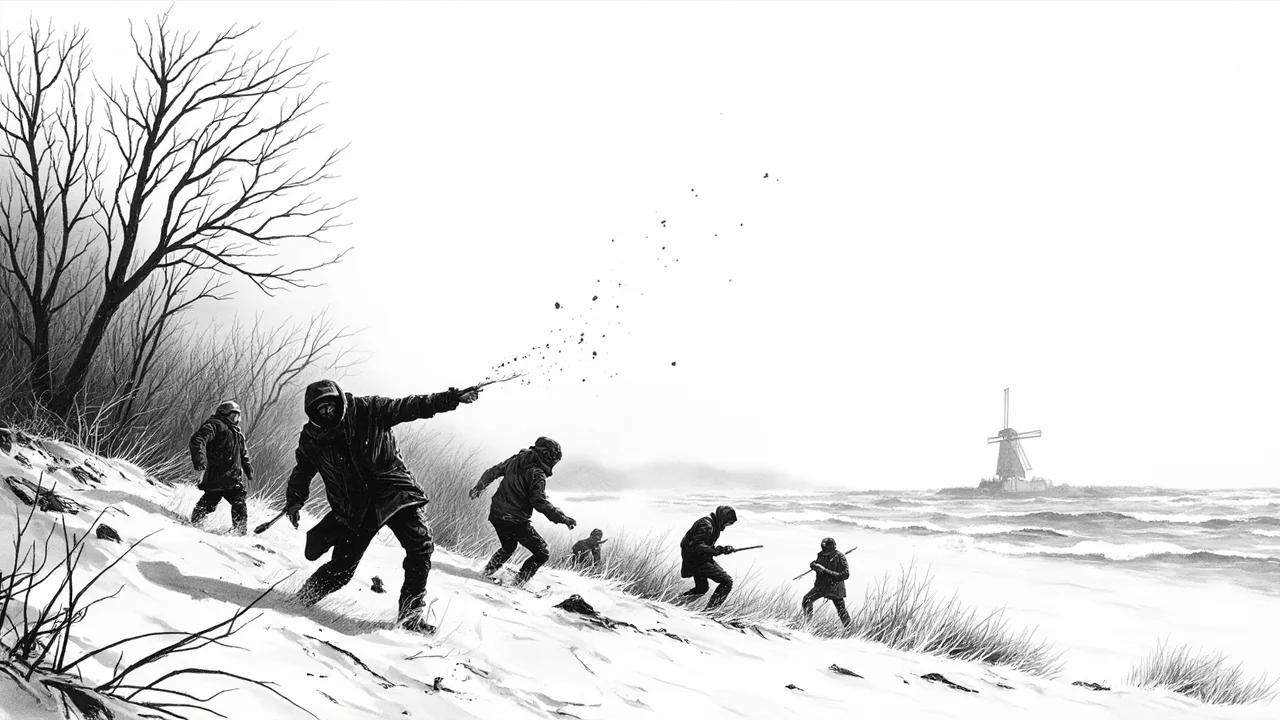
Denmark's roadside assistance services battled an unprecedented surge in calls as a severe winter storm paralyzed traffic nationwide. SOS Dansk Autohjælp and Falck Assistance reported record-breaking demand, with rescue teams themselves getting stuck in deep snowdrifts during a frantic 24-hour period. This extreme weather event tested the nation's preparedness and highlighted the critical role of these services in Denmark's social infrastructure.
"It has been a wild 24 hours. People are stuck almost everywhere. Even our own vehicles have gotten stuck," said Lene Forsingdal, Station Manager for SOS Dansk Autohjælp in Southern Jutland. Her statement captures the chaotic scene that unfolded across the country. The problem extended far beyond a single region. Falck Assistance reported exceptionally high activity from North Jylland to the island of Bornholm.
Morten Manow, an Area Manager for Falck, described the situation as extraordinary. He confirmed that Friday alone brought an incredible number of vehicle recoveries. The overwhelming demand led to increased waiting times for help, with delays stretching up to two hours in the hardest-hit areas. This backlog created significant challenges for stranded motorists facing freezing temperatures.
A Nationwide Crisis Unfolds
The Danish Road Directorate identified icy roads as the greatest ongoing challenge. They warned that coming days of sub-zero temperatures would increase the risk of slippery conditions. Snowdrifts reduced visibility and made many roads, particularly smaller secondary routes, impassable. On the island of Bornholm, police strongly advised against all unnecessary travel due to strong winds and heavy snow blowing.
Authorities on Bornholm recommended any essential travel occur early in the day. Snow clearance on major roads was scheduled to halt at 6:00 PM, leaving evening drivers vulnerable. Weather forecasts predicted nearly a full day before winds would subside on the island, ending the dangerous snow-blowing conditions. This left a narrow window for safe passage and complicated rescue logistics.
The Human Toll of the Storm
Behind the statistics of rescue calls are individual stories of distress and inconvenience. Danish winters demand preparedness, but this storm's intensity caught many off guard. Stranded drivers faced not just disruption but genuine risk from exposure. Morten Manow's public advice underscored the seriousness of the situation. He urged people to monitor police and Road Directorate announcements closely.
"For heaven's sake, always ensure you have warm clothing and possibly bring a snow shovel," Manow emphasized. This practical guidance reflects a core principle of Danish civic responsibility: personal preparedness. Yet, the scale of this event overwhelmed individual readiness. It transformed a common winter nuisance into a collective crisis requiring a systemic response.
Systems Under Pressure
The storm placed immense strain on Denmark's well-regarded assistance networks. These services, often taken for granted, form a silent pillar of the nation's welfare model. They ensure mobility and safety for citizens, which is especially critical in a country with long, dark winters. When they are stretched to capacity, as they were during this storm, it reveals a vulnerability in the social fabric.
Experts note that climate change may increase the frequency of such extreme weather events. This raises important questions about resource allocation for roadside assistance groups. Should municipalities increase winter service budgets? Can volunteer networks be better integrated to support professional teams during peak crises? The storm provides a case study for policymakers analyzing critical infrastructure resilience.
A Test of Preparedness and Patience
The event also tested the famous Danish concept of "samfundssind," or community spirit. It required patience from stranded citizens and extraordinary effort from rescue workers. The fact that rescue vehicles themselves became stuck illustrates the extreme conditions faced by all. This shared challenge, however, often fosters a sense of communal endurance during Danish winters.
Local community centers and social networks likely played an unseen role, offering shelter or information to those affected. The Danish model relies on this interplay between state-provided services, private companies like Falck, and communal support. A severe winter storm acts as a stress test for this entire ecosystem, highlighting both its strengths and its breaking points.
Looking Beyond the Immediate Crisis
As the wind subsides and temperatures drop further, a new challenge emerges. Falck Assistance anticipates a second wave of calls for jump-starts as frigid temperatures drain car batteries. The crisis evolves but does not end. This pattern is familiar to Danes, yet the intensity of this particular storm was notable. It serves as an annual reminder of nature's power over even the most organized societies.
The Road Directorate's continued warnings about ice signify that the danger period is prolonged. Clean-up and recovery will take days. The economic impact, from lost work hours to delayed goods, will be calculated later. For now, the focus remains on safety, recovery, and restoring normal mobility. The performance of assistance services during this time is closely watched as an indicator of systemic reliability.
A Reflection on Danish Winter Resilience
Ultimately, this wild 24-hour period is more than a news story about bad weather. It is a snapshot of Danish society in response to crisis. It involves public-private partnerships, civic advice, and personal responsibility. The efficient, though delayed, response of assistance organizations underscores a deep-seated expectation of support that defines the Danish welfare experience.
Yet, the two-hour wait times also signal a system at its limit. As Denmark confronts potentially more volatile winters, the balance between cost, preparedness, and service level will require ongoing discussion. For the thousands of drivers who sat waiting in the cold, this storm was a personal hardship. For the nation, it was a reminder that even the most established systems must adapt when the weather writes its own brutal rules. The true test is not just surviving the storm, but learning from it to build more resilient networks for winters to come.