
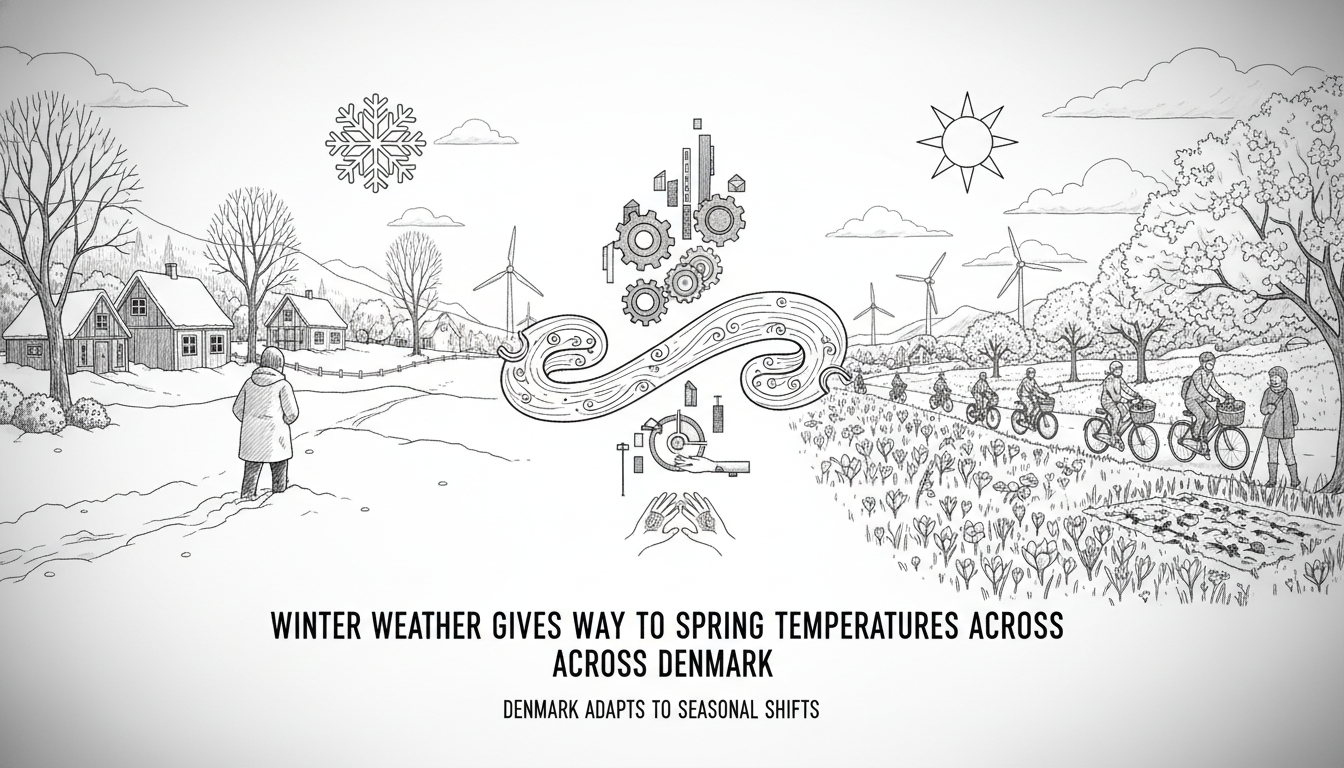
Denmark's sudden shift from winter snow to spring warmth reveals much about how Danes adapt to changing conditions. Southern regions woke to snow-covered landscapes this week, with accumulations reaching two to eight centimeters in some areas. The snow blanketed Southern Jutland, Funen, and Lolland-Falster, creating picturesque winter scenes that will soon transform.
Meteorologist Trine Pedersen from Denmark's Meteorological Institute explained the changing patterns. "The week begins with winter conditions, especially in southern regions where snow arrived overnight," she said. "But as the day progresses, temperatures will rise slightly, and this beautiful snow will turn to slush and rain."
The transition carries practical implications for Danish society. Pedersen noted particular concerns about freezing rain in Southern Jutland near the Wadden Sea. "During early morning hours, there's risk of what we call supercooled precipitation forming ice sheets," she stated. The institute issued official warnings about potential ice formation in affected areas.
Temperatures will hover around freezing through Tuesday and Wednesday, with occasional light rain but generally dry conditions. The real change arrives Thursday when a low-pressure system northwest of the British Isles pumps warmer air across Denmark. Southwest winds will strengthen, bringing temperatures between five and ten degrees Celsius, even overnight.
This weather pattern reflects broader Danish approaches to environmental adaptation. The Danish welfare system has long emphasized preparedness for seasonal transitions, with municipalities coordinating response to weather-related challenges. Social centers across Copenhagen and other cities often extend hours during extreme weather, providing warmth and assistance to vulnerable residents.
The rapid temperature swing demonstrates how Nordic countries manage climate variability. Danish integration policies often reference weather adaptation as metaphor for societal flexibility. As newcomers learn to navigate Danish seasons, they also learn about layered clothing strategies and hygge culture that makes winter bearable.
What seems like simple weather news actually touches multiple aspects of Danish life. Transportation departments monitor road conditions, energy providers adjust heating demands, and social services check on elderly residents. The coordination between national forecasting and local response showcases Denmark's much-admired social infrastructure.
While the snow will disappear quickly, the systems supporting Danes through weather changes remain constantly active. This integration of forecast science with community response represents the practical application of Denmark's social contract, where collective well-being outweighs individual inconvenience.