
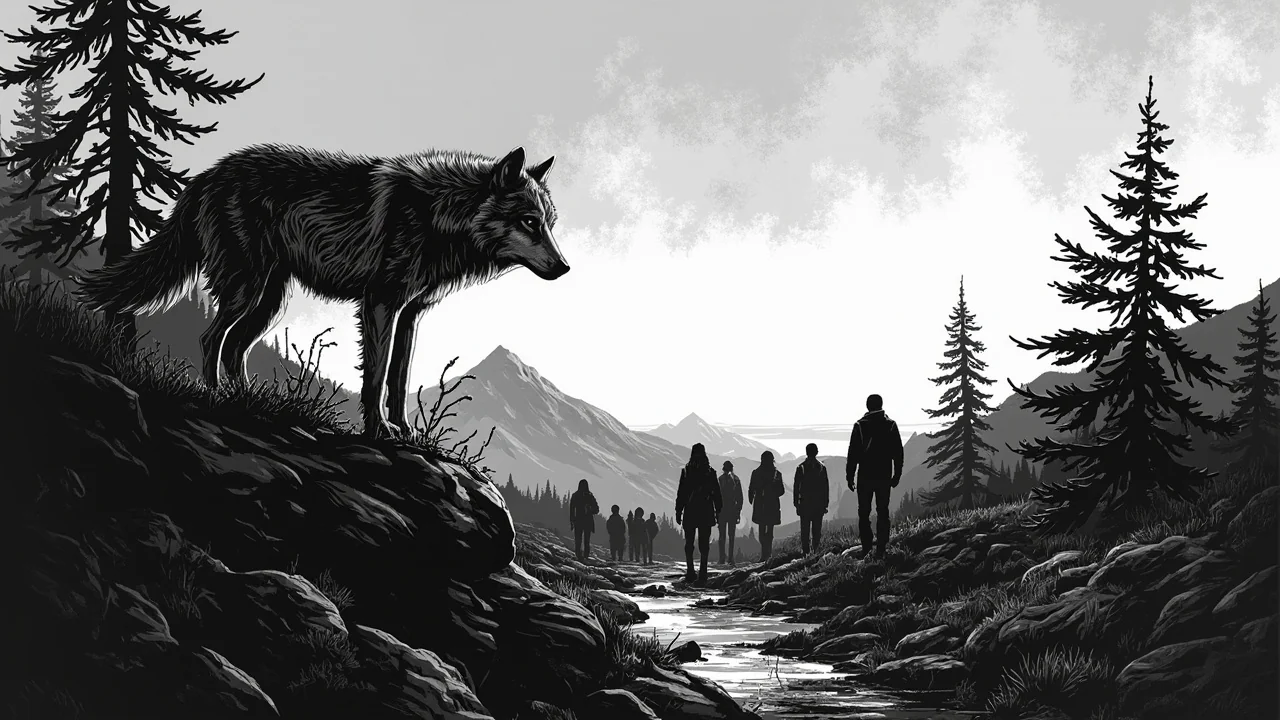
Denmark's wolf population has triggered a national safety debate after a 14-year-old girl filmed one following her in Oksbøl. The Friday evening incident, captured on the girl's phone, shows the wolf pacing a residential street mere meters away. A passing couple drove the girl home, but the video shared by her mother has ignited urgent political and local action, testing the nation's delicate balance between conservation and public security.
Green Transition Minister Jeppe Bruus expressed serious concern in a Saturday statement. "I understand completely that she and her family are very worried – I share that concern fully," he wrote. Bruus confirmed the local volunteer wolf patrol was activated to scare wolves away from urban areas. He added authorities stand ready to escalate their response. "They are also prepared to go further and have the wolf shot if the situation develops," the minister stated.
A Community on Edge
Oksbøl, a town in southwestern Jutland, is no stranger to wolf sightings within its built-up areas. Last year, repeated incidents led to the establishment of a local wolf watch group. This volunteer network mobilizes when residents spot wolves near homes. In direct response to Friday's event, the group installed blinking deterrent lights, known as foxlights, along the forest edge bordering the town. "We have put up foxlights that flash to prevent wolves from entering the town," said group spokesperson Thomas Sørup Mortensen. The Nature Agency is supplementing this effort with surveillance cameras in the adjacent woodland to monitor wolf movements.
Despite the alarming footage, officials and experts suggest the wolf posed little physical danger. Nature Agency Vice Director Mads Jensen described it as likely a young, inexperienced animal. "These are the months when they leave their packs and roam around," he explained. The agency decided to act because the wolf's behavior created fear. "Since it follows the girl for a while and in that way creates insecurity with its behavior, we choose together with the wolf watch group to launch the various initiatives," Jensen said.
Expert Analysis of Wolf Behavior
Professor and wolf expert Peter Sunde from Aarhus University analyzed the video. He concurred the animal's actions did not indicate a predatory threat. "The behavior clearly suggests a wolf that has strayed off course and is therefore confused, disoriented, and uncertain," Sunde noted. This assessment highlights a central tension in Denmark's wolf management: distinguishing between natural animal curiosity and genuine risk. The incident exemplifies the challenges wolves face navigating human-dominated landscapes as they re-establish territories in Denmark after a 200-year absence.
Minister Bruus last year expanded the official definition of a "problem wolf." This legal classification now includes wolves that exhibit behavior causing significant public insecurity, even without a direct attack. This policy shift empowers authorities to order a cull if a wolf repeatedly shows no fear of humans near populated areas. The Oksbøl incident is a direct test case for this revised protocol, placing the young wolf's future behavior under intense scrutiny.
The Human Dimension of Coexistence
The psychological impact on the Oksbøl community is profound. For residents, especially families with children, the idea of a large predator on their street is deeply unsettling. The swift installation of lights and cameras provides tangible security measures, but the underlying anxiety remains. This event forces a difficult conversation about the practical limits of wildlife reintroduction in a densely populated country like Denmark. The national wolf population, while small, is growing and expanding its range, making such encounters increasingly probable.
Local wolf watch volunteers represent a grassroots attempt to bridge this gap. Their work involves immediate response, public education, and now, deploying non-lethal deterrents. Their presence aims to provide a buffer between the protected species and a concerned public. However, their reliance on volunteer efforts raises questions about long-term sustainability and statewide resource allocation for human-wildlife conflict.
Policy at a Crossroads
Denmark's approach sits at a complex intersection of EU habitat directives, national conservation goals, and local safety demands. The state is obligated to protect the strictly endangered wolf, yet must also guarantee public welfare. The tools being used in Oksbøl—scaring devices, monitoring, and the threat of lethal removal—illustrate the graduated response system now in place. The coming days will be critical. Authorities will review camera footage to track the specific wolf's movements and determine if it was a one-time exploration or a pattern of boldness.
The incident underscores a new reality for rural Danish communities. The romantic notion of wolves in distant forests has collided with the stark image of one on a residential street. Public tolerance, a key component of successful carnivore conservation, is being tested in real time. The government's response must carefully weigh ecological commitments against its duty to protect citizens from fear, if not from physical harm.
Looking Ahead: A National Conversation
This single encounter in Oksbøl has amplified a nationwide discussion. It moves the debate from abstract policy meetings to kitchen tables, where video evidence makes the issue immediate and personal. The effectiveness of the new deterrents will be closely watched by other municipalities near wolf territories. Success could provide a model for non-lethal coexistence; failure could increase pressure for more aggressive population control.
The fundamental question remains: Can Denmark, with its cultivated landscapes and close-knit communities, find a sustainable way to live alongside large predators? The answer requires more than lights and cameras. It demands continued scientific monitoring, transparent communication from authorities, and support for communities on the front lines. The wolf's return is not just a ecological event, but a social experiment. The outcome will define Denmark's relationship with its rewilding nature for decades to come. For now, the people of Oksbøl wait and watch, hoping the blinking lights on their forest edge are enough to keep a safe distance between their world and the wild.