
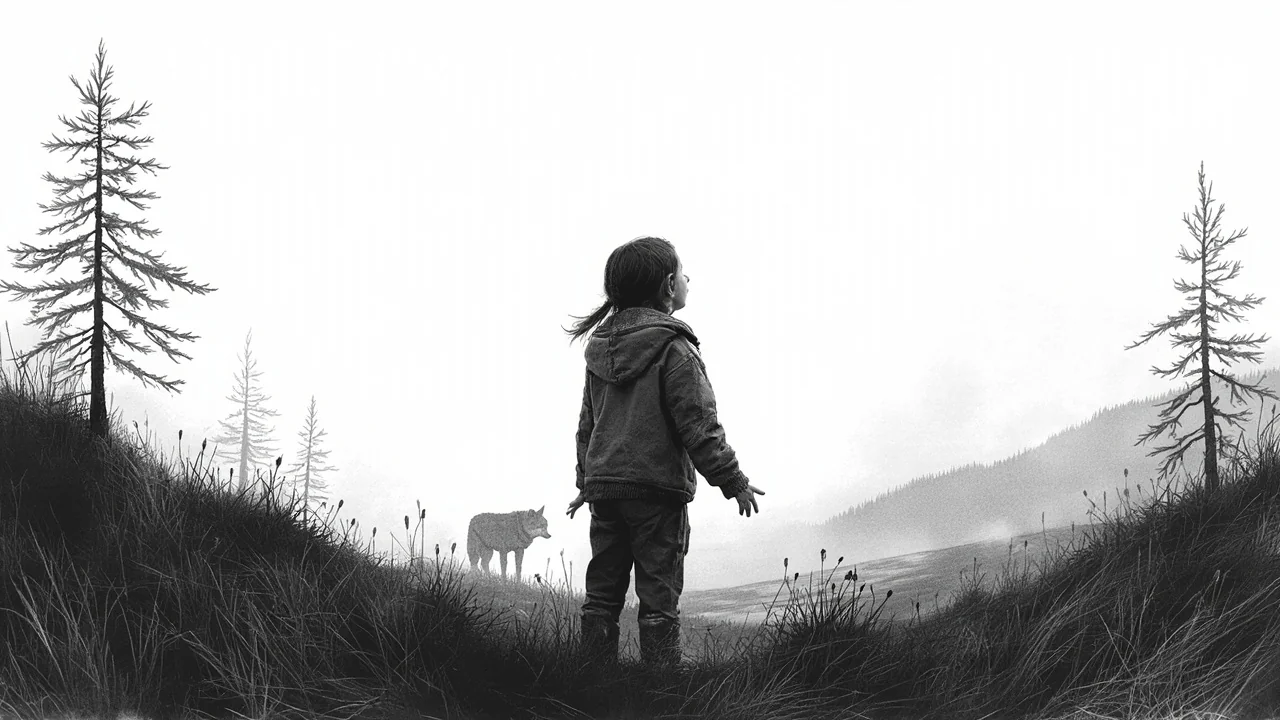
Denmark's wolf management policy faces a critical test after a 14-year-old girl filmed a wolf circling her near Oksbøl. The Friday evening incident has propelled the nation's complex relationship with its small wolf population back into the political and public spotlight. Minister for the Environment Jeppe Bruus has stated authorities are prepared to escalate to shooting the animal if necessary, highlighting the tension between conservation and public safety.
"I understand that she and her family are very worried - I share that concern fully," Bruus wrote in a Saturday Facebook post. The girl was reportedly unharmed but shaken, later picked up by a passing couple and driven home. Her mother shared the video online, showing the wolf moving back and forth just meters away in a residential area. This visual evidence has fueled a heated national conversation, forcing a re-examination of protocols established just last year.
A Minister's Swift Response and a Changed Policy
The immediate political reaction underscores the sensitivity of human-wildlife conflict in Denmark. Minister Bruus confirmed the local volunteer wolf patrol was activated to scare wolves away from the Oksbøl area. His statement, however, went further. "The authorities are also ready to go further and have the wolf shot if the situation develops," he wrote. This stance is empowered by a significant policy shift Bruus himself enacted in 2023. The definition of a 'problem wolf' was expanded to include animals that frequent urban areas despite scaring attempts, or those displaying aggressive behavior toward humans. Such a designation permits a lethal response.
This policy change was not theoretical. For the first time in modern Danish history, a wolf was legally shot as a 'problem wolf' in 2023 after repeated close encounters. The Oksbøl incident represents the first major test of this new framework in a scenario involving direct, filmed proximity to a child. It places the minister's office in a direct line of responsibility, balancing ecological commitments with a fundamental duty of care for public welfare. The speed of his response indicates the political weight this incident carries.
Expert Analysis Questions the Narrative of Threat
While the political and public reaction leans toward perceiving danger, leading scientific voices urge caution. Professor and wolf expert Peter Sunde from Aarhus University analyzed the widely circulated video. He offered a different interpretation of the animal's behavior, one rooted in ethology rather than emotion. "The behavior clearly indicates a wolf that has lost its way and is therefore confused, disoriented, and uncertain," Sunde stated. He concluded that, based on the footage, the wolf did not constitute a direct threat to the girl.
This expert perspective introduces a critical tension into the story. It suggests the wolf's actions may have been born of distress and spatial confusion, not predatory intent. Wolves in Denmark, part of the Central European lowland population, are extremely shy of humans. Documented cases of aggressive behavior are exceptionally rare. Sunde's analysis implies that the immediate leap to a lethal option, while politically understandable, may not align with the animal's actual behavior as assessed by specialists. This clash between perceived threat and scientific assessment is at the heart of Denmark's wolf dilemma.
The Community on the Front Line
The town of Oksbøl in Varde Municipality is not new to this challenge. Previous wolf sightings within its urban boundaries last year led directly to the establishment of the local volunteer wolf patrol referenced by the minister. This community-based group represents a first line of defense, aiming to use non-lethal methods to haze wolves away from human habitation. Their existence is a testament to the ongoing adaptation required in regions where wolf territories overlap with human spaces.
The incident reveals the daily reality for residents in these areas. The presence of large predators, however protected, alters the sense of security for families. The mother's decision to share the video publicly speaks to a desire for awareness and action. It transforms a personal fright into a public policy case study. For local politicians and municipal authorities, the task is granular: ensuring playgrounds, pathways, and residential streets feel safe, while navigating national conservation laws and a deeply polarized national debate.
A National Debate Rekindled
This single event has reignited Denmark's enduring and often emotional debate over wolves. On one side, conservationists and ecologists argue for coexistence, pointing to the wolf's role in ecosystems and its right to exist in its natural habitat, which in a densely populated country like Denmark inevitably brushes against human settlements. They emphasize non-lethal deterrence and public education. On the other side, livestock farmers, some rural residents, and now, following this incident, many concerned citizens, argue for stricter population control and the right to feel safe. The image of a child facing a wild predator is a powerful symbol for this group.
The Danish model, with its updated 'problem wolf' definition, attempts to walk this line. It maintains the wolf's protected status while creating a clear, if controversial, protocol for removal in specific circumstances. The Oksbøl case is now the benchmark for how this protocol is implemented. Will the authorities pursue scaring and monitoring, as experts might advise? Or will political and public pressure for a definitive, lethal solution prevail? The decision will set a precedent for future encounters.
The Path Forward: Coexistence or Control?
The coming days will be telling. Environmental authorities will track the animal, likely using the local patrol. Its continued behavior will determine its fate under the 2023 rules. Beyond this individual case, the incident forces broader questions. Is Denmark's landscape, fragmented by roads and agriculture, suitable for a sustained wolf population? How can communities be better equipped and educated for coexistence? And where is the line where public safety legitimately overrides species protection?
Denmark's wolf population remains tiny, estimated at fewer than 20 individuals primarily in West Jutland. Each animal and each conflict is magnified. The story of the girl in Oksbøl is no longer just about a frightening few minutes on a Friday evening. It is a stress test for a national policy, a mirror held up to societal fears, and a challenge to find a balance that feels both ecologically responsible and humane. The minister's readiness to 'go further' hangs in the air, a promise of security to some and a potential overreaction to others. In the quiet fields of Jutland, Denmark is deciding what kind of wilderness it is willing to live with.