
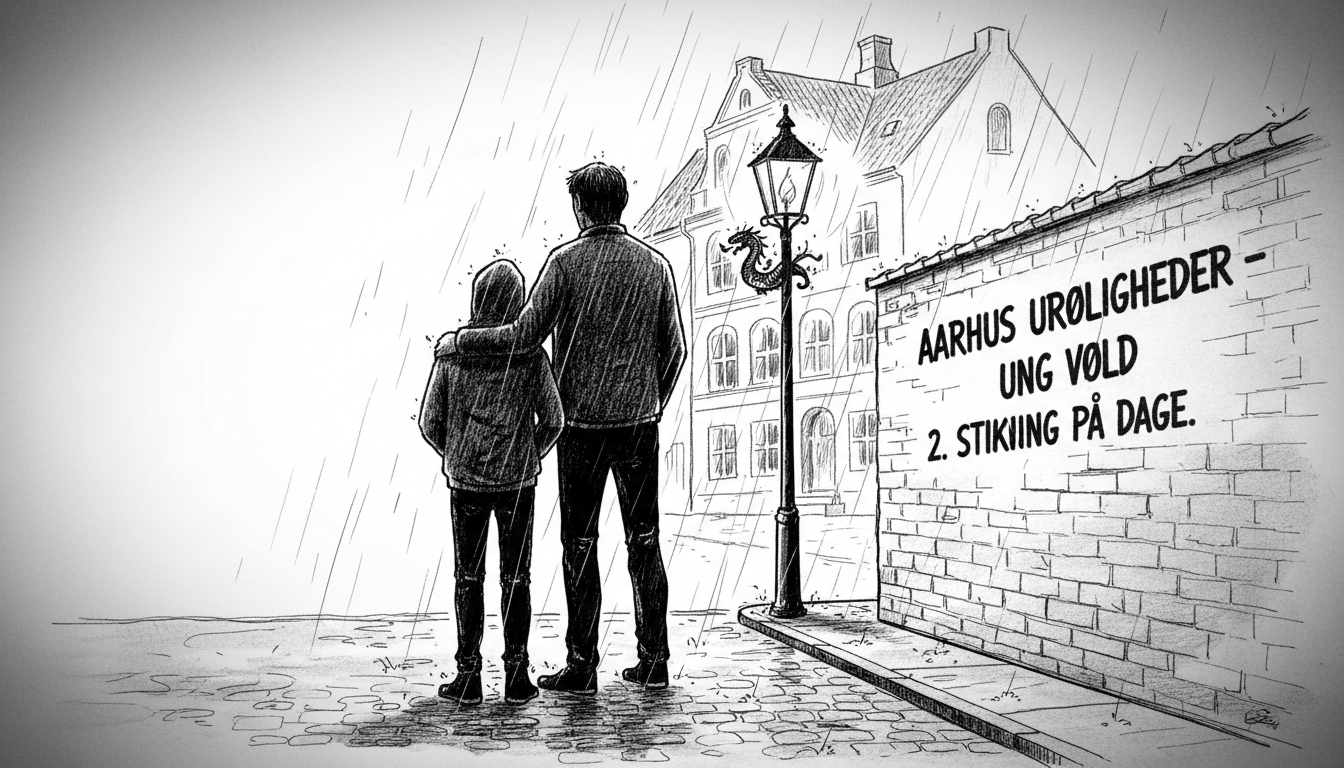
Denmark youth violence has again erupted in Aarhus, with a 15-year-old boy stabbed on Ryhavevej in the city's west. This Sunday evening attack marks the second serious assault on a teenager in the Aarhus area within 72 hours, sending shockwaves through a community already reeling from a Friday incident near a Tilst gymnasium. Police are urgently investigating potential links between the two cases, probing whether they signal a dangerous new pattern of conflict among young people in Denmark's second-largest city. The 15-year-old victim sustained multiple injuries requiring hospital treatment, though police described them as primarily superficial. Emergency services transported him by ambulance following the 7:24 PM report. This latest stabbing forces a difficult conversation about safety, integration, and the social pressures facing young men in certain urban neighborhoods. It challenges Denmark's self-image as a secure, orderly society where such violence is an aberration. For residents of western Aarhus, the immediate reality is one of fear and unanswered questions. Police have launched a public appeal for witnesses to the Ryhavevej incident or anyone with information about the possible motives behind these attacks. The proximity of the two events—both targeting teenage boys in the greater Aarhus area—has heightened concerns that this may be connected to gang rivalries or personal disputes spilling into public spaces. Investigators are examining potential connections to the Friday assault on a 17-year-old near the gymnasium at Kileparken in Tilst. That victim was not a student at the school, suggesting the location may have been incidental to a targeted confrontation. The repetition of method and victim profile within such a short timeframe is what most alarms both authorities and community leaders. It suggests a troubling normalization of knife violence as a tool for conflict resolution among some youth.
A City's Anxious Response
The police response has been swift, with East Jutland Police confirming the investigations are running in parallel. A central question is whether these are isolated interpersonal conflicts or symptoms of deeper, systemic issues in Aarhus. While Denmark maintains a comparatively low overall crime rate, certain urban pockets experience disproportionate levels of youth and gang-related violence. Aarhus, with its diverse demographics and complex social geography, has been a focal point for national debates on integration and crime prevention. Local social workers in Aarhus note that incidents like these often have roots in perceived disrespect, social media feuds, or territorial disputes between groups of young men. They rarely emerge from nowhere. The challenge for municipalities and police is intervening in these cycles before they escalate to violence. Community policing efforts in Aarhus have emphasized building relationships with at-risk youth, but these stabbings test the efficacy of those strategies. The attacks occurred in different districts—Tilst and western Aarhus—potentially indicating mobility of conflict or multiple points of tension. This geographical spread complicates the policing response and community reassurance efforts. Parents in the affected areas are now grappling with how to keep their children safe in spaces that should be secure. The stabbing near a school gymnasium is particularly unsettling, as educational institutions are considered community anchors.
Beyond the Police Blotter: Social Roots of Conflict
Experts on Danish social policy point to a confluence of factors that can contribute to youth violence in cities like Aarhus. While not excusing criminal acts, they highlight how social inequality, marginalization, and failures in early youth support systems can create fertile ground for conflict. Denmark's robust welfare system is designed to catch those falling behind, but some young people still slip through the cracks. They may face challenges related to identity, belonging, and economic opportunity that are not fully addressed by standard municipal programs. When combined with the group dynamics of adolescence, these pressures can sometimes manifest in violence. Research on integration in Denmark shows that second-generation young men in some urban areas can experience high levels of stress, navigating expectations from family, peers, and a sometimes-skeptical wider society. This does not cause crime, but it can contribute to environments where status and respect are fiercely defended. Gang affiliation, while often overstated in public discourse, can offer a sense of structure and identity that some disillusioned youth find lacking elsewhere. Municipal social centers in Aarhus and Copenhagen have long worked on outreach programs aimed at providing alternative communities through sports, mentorship, and education. The effectiveness of these programs is now under renewed scrutiny. A key statistic often cited in integration reports is the educational attainment gap for young people with immigrant backgrounds in certain urban schools. Lower completion rates for vocational and secondary education can limit future prospects, increasing vulnerability to negative influences. The Danish government has implemented various action plans against gang violence, focusing on coordinated efforts between police, social services, and schools. These plans emphasize early intervention and exit programs for those involved in gangs. Yet, as the Aarhus stabbings show, preventing acute violence remains an immense challenge.
The National Picture and Political Repercussions
This incident will inevitably fuel ongoing national debates about Denmark immigration policy and social cohesion. Politicians across the spectrum will be asked to respond, often with competing diagnoses and solutions. Some will call for tougher policing and sentencing for youth violence. Others will advocate for increased investment in social prevention and community building. The truth likely involves both. Denmark's approach to social policy is famously comprehensive, but its application in complex urban settings requires constant adaptation. The Aarhus stabbings expose a raw nerve in Danish society: the fear that safety and social trust are eroding in specific locations. This fear often centers on neighborhoods with higher ethnic diversity, though violence is not confined to these areas. The political response must balance a firm stance on crime with a smart approach to its root causes. Overly broad crackdowns can alienate the very communities whose cooperation is essential for prevention and investigation. Community leaders in Aarhus emphasize the need for dialogue and partnership, not just surveillance. They argue that most young people in these neighborhoods are law-abiding and are equally victimized by the violence and stigma it brings. The task is to isolate the small minority involved in serious violence while supporting the majority. This requires intelligence-led policing, trusted local intermediaries, and opportunities for positive engagement. The coming days will be critical. Police will work to determine if the two stabbings are linked and identify suspects. The broader community, from city hall to local sports clubs, must work to calm tensions and prevent retaliation. For the families of the two victims, the focus is on recovery and justice. For Danish society, these events in Aarhus are a stark reminder that social harmony cannot be taken for granted. It requires relentless, nuanced effort from every level of society. The ultimate test is not just solving these crimes, but preventing the next one.