
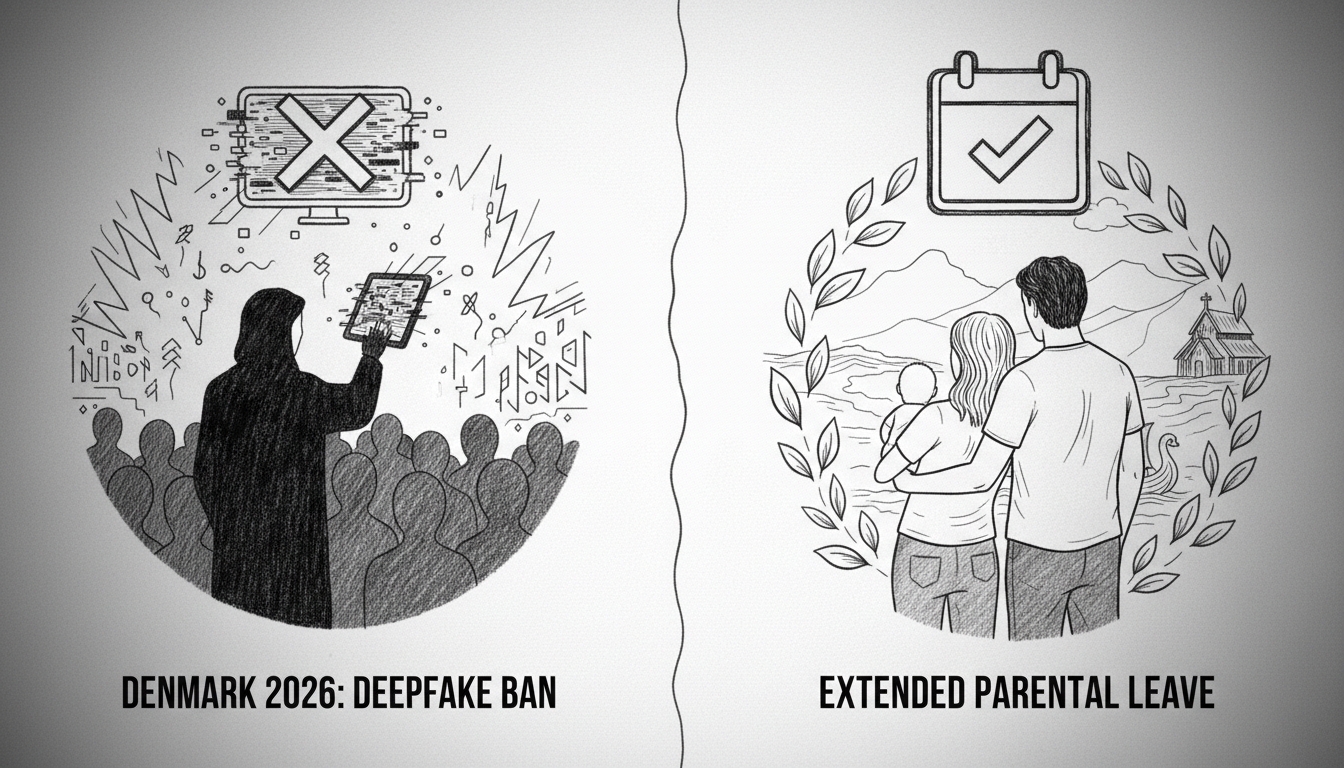
Denmark's new laws for 2026 target two distinct challenges of modern society: digital deception and family welfare. A ban on sharing AI-generated deepfakes and enhanced parental leave for parents of hospitalized newborns will take effect on January 1st. These changes reflect a legislative agenda focused on protecting citizens in both the virtual and deeply personal spheres of life. For a nation that prides itself on trust and social cohesion, the deepfake law represents a preemptive strike against a growing threat. The parental leave adjustment, meanwhile, offers tangible support during one of life's most stressful periods. Together, they signal where Danish policymakers are directing their attention as a new year begins.
A Digital Shield Against Deception
The forthcoming prohibition on sharing AI-manipulated 'deepfake' content marks a significant step in Denmark's digital regulation. While the full legal text will define precise boundaries, the law's intent is clear: to criminalize the malicious dissemination of synthetic media designed to deceive. This move places Denmark among a vanguard of European nations grappling with the rapid evolution of artificial intelligence. Legal experts anticipate the law will focus on non-consensual intimate imagery, fraudulent political content, and other fabrications causing demonstrable harm. The challenge, analysts note, will be balancing this prohibition with constitutional protections for freedom of expression. Enforcement will likely require cooperation between social media platforms and Danish authorities, testing the practical limits of digital policing. 'Legislation must walk a fine line,' said Karen Møller, a professor of IT law at the University of Copenhagen. 'We must prevent clear harm without stifling legitimate satire, art, or commentary. The definitions in the final law will be crucial.'
Supporting Families in Crisis
Parallel to the digital crackdown, a more intimate policy shift will offer better conditions for parents of infants requiring hospital care. The new rules guarantee improved parental leave benefits when a newborn is admitted to hospital, acknowledging the immense emotional and logistical strain such situations create. Under Denmark's existing robust welfare system, parents already receive generous leave, but the new provision adds a crucial layer of security for vulnerable families. It ensures parents can be present for their child without exhausting their allotted leave or facing financial penalty during an already traumatic time. Family policy advocates have long highlighted this gap, arguing the standard system was not designed for these exceptional circumstances. 'This is a humane and necessary adjustment,' stated Lars Jensen from the Danish Family Welfare Association. 'It recognizes that the period after birth doesn't follow a standard script. When a child is hospitalized, parents need to be there, not worrying about their leave running out.' The change is expected to affect thousands of families annually, providing stability when it is needed most.
The Mechanics of Danish Lawmaking
These incoming rules follow Denmark's established parliamentary process, where laws proposed by the government are debated and amended in the Folketing. The January 1st implementation date is administratively convenient, aligning with new budgetary and planning cycles across the public sector. The deepfake ban likely originated from growing international concern and domestic incidents, while the parental leave tweak stems from ongoing evaluations of Denmark's social safety net. Both proposals would have undergone committee review, receiving input from experts, organizations, and sometimes the public. This process, while sometimes slow, aims to create durable and considered legislation. The simultaneous introduction of laws addressing such disparate issues—from cutting-edge technology to core family policy—is typical of Denmark's comprehensive legislative approach. It reflects a government addressing multiple fronts of societal development at once, from the future of digital interaction to the foundational support for its youngest citizens and their parents.
Anticipated Impact and Ongoing Challenges
The real-world effects of these laws will unfold throughout 2026 and beyond. The deepfake ban's success will depend on clear public awareness, effective reporting mechanisms, and judicial interpretation. Its deterrent value may be as important as actual prosecutions. For families, the new parental leave provision will bring immediate, concrete relief, removing one significant source of anxiety during a medical crisis. However, analysts point to broader questions. Will the deepfake law keep pace with evolving AI technology, or will it require frequent updates? Does the parental support go far enough, particularly for single-parent households or families with other children? These are the questions that will dominate future policy debates. 'Laws are snapshots of a society's priorities at a given moment,' observes political scientist Henrik Søndergaard. 'These two show Denmark is concerned about protecting individual integrity—both online and in the family unit. The next test is how these principles are implemented and enforced in daily life.'
A Broader Look at Nordic Policy Trends
Denmark's new laws resonate with wider regional priorities. Neighboring Sweden and Norway are also examining stricter regulations on synthetic media, particularly concerning election integrity and personal privacy. The Nordic model has long emphasized strong family support, and Denmark's enhancement aligns with a continuous effort to adapt these systems to modern realities. Comparing the approaches reveals a shared Nordic caution towards unregulated technological threats and a consistent commitment to state-supported family welfare. However, Denmark's specific, criminalized ban on sharing deepfakes appears more proactive than some current regional frameworks, potentially setting a precedent. In the realm of family policy, the change reinforces the region's leadership in parental leave, though specifics like duration and pay still vary across the Nordic countries. This dual focus demonstrates how Nordic societies attempt to harness the benefits of technological progress while actively mitigating its risks and strengthening human-centric support networks.
As 2026 begins, these laws will transition from political agreements to lived reality. Their ultimate legacy will be written in courtrooms dealing with first-of-their-kind deepfake cases and in hospital wards where parents can breathe slightly easier. They represent a pragmatic response to two very different facets of contemporary life: the bewildering speed of digital innovation and the timeless vulnerabilities of the human condition. For Danes, the new year brings not just a calendar change, but a subtle reshaping of the rules that govern their interaction with technology and each other. The success of these measures won't be found in legislative texts, but in whether they genuinely build trust—both in what we see online and in the support we can expect during life's most difficult moments.