
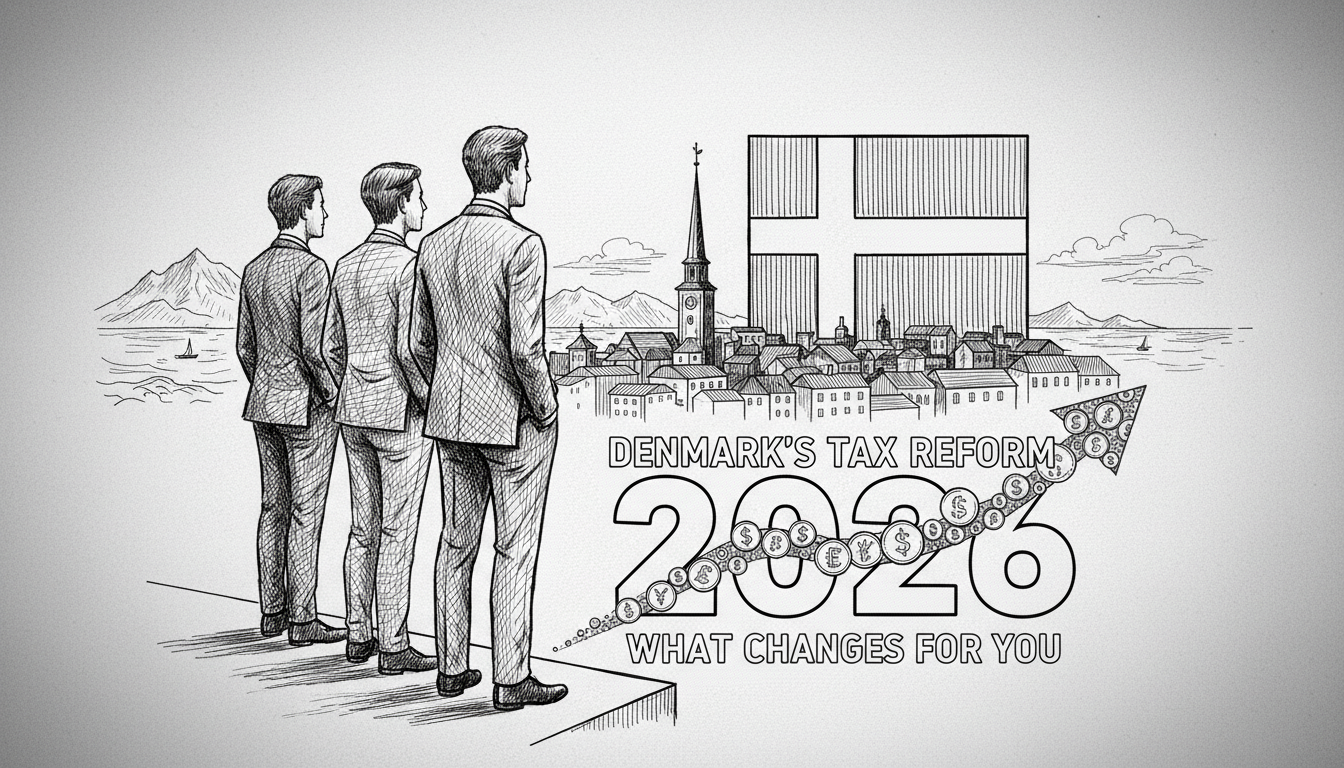
Denmark's parliament is poised to vote on a sweeping tax reform that will reshape personal finances for millions starting in 2026. The proposed changes aim to simplify one of the world's most complex tax systems and provide relief for middle-income earners. As a reporter who often writes about the intersection of policy and daily life in Danish society, I see this reform as a critical test. It balances the need to fund our renowned welfare system with growing public pressure to let people keep more of their paychecks.
A System Under Scrutiny
Denmark's tax-to-GDP ratio consistently ranks among the highest in the OECD, funding everything from free healthcare and education to generous unemployment benefits. The top marginal income tax rate, when local taxes are included, sits around 56%. This high-tax, high-service model is a cornerstone of our social contract. Yet, for years, economists and citizens have criticized the system's sheer complexity. Numerous deductions, credits, and bracket thresholds create a labyrinth where even savvy taxpayers need professional help. The proposed 2026 reform directly tackles this criticism with a promise of simplification. It seeks to reduce administrative burdens and make the system more transparent for everyone, from native Danes to the expatriates who contribute significantly to our economy.
The Middle-Income Focus
The core political promise of this reform is reducing the tax burden on middle-income earners. This group, often defined as households with annual incomes between 400,000 and 800,000 DKK, feels the pinch of high marginal rates without accessing the same wealth-building avenues as top earners. The government's proposal is expected to adjust income tax brackets, potentially raising the threshold for the top marginal rate. It also plans changes to standard deductions and tax credits like the employment deduction. The goal is to increase net income for this segment, aiming to boost disposable income and incentivize work. "The focus on the middle class is both economically and socially strategic," said a senior policy analyst from the Danish Economic Council. "It's about maintaining the perceived fairness of the system, which is vital for its continued public support."
Simplification in Practice
What does simplification actually mean for the average person? For employees, it could mean a more straightforward annual tax assessment with fewer options for individual deductions. The reform may consolidate several existing credits into a single, more generous standard deduction. For freelancers and small business owners, changes to how business expenses are reported and deducted are likely. The government has hinted at streamlining the rules around deductible work-related costs, which can be a major source of confusion. This move could save time and reduce accounting fees for many. However, some tax advisors warn that true simplification is difficult. "Every deduction exists for a reason, often to promote certain behaviors like home renovations or green investments," noted a Copenhagen-based tax consultant. "Removing them simplifies the form but may remove policy tools the state wants to keep."
Implications for Expats and Foreign Workers
Denmark's tax reform holds particular significance for its large community of foreign professionals and expats. Denmark's immigration policy has long sought to attract highly skilled workers, and the tax system is a key part of that equation. The current expatriate tax scheme, which offers a reduced flat tax rate for a limited period, is not directly part of this broader reform but exists within its shadow. A simpler general tax system could make Denmark more attractive to international talent by reducing the initial administrative hurdle. However, experts watching Copenhagen integration trends note that long-term retention depends on the overall tax burden after special schemes expire. Clarity and stability in the tax code are as valuable as the rates themselves for this mobile demographic.
The Trade-Offs and Unanswered Questions
No tax reform happens in a vacuum. Reducing revenue from middle-income earners raises immediate questions about funding for the Danish welfare system. Will the reform be revenue-neutral, relying on closing other loopholes or shifting the tax base? Some analysts suggest a greater focus on green taxes or property taxes could fill any gap. Others question whether the proposed changes will meaningfully affect labor supply. "The economic evidence on tax cuts boosting work hours is mixed, especially in a society with already high employment like Denmark," the economic analyst explained. The reform's impact on income inequality is also under scrutiny. While helping the middle class, will it do enough for lower-income groups, or inadvertently benefit high earners through simplified capital gains taxes? The final parliamentary negotiations will likely hinge on these distributional effects.
Preparing for 2026
With the vote imminent, what should individuals do? First, avoid making any financial decisions based on proposals. Wait for the final, passed legislation. Once the law is published, take time to understand the specific changes to tax brackets and credits that apply to your income level. Employees on standard salary contracts will see changes automatically reflected in their preliminary income tax statements. Self-employed individuals and those with complex finances should plan a consultation with a tax advisor in late 2026 to prepare for the 2027 tax season. The Danish Tax Agency will release new guides and calculators, which will be essential resources. This period of change underscores a constant tension in Danish society news: the evolution of a generous social policy model in a globalized economy. The 2026 tax reform is not just about kroner and øre. It is a recalibration of the social contract that has defined modern Denmark. Its success will be measured not only in economic growth figures but in the public's continued trust that the system is both fair and sustainable for the next generation.