
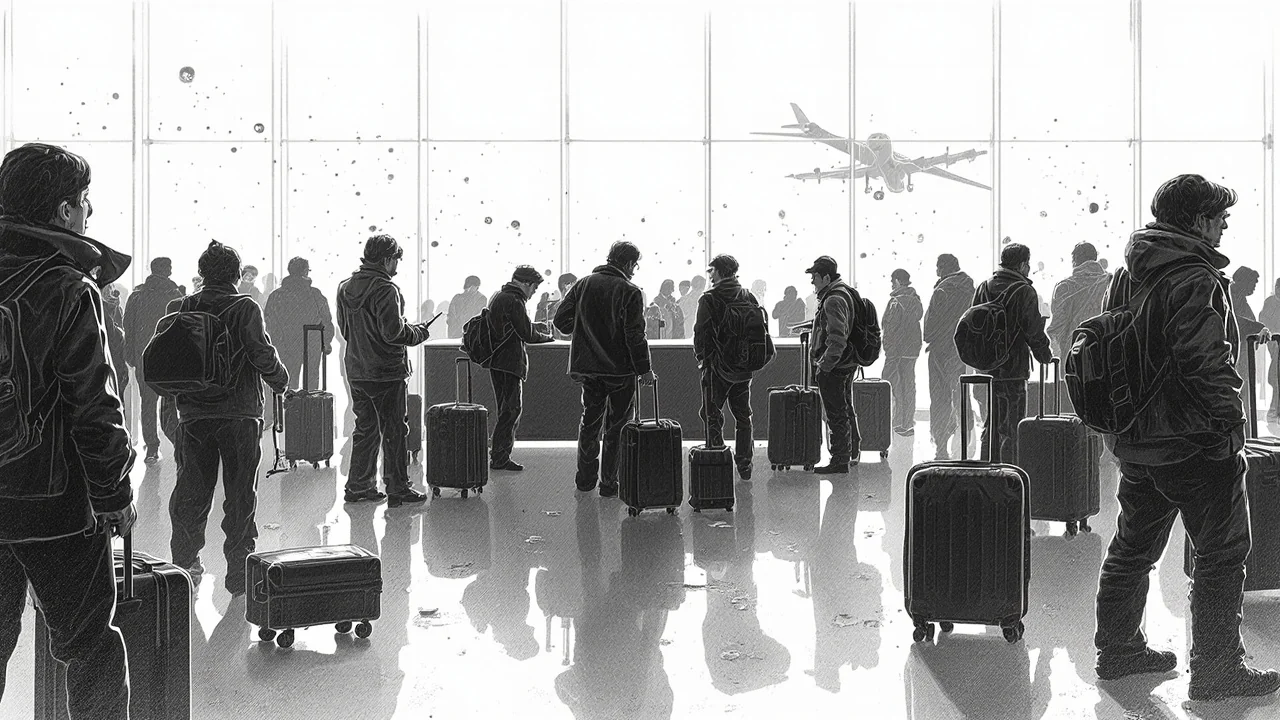
Denmark's Copenhagen Airport stranded 7,000 pieces of passenger luggage this weekend due to a critical technical failure. The breakdown in the automated baggage sorting system, which began Friday evening, forced a full return to manual handling for two days before normal operations resumed early Sunday. For thousands of travelers jetting off for the autumn break, the disruption meant arriving at their destinations without their suitcases, a stark reminder of our reliance on hidden technological infrastructure.
Communications Director Lise Agerley Kürstein confirmed the scale of the disruption. The core issue was a failure in communication between two separate IT systems controlling the sorting machinery. "The error on the sorting machines was due to problems with two IT systems that would not 'talk to each other'," Kürstein explained. This simple software handshake failure cascaded into a major logistical crisis, halting the flow of bags in Scandinavia's busiest air hub.
The Human Cost of Automation
Behind the number 7,000 are individual stories of frustration. Families heading on holiday faced arrivals without swimwear or ski gear. Business travelers attended meetings without their presentation materials. The airport, while working to resolve the technical fault, had to simultaneously manage a flood of passenger inquiries and complaints. This incident highlights a persistent tension in Danish society's embrace of efficiency: the vulnerability of highly automated systems when they fail. The social contract of smooth travel, a hallmark of a well-functioning state, temporarily broke down.
Extra staff were called in throughout Friday and Saturday to tackle the mountain of bags manually. This required a rapid, costly mobilization of human labor to substitute for failed technology. Workers sorted and routed luggage by hand, a process far slower and more prone to error than the automated system designed to handle Copenhagen Airport's immense capacity. "We have now resumed normal operations in baggage sorting," the airport stated on its website, signaling the end of the acute crisis but not the end of the recovery effort.
When Systems Fail, People Step In
The manual intervention is a testament to operational contingency planning. Airports, as critical nodes in global mobility, cannot afford complete paralysis. The immediate call for extra personnel shows a structured crisis response, yet it also exposes the limits of that response. Manual sorting cannot match the throughput of automated systems, guaranteeing delays. The workforce became the temporary patch on a digital wound, laboring to clear the backlog created during the 48-hour system outage. Kürstein noted teams were "working at high pressure to get all luggage to the right destination."
This event serves as a case study in systemic risk. Denmark prides itself on seamless public and private services, from digital government to transport. The Copenhagen Airport baggage failure reveals the complex interdependencies beneath that smooth surface. A single point of failure—incompatible IT systems—can disrupt the plans of tens of thousands. It raises questions about redundancy and resilience in essential infrastructure. How many other critical systems are one software glitch away from similar collapse?
Beyond the Terminal: A Societal Mirror
Analyzing this through my lens of Danish society and integration, such disruptions have a unequal impact. For tourists or frequent business flyers, this is an inconvenience. For individuals traveling to visit family in their countries of origin, perhaps with carefully packed gifts or essential documents, the stress is magnified. For new residents or those with less familiarity navigating claims and compensation in Danish or English, the bureaucratic aftermath can be daunting. The efficiency of the welfare state is often measured in its everyday functionality; when it stutters, the experience can feel uniquely jarring.
There is also an economic dimension. Copenhagen Airport is a vital engine for the Danish economy, facilitating tourism and business connectivity. Prolonged operational issues risk damaging its reputation for reliability, a key competitive factor among European hubs. The cost of emergency labor, compensation for delayed bags, and potential reputational harm all tally up. In a region where punctuality and order are cultural cornerstones, such failures are noticed.
The Road to Recovery and Resilience
As of Sunday, the technical fault is repaired. The focus has shifted from crisis management to recovery and prevention. The backlog of 7,000 delayed bags requires a massive logistical effort to reunite them with owners spread across the globe. This involves coordination with dozens of airlines and ground handlers worldwide. The process of tracking, transporting, and delivering these bags will continue for days, a silent epilogue to the weekend's chaos.
The crucial question for airport management and for Danish infrastructure planners is: what next? The post-mortem will likely examine the root cause of the IT communication failure. Was it a software update, a network issue, or a hardware fault? More importantly, it must review the system's fail-safes. Is there sufficient backup capacity? Can the switch to manual mode be made faster and more efficient? Investing in resilience is less visible than investing in shiny new automation, but events like this prove its indispensable value.
This baggage system breakdown is more than a travel anecdote. It is a snapshot of modern Denmark grappling with the complexities of a digitized world. It shows that even in one of the world's most organized societies, technology can introduce profound fragility. The solution, both over the weekend and looking forward, relies on a blend of skilled human labor and robust, fault-tolerant design. As passengers finally receive their wayward suitcases, the challenge for Copenhagen Airport is to ensure its systems learn to 'talk' to each other more reliably, preserving the trust and smooth journey that every traveler expects.