
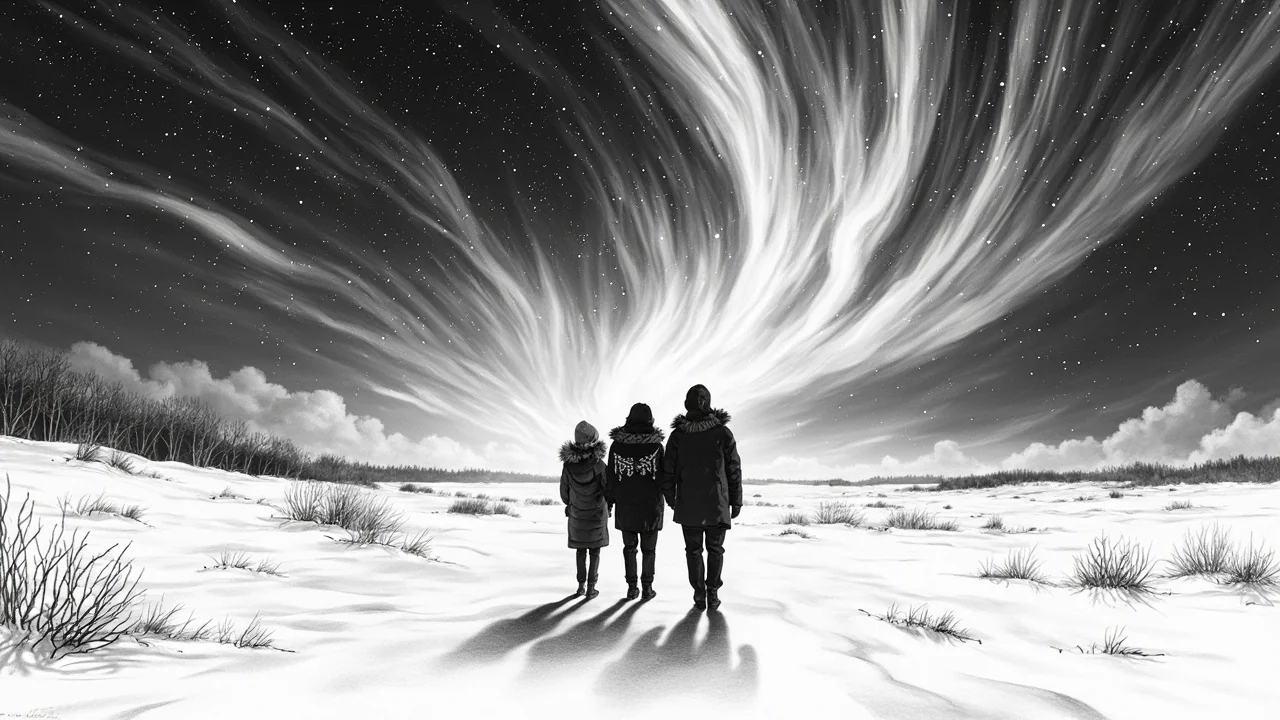
Denmark is experiencing a severe cold snap, with meteorologists forecasting temperatures plunging to minus 15 degrees Celsius. The extreme conditions, driven by clear Arctic skies, have created a rare opportunity for Danes to witness the aurora borealis from their own backyard. This unusual meteorological event offers a moment of natural wonder amidst the biting frost, challenging the typical Danish winter experience.
Photographer Per Rasmussen ventured to Avnø Fjord in southern Zealand to capture the phenomenon. He describes the experience as both beautiful and bitterly cold. "You have to get out where there isn't much lighting," Rasmussen advises, emphasizing the need to escape urban light pollution. His practical tips extend to photography and personal comfort, noting that sometimes the lights are visible only through a camera lens in such southern latitudes.
The Science Behind the Freeze and the Light
The Danish Meteorological Institute (DMI) confirms the intense cold is a direct result of the clear weather. With no cloud cover to act as an insulating blanket, heat escapes rapidly into the atmosphere. Martin Lindberg, the duty meteorologist, provided a detailed forecast. "The coldest will be in Jutland," he stated. "Most places will see between minus 8 and minus 15 degrees. It might even get colder locally." On the islands, temperatures are expected to be slightly less severe, ranging from minus 4 to minus 10 degrees.
This specific combination of factors—bitter cold from high-pressure systems and geomagnetic activity—creates the window for northern lights. While commonly associated with Scandinavia's northern reaches, strong solar storms can push the auroral oval far enough south to be visible over Denmark during perfectly dark, clear nights. The current conditions present that exact scenario.
A Community Braces and Gazes Skyward
The cold wave is more than a spectacle; it is a test of infrastructure and personal preparedness. Danish municipalities have activated cold weather protocols, ensuring shelters are open for vulnerable citizens. Social centers and community organizations are checking on elderly residents, a standard practice during extreme weather within the Danish welfare model. The societal response to a deep freeze reveals the interconnectedness of the system, where individual comfort is supported by communal structures.
Yet, alongside these practical concerns, a shared sense of anticipation has grown. Online community groups and social media are flooded with tips on the best viewing locations away from city lights, from the dark coasts of West Jutland to the open fields of Lolland. This collective search for beauty in the cold reflects a characteristic Danish resilience. The event becomes a shared national experience, uniting people through photography tips and weather reports.
Photographing the Phenomenon: Patience and Layers
For those attempting to capture the lights, Rasmussen's guidance is essential. He stresses the importance of pointing cameras north and holding them perfectly still for several seconds to capture the faint light. A smartphone on a steady surface can often detect colors invisible to the naked eye. His most crucial advice, however, is sartorial. "And then you have to put on a lot of clothes," he says, describing his own bundled-up appearance as resembling a 'mummy-troll.'
This practical focus on preparation is a hallmark of dealing with Danish nature. The pursuit is not reckless but planned, respecting the power of the cold while seeking its reward. It mirrors a broader cultural approach to challenges: methodical, well-equipped, and patient. The stunning images that emerge from these frosty nights are triumphs of preparation as much as they are of natural beauty.
A Temporary Respite from the Deep Freeze
The intense cold is not forecast to last indefinitely. According to DMI's Lindberg, a weather front from the west is expected to bring milder temperatures and snow by Monday. This shift will likely end the optimal viewing conditions for the aurora, as increased cloud cover will obscure the sky and trap heat closer to the ground. The northern lights display, therefore, exists in a precious and fragile window of meteorological coincidence.
This transition also signals a return to a more typical, overcast Danish winter. The extreme cold, while harsh, provided a crystalline clarity that is unusual for the season. The coming snow and milder air will bring their own challenges and aesthetics, shifting the national focus from stargazing to road gritting and cozy indoor living, or hygge.
Reflections on Nature's Dual Forces
This event presents a striking paradox. The same atmospheric conditions that create a dangerous, bone-chilling frost also paint the sky with ethereal, dancing lights. It is a reminder of nature's capacity for both severity and sublime beauty, often intertwined. For a society accustomed to a moderated coastal climate, such an extreme offers a visceral connection to the Arctic forces that shape the broader Nordic region.
It prompts questions about our relationship with the natural world, especially in an era of climate change. While a single cold snap is not indicative of broader trends, the intensity of such events and their frequency are subjects of ongoing scientific study. The northern lights over Denmark serve as a breathtaking reminder of the planet's complex and interconnected systems, visible only when conditions are just right—or, in this case, just severe enough.
Will this sharp freeze become a more common feature of Danish winters, or is it a rare outlier in a warming trend? The answer remains uncertain. For now, Danes are presented with a choice: to see only the inconvenience of the cold, or to bundle up, look north, and catch a fleeting glimpse of magic in the deep winter night. The experience, for those who brave it, becomes a personal story of endurance rewarded with wonder, a brief alignment of the earthly and the celestial in the Danish dark.