
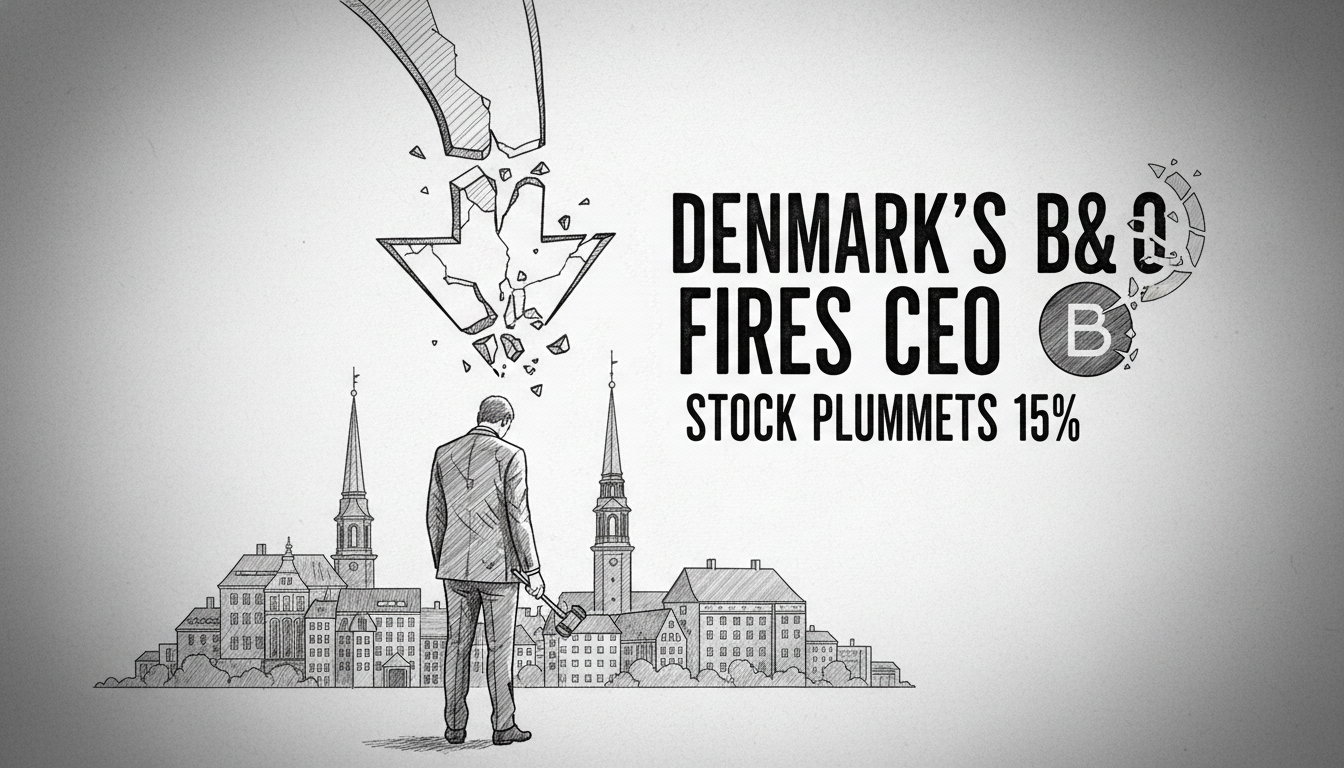
Bang & Olufsen stock fell sharply on Wednesday after the Danish luxury audio company fired its CEO, Kristian Teär, with immediate effect. The board of the Struer-based firm announced the sudden leadership change in a market statement, sending shares down over 15% in early trading. This abrupt move underscores the intense pressure facing the iconic 99-year-old brand as it struggles to find its footing in a rapidly evolving consumer electronics market.
Kristian Teär, who took the helm in 2019, has been steering B&O through a period of significant transformation. His departure marks the end of a five-year strategy aimed at revitalizing the company's product lineup and digital presence. The board provided no detailed explanation for the dismissal beyond stating a need for new leadership, leaving investors and industry observers to speculate about internal disagreements over the company's future direction.
A Sudden End to a Transformation Plan
Teär's tenure was defined by an ambitious plan to make Bang & Olufsen's high-end products more accessible and relevant to a new generation. He focused on expanding the brand's direct-to-consumer sales, investing in connected speaker technology, and forging partnerships with brands like Porsche. Despite these efforts, financial performance has remained volatile, with the company repeatedly missing its own profitability targets. The immediate stock market reaction suggests deep investor skepticism about the company's current trajectory without a clear successor in place.
"When a CEO departs with immediate effect, it typically signals a fundamental disagreement with the board on strategy or performance," said Lars Bo Jakobsen, a senior analyst covering consumer electronics at Nordea Markets. "The market is punishing the stock not just for the CEO's exit, but for the uncertainty it creates. B&O is at a critical juncture, competing against giants like Apple and Sonos while trying to protect its luxury aura. This leadership vacuum is the last thing it needs."
The Persistent Challenge of Modern Luxury
Bang & Olufsen's core dilemma is timeless yet increasingly acute. How does a heritage brand synonymous with exquisite Danish design and superior sound justify its premium price in a market flooded with good-enough, smart-enabled alternatives? Under Teär, the company launched products like the portable Beosound A5 speaker and the Beosound Theatre soundbar, attempting to blend its design legacy with modern connectivity. Yet, these products enter a fiercely competitive space where brand loyalty is fragile and technological obsolescence is rapid.
The company's financial reports tell a story of fits and starts. While there have been quarters of growth, often driven by specific product launches or regional success, sustained profitability has been elusive. Costs associated with its manufacturing base and extensive retail network remain high, squeezing margins. The luxury consumer electronics segment is particularly sensitive to economic downturns, and inflationary pressures have made discretionary purchases of multi-thousand-dollar speakers a harder sell.
What Comes Next for the Struer Icon?
The board has initiated a search for a permanent replacement and appointed Chief Financial Officer Martin Risgaard as interim CEO. This move provides operational continuity but raises questions about whether the company will seek another turnaround specialist from outside or promote from within its design and engineering ranks. The choice will signal whether B&O plans to double down on technological innovation or refocus on its roots as an uncompromising design house.
Industry experts suggest several paths forward. One is a deeper embrace of the brand's luxury status, potentially further elevating price points and exclusivity to serve a narrower, ultra-high-net-worth clientele. Another is a more aggressive push into the broader premium audio market with slightly lower price points and amplified marketing. A third, more radical option could involve seeking a strategic partnership or even a sale to a larger technology conglomerate seeking a luxury badge.
"The new CEO will need to answer a very difficult question," said Heidi Fog, a brand strategy consultant who has worked with several Danish design companies. "Is Bang & Olufsen a technology company that uses design, or a design company that uses technology? The answer dictates everything from product development to marketing spend. The brand's magic has always been in the balance, but that balance is harder than ever to maintain."
A Legacy Under Pressure
Founded in 1925 in Struer, Bang & Olufsen is more than a company; it is a piece of Danish industrial heritage. Its products are featured in design museums worldwide, representing a specific vision of Scandinavian modernism. This legacy is both an immense asset and a potential burden, creating expectations that can stifle radical change. The community in Struer, where the company remains a major employer, will watch the coming transition with particular anxiety.
The firing of a CEO is often a precursor to broader restructuring. Employees, retailers, and loyal customers are now left wondering if this leadership shock will lead to significant changes in product lines, retail strategy, or even the company's ownership structure. The lack of a communicated plan from the board only amplifies this unease.
For now, Bang & Olufsen finds itself in a familiar but precarious position for heritage brands: caught between glorious past and an uncertain future. The board's decisive action shows an urgency to change course. Yet, removing the captain mid-voyage is a risky maneuver that only pays off if the next navigator has a much clearer map. The steep drop in the company's share price is a stark measure of the faith the market currently has in that outcome. The next move must convincingly address whether this iconic Danish name can once again define the future of audio, or if it will remain a beautiful relic of a bygone era.