
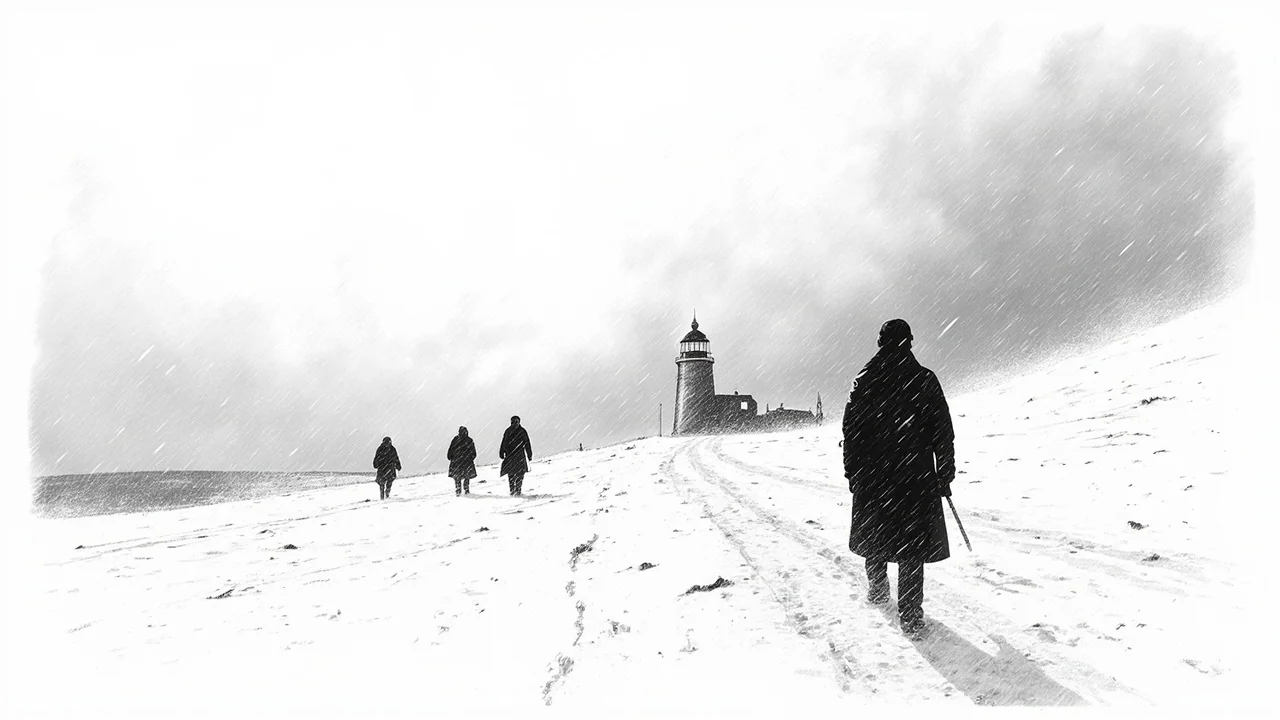
Denmark's island of Bornholm faces near-total isolation this weekend as heavy snowdrifts prompt police to warn against all non-essential travel. The local police force has issued a stark advisory for Saturday, urging residents who must drive to do so only before noon. This 12-hour window represents the only safe passage as forecasted snow squalls threaten to cut off the Baltic Sea island's road network.
Vagtchef Mathias Buus Kofoed confirmed the main roads remain passable for now. The critical vulnerability lies with the secondary and tertiary routes. "We expect the Class B roads to close quite quickly, in step with snow clearing stopping at 12," Kofoed stated. "Class C roads will not be cleared at all this weekend." This triage system reveals a harsh reality of remote island life during extreme weather. Resources are prioritized, leaving rural residents to fend for themselves.
A System of Prioritized Roads
Denmark employs a clear road classification system that dictates winter maintenance. Class A roads are primary arteries, vital for connecting regions and receiving continuous clearing. On Bornholm, these likely include Route 38, the island's main thoroughfare. Class B roads are intermediate connectors crossing the island's interior. Class C roads are small country lanes serving isolated homes and farms. When the snowplows stop at midday, these lesser routes become impassable traps. This policy, while pragmatic for resource management, explicitly accepts the isolation of rural communities for days. For farmers, elderly residents, or those in remote summerhouse areas, the message is unequivocal: you are on your own until Monday.
The Psychology of Island Isolation
The situation taps into a deep-seated cultural memory for Bornholmers. As a distant island 150 kilometers from the Danish mainland, self-reliance is ingrained. Historians often note the island's unique identity, forged by periods of separation. Modern infrastructure and regular ferry flights have softened this, but weather events swiftly restore the old boundaries. "There is a collective mindset here that mainlanders sometimes struggle to understand," said Lars Thygesen, a local historian and author. "We prepare differently. A snow forecast in Copenhagen means a slow commute. On Bornholm, it means assessing your supplies and your proximity to a Class A road."
This event is not just about transportation but about community resilience. The police advice to carry warm clothes, blankets, a shovel, a charged phone, and necessities is a standard Danish winter warning. On an island facing a full road network shutdown, it transforms from good advice to a critical survival checklist. The social media announcement on platform X serves as the primary lifeline for official information, highlighting how digital communication has become essential in modern crisis management.
Municipal Responsibility in a Crisis
The snow clearing cutoff at noon on a weekend points to municipal budgeting and labor agreements. Clearing roads is expensive, requiring overtime pay for drivers. Smaller municipalities, like Bornholm's combined municipality, must make difficult cost-benefit analyses. Prioritizing primary routes ensures emergency services, doctors, and essential goods can still move. Letting secondary roads wait is a calculated risk. A spokesperson for the Bornholm Municipality explained that their contingency plans are activated based on DMI warnings. "Our resources are deployed where they can do the most good for the largest number of people," the spokesperson said. This utilitarian approach defines Danish welfare logistics, even when it leaves some citizens temporarily behind.
Local community centers and libraries often become unofficial support hubs during such events. Neighbors check on neighbors, especially the elderly. This informal network is the unspoken second layer of the Danish welfare state, where civil society fills gaps left by official systems. The incident underscores a tension within the famed Nordic model: universal support is sometimes constrained by geography and resource limits. The state guarantees assistance, but its arrival may be delayed by a snowdrift on a Class C road.
Lessons from Previous Winters
While no accidents or stranded vehicles were reported by late morning, the memory of past winters looms. Severe snowstorms have previously cut power and blocked roads on Bornholm for days. Each event refines the response. The explicit communication about which roads will be abandoned is a form of brutal transparency, allowing people to make informed decisions. It also manages expectations and prevents futile calls for help to the overstretched police and emergency services. Analysts view this clear, direct public messaging as a key strength of Danish administrative culture, reducing panic and promoting personal responsibility.
Climate scientists note that while single weather events cannot be directly attributed to climate change, the North Atlantic region is experiencing more volatile winter patterns. This could mean more frequent intense snowfall events punctuating generally milder winters. For island communities, this volatility demands increased investment in resilient infrastructure. Could this mean more fortified road classifications or different resource allocations for remote areas? It is a growing debate in Danish social policy circles, balancing equity with fiscal practicality.
The Human Cost of Calculated Risk
The true impact of this policy is felt in quiet kitchens and living rooms across the island's countryside. A postponed doctor's appointment, a missed weekend shift at a job, the cancellation of a family visit—these are the micro-disruptions that define such an event. For the island's tourism sector, a key economic driver, weekend bookings may suffer, representing lost income for small businesses. The police advisory, though focused on safety, sends economic ripples through a community already facing the challenges of peripheral geography.
As Saturday afternoon progresses and the snow continues, the island will settle into a forced quiet. The closed roads create pockets of solitude. For some, it is an inconvenience. For others, it is a reminder of their vulnerability. The Danish welfare state, often portrayed as an all-encompassing safety net, shows its seams when nature intervenes. The system relies on citizens heeding clear warnings and preparing accordingly. In this instance, the social contract is simple: the authorities will tell you exactly when and where they will stop, and you must plan around that reality.
Bornholm's weekend snow-in is a small-scale drama with large implications. It tests infrastructure, community bonds, and the limits of state responsibility. By Sunday at 08:00, the DMI warning expires. The snowplows will likely rumble back to work on Monday morning, reconnecting the island piece by piece. Until then, the island endures a familiar, ancient condition: isolation by nature, managed by a modern, transparent state. The question for Denmark's future is how climate volatility will stretch this model, and whether the definition of an essential road will need to expand to match.