
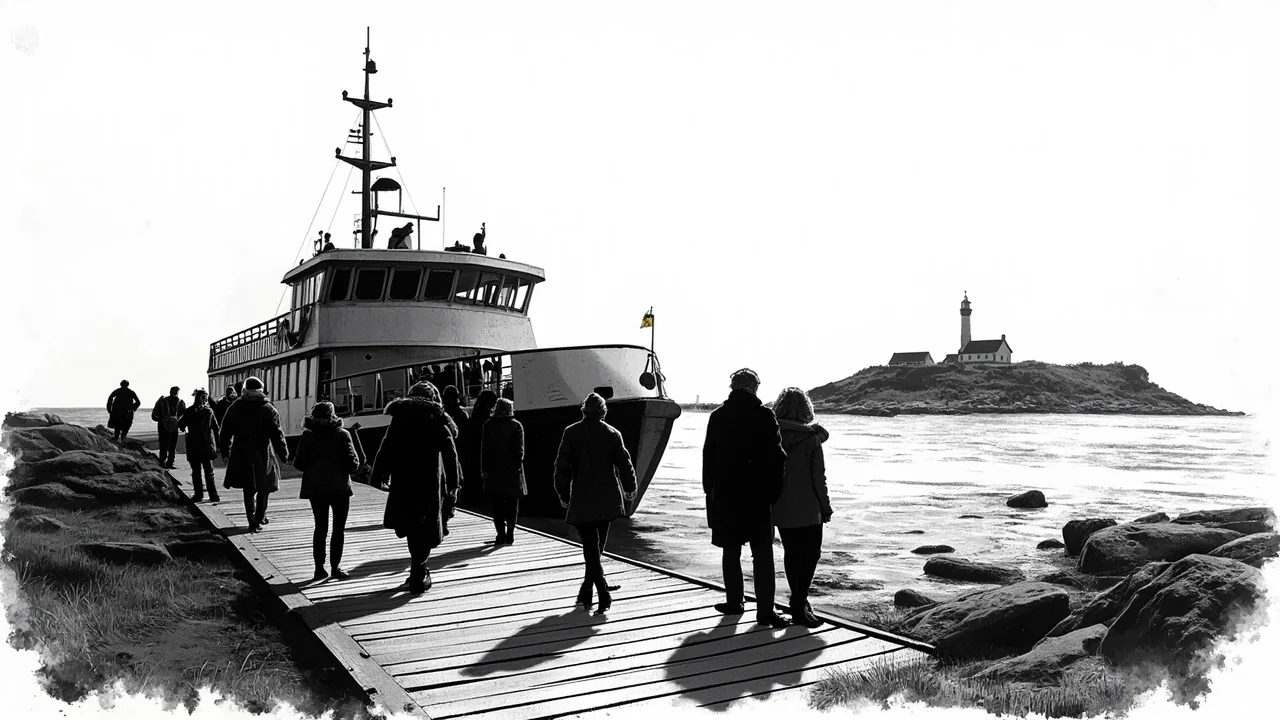
Denmark's Bornholm island was paralyzed by a severe winter storm Friday night, forcing 12 ferry passengers to spend the night stranded in the Rønne terminal. The group, provided with blankets and field mattresses by authorities, were finally allowed to leave the terminal Saturday morning as extreme conditions continued to grip the Baltic Sea island. This overnight ordeal highlights the profound vulnerability of island communities to sudden weather disruptions, even within Denmark's highly organized welfare state.
Bornholm's emergency services raised their alert level to its highest state Friday evening in response to heavy snow, strong winds, and a dangerous high water stand. Police on the island strongly advised against all unnecessary travel due to snowdrifts, a warning that remained in effect throughout Saturday. For those who had to venture out, conditions were deemed best only in a narrow window from early morning until noon. The Danish Meteorological Institute forecast snowdrifts would continue on the island from Saturday morning for roughly the next 24 hours, prolonging the crisis.
A Night in the Terminal
The stranded passengers, whose travel plans were abruptly cancelled, experienced an unexpected and uncomfortable pause in the sterile environment of a ferry terminal. While authorities provided basic necessities, the situation underscores a lack of immediate contingency housing for such events. This incident is not merely a travel delay but a snapshot of forced communal living under duress, organized by municipal crisis protocols. In a society famed for its planning and social safety nets, the storm revealed a raw edge where nature temporarily overrides infrastructure.
Local emergency management faces unique challenges on Bornholm, separated from the mainland. Coordination between ferry operator Bornholmslinjen, Bornholm Police, and the island's fire service is critical during such shutdowns. The decision to house people in the terminal itself is a standard last-resort protocol, prioritizing safety over comfort. It prevents risky attempts to find alternative lodging during impossible travel conditions. Yet, for the individuals involved, it represents a personal disruption, waiting out a storm in a public space not designed for overnight stays.
The Infrastructure of Isolation
Bornholm's geographical reality shapes every aspect of its crisis response. Located in the Baltic Sea, the island's lifeline is its ferry and air connections to Denmark and Sweden. When these are severed by weather, the island effectively becomes isolated, turning internal resources and community resilience into the primary buffers. The police warning against all travel highlights how quickly internal mobility can also collapse under snowdrifts, compounding the isolation. This event tests the island's self-sufficiency and the limits of the national welfare system's reach during acute, localized natural events.
Analysts note that such incidents, while infrequent, are stress tests for peripheral municipalities. They examine how well local social services can activate support for stranded individuals who are not residents. The provision of blankets and mattresses points to pre-positioned emergency supplies, a basic requirement. However, the experience raises questions about psychological support, information flow, and the quality of temporary accommodation during longer, multi-day disruptions that climate change may make more common.
Community and Crisis Response
The response on Bornholm is a blend of official protocol and implicit community expectation. In a close-knit island society, the social contract demands a high standard of care for visitors and residents alike during emergencies. The fire service's public Facebook update about raising the alert level is part of a transparent communication strategy vital for public trust. It signals seriousness and prepares the community for further instructions, while also informing off-island relatives and the media.
This event, though small in scale, operates as a microcosm of Danish emergency management. It demonstrates the decentralized model where municipal services (the fire department) and national authorities (the police, DMI) must integrate seamlessly. The stranded passengers became temporary wards of the municipality, their well-being a direct responsibility of local authorities until the transport links reopened. This seamless handoff from a private ferry company to public crisis services is a fundamental, if rarely seen, function of the Danish welfare model.
Looking Ahead at a Changing Climate
The Bornholm storm arrives amid broader discussions in Denmark about climate adaptation and resilient infrastructure. While not directly attributable to climate change, this type of intense winter storm aligns with models predicting more volatile weather patterns. For island communities, this translates into a higher risk of more frequent or severe connectivity disruptions. Planning must now consider whether terminal buildings need enhanced facilities for stranded passengers, or if partnerships with nearby hotels for emergency lodging should be formalized.
The incident also highlights a digital vulnerability. Reliance on social media (Facebook, X) for official police and emergency updates is effective only for those connected and monitoring those channels. For stranded travelers potentially facing language barriers or low phone batteries, traditional in-person communication and clear signage in terminals remain irreplaceable. The human element of crisis management—calm officials, clear explanations, and tangible care like hot drinks—often matters as much as the logistical planning.
The Human Cost of Disconnection
Beyond the protocols and warnings lies the personal reality for the 12 individuals. A planned journey transformed into an anxious overnight stay, uncertain of when they could continue. For some, this may have meant missed appointments, worried families, or extra expenses. This human impact is the ultimate measure of any crisis response. The quality of their temporary shelter, the clarity of information they received, and the empathy shown by staff define the experience far more than the official alert level.
In Denmark, where societal trust in institutions is high, such events are generally met with public patience and understanding. There is an expectation that authorities are doing their competent best. This social cohesion is itself a form of resilience, reducing panic and encouraging compliance with safety advice. The passengers likely waited, knowing the situation was managed, even if uncomfortably. This trust is a cornerstone that allows functional, if imperfect, solutions like a night on a terminal floor to be accepted as a necessary, temporary hardship.
As the snowdrifts continue on Bornholm, the story of the 12 passengers serves as a brief, stark reminder. It shows how quickly modern mobility can be halted, and how communities on the geographic periphery absorb the shock. Their departure from the terminal Saturday morning marked a quiet end to a small crisis, but the lessons about isolation, infrastructure, and care for the stranded will linger much longer for those who plan for Denmark's next storm.