
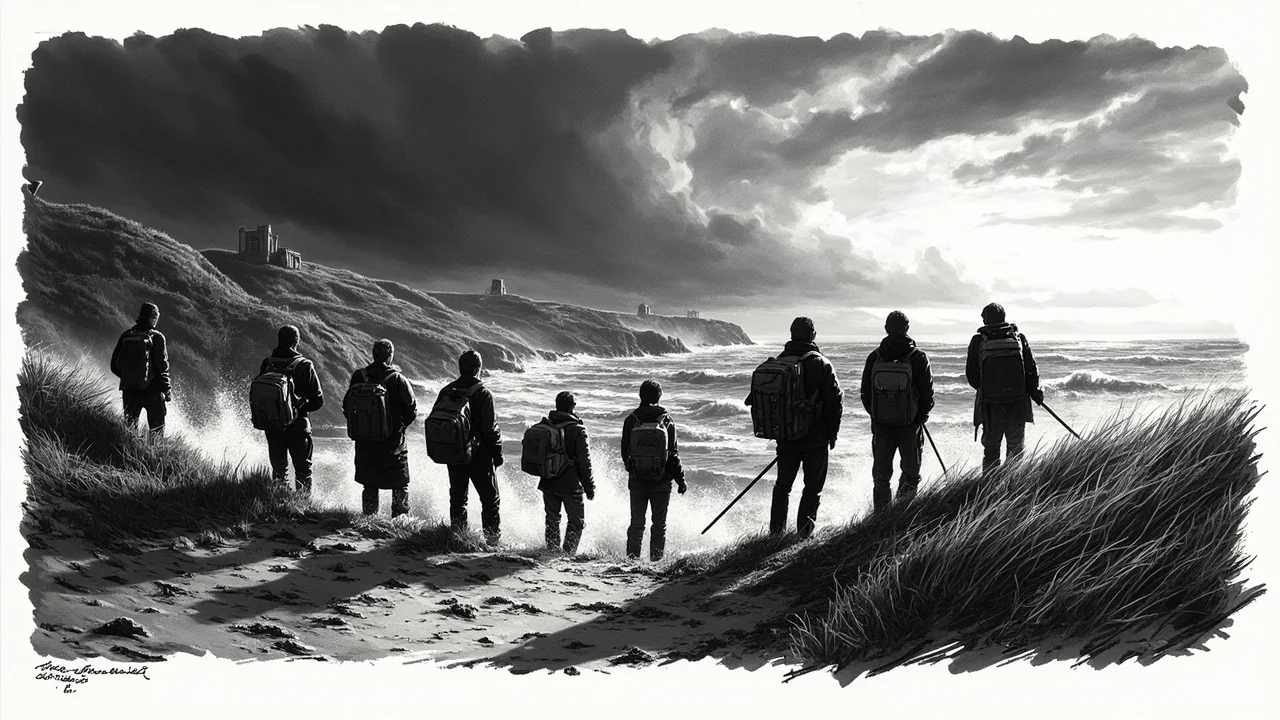
Denmark's Bornholm island has stranded 12 passengers overnight after heavy snow and winds closed all roads. Families slept on field cots in the Rønne ferry terminal, shielded from a night that police warned would be a 'cold experience' in a car. This local emergency offers a stark test of the Danish welfare system's capacity to respond when nature isolates a community.
A Night in the Ferry Terminal
Thomas Møller and his family, along with their two dogs, were among those given blankets and beds in the terminal. 'I am glad we were allowed to sleep in the terminal,' Møller said. He noted the alternative would have been dangerously cold inside their vehicle. Bornholm Police explicitly advised against all non-essential travel, stating many minor B and C roads remain unplowed. For those who must drive, authorities mandated a survival kit: warm clothes, blankets, a shovel, a charged phone, and necessary supplies.
The police and emergency services convened this morning to assess the situation. Snowplows currently focus only on main arteries like Rønnevej and Sønderlandevej. The Danish Meteorological Institute (DMI) maintains a severe weather warning for Bornholm, with strong winds causing significant snowdrift. A low-pressure system moving from the English Channel toward Holland drives the persistent gales.
A Broader National Warning
While the winds are decreasing across mainland Denmark, the risk of snowdrift remains. DMI has issued a separate warning for the southern part of the country. Southeast Jutland Police echoed Bornholm's advice, urging drivers to monitor traffic conditions closely. Their social media statement reiterated the essential checklist: phone, shovel, warm clothing, food, drink, and vital medicine. This consistent messaging highlights a coordinated national response protocol for winter emergencies.
The incident on Bornholm, a Danish island in the Baltic Sea, underscores the vulnerabilities of isolated communities. Ferry connections provide a lifeline, but severe weather can snap it instantly. When roads become impassable, the standard social infrastructure—community centers, shelters, and municipal aid—must activate rapidly. The use of the ferry terminal as an impromptu shelter demonstrates this adaptive capacity.
Analysis: The Welfare State's Winter Test
'This is where the Danish welfare model meets reality,' says Lars Jensen, a social policy researcher at the University of Copenhagen. 'It's not just about monthly benefits. It's the municipal duty of care during a crisis, ensuring no one is left in a freezing car. The local response on Bornholm appears to have worked, but it tests resources.' Jensen points out that such events disproportionately affect new residents and those less familiar with harsh Nordic winters.
Integration specialists note that weather emergencies can deepen community bonds or expose fissures. 'For newcomers, a crisis like this is a rapid immersion in both Danish climate and Danish communal responsibility,' says Ayaan Hassan, who runs a community center in Copenhagen. 'Seeing the police prioritize safety over regulation, providing shelter in a public space, is a powerful lesson in the practical application of samfundssind—community spirit.'
The Danish approach hinges on municipal readiness and clear public communication. Bornholm's authorities did not hesitate to issue a blanket warning against travel. This preventative stance aims to reduce the burden on emergency services. It reflects a policy that values collective safety over individual inconvenience, a concept deeply embedded in the social contract.
Implications for Social Policy and Integration
Events like this reveal the infrastructure behind Denmark's famed quality of life. The seamless shift of a ferry terminal into a shelter involves planning, logistics, and social trust. For the stranded travelers, the experience was an unplanned glimpse into the system's safety net. The presence of children and pets in the terminal also shows how responses are tailored to modern family needs.
However, analysts ask if the system is prepared for more frequent extreme weather events linked to climate change. 'A stronger climate means more intense, disruptive storms,' notes meteorologist Karen Berg. 'Our infrastructure and crisis plans are built for the climate of the past. Today's event is a drill for tomorrow's more common emergencies.' This suggests that winter preparedness will become an increasingly critical component of Danish social policy and municipal budgeting.
Furthermore, the clear, direct communication from police serves as a vital public service. It bridges language and cultural barriers by focusing on universal needs: warmth, safety, and preparation. This type of communication is crucial for ensuring all residents, regardless of background, understand and can respond to imminent dangers.
A Look Ahead as Winds Subside
The immediate crisis on Bornholm will ease as plows clear roads and winds diminish. The 12 stranded passengers will eventually reach their destinations. The event, while minor in scale, provides a meaningful case study. It demonstrates the interaction between Danish municipal responsibility, national forecasting, and on-the-ground community resilience.
As Denmark continues to integrate diverse populations, shared experiences like enduring a storm become part of the national story. The narrative is not just about hardship, but about the structured response that hardship triggers. The Bornholm storm tested a system. Based on the safe night in a ferry terminal, the system held. But with changing weather patterns, such tests are likely to become more severe and more frequent. How will the Danish welfare model adapt when the storms grow stronger?