
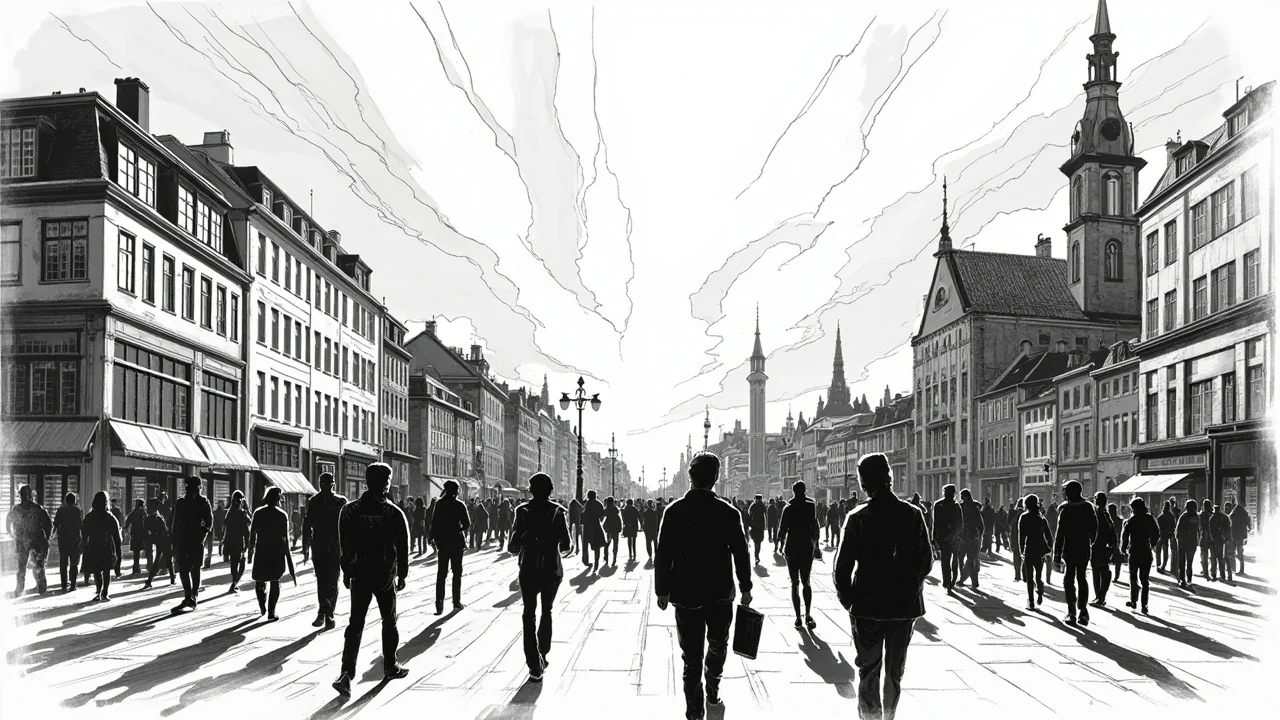
Copenhagen's population has grown significantly, adding 138,891 residents since 2010 alone. This sustained growth presents both opportunities and profound challenges for the city's infrastructure, housing market, and social fabric. As a reporter who has watched this evolution firsthand, I see a city straining under the weight of its own success while trying to maintain its unique character.
This demographic shift is not evenly distributed. One particular demographic group is increasing its share of the city's population at a faster rate than others, reshaping neighborhoods and public services. The data points to a fundamental change in who calls Copenhagen home, forcing municipal planners into a constant game of catch-up.
The Numbers Behind the Growth
Since 2010, Copenhagen Municipality has absorbed a population equivalent to a medium-sized Danish city. The figure of 138,891 new residents represents a substantial increase, pushing the total population well over 600,000. This growth rate consistently outpaces national averages, solidifying the capital's role as Denmark's primary engine of demographic change.
Growth on this scale is not abstract. It translates directly into increased demand for every municipal service, from kindergarten spots and school classrooms to public transportation and waste collection. City planners I've spoken with describe a perpetual tension between ambitious urban development projects and the daily reality of accommodating thousands of new citizens each year. The pressure on Copenhagen's famous welfare model is intensifying.
A City Transformed Neighborhood by Neighborhood
The impact of this growth is most visible at the neighborhood level. Areas like Nordvest, Amager, and Sydhavnen have experienced dramatic transformations. New apartment blocks rise where industrial zones once stood, and local high streets now feature a global mix of shops and restaurants. This change brings vitality but also fuels anxieties about gentrification and the loss of community identity.
Long-time residents in these areas often express mixed feelings. "We welcome the new energy and the diversity," said a community center leader in Nordvest, who asked not to be named. "But we also see rents climbing and public spaces becoming more crowded. The city needs to invest in social infrastructure—not just bricks and mortar—to keep communities cohesive." This sentiment echoes across districts experiencing rapid change, highlighting a gap between physical development and social integration.
The Strain on Housing and Social Services
Copenhagen's housing market is at the breaking point. The population surge has exacerbated a pre-existing housing shortage, sending prices and rents to record highs. Young professionals, students, and lower-income families are increasingly priced out of the city center, leading to longer commutes and a potential hollowing out of the city's economic diversity. The municipality's affordable housing waiting lists have grown exponentially, becoming a symbol of the crisis.
The strain extends beyond housing. Schools are operating at or above capacity, requiring shifts and temporary classrooms. Healthcare clinics report longer waiting times, and public transportation networks, though expanding, are often overcrowded during peak hours. These pressures test the resilience of the Danish welfare system, which is built on principles of universality and high quality. Maintaining these standards for a rapidly growing and changing population is the city's defining challenge.
Integration in a Growing Metropolis
With specific demographic groups growing faster, the task of integration takes on new urgency. Successful integration in the Danish context means more than just providing a roof; it requires access to the labor market, language education, and social networks. Copenhagen Municipality has numerous programs aimed at this, from Danish language schools run by the municipality to job training initiatives at local social centers, known as 'folkehuset' or 'kulturhus'.
However, experts point out that scale matters. "The systems we have were designed for a different, smaller city," noted a social policy researcher from the University of Copenhagen. "When growth is concentrated in specific groups, it can overwhelm targeted integration efforts. We need to think about mainstreaming integration—making it a part of all public service planning, from urban design to library services." This approach requires a shift from seeing integration as a separate policy silo to viewing it as a core function of a modern metropolis.
The Political and Policy Response
City politicians are grappling with this growth on multiple fronts. The political debate often centers on a difficult balance: how to welcome growth and the economic dynamism it brings while protecting the city's livability and social balance. Policies focus on accelerating construction, expanding public transit like the Metro City Ring, and investing in "bløde omkostninger" or "soft costs"—parks, cultural venues, and community spaces.
Yet, there is a growing recognition that Copenhagen cannot solve these challenges alone. The growth is partly driven by national trends—centralization of education and jobs, international migration patterns—requiring greater coordination with national government and surrounding municipalities in the Hovedstadsregionen (Capital Region). The question of how to distribute growth and its benefits more evenly across Zealand is gaining political traction.
Looking to Copenhagen's Future
Copenhagen stands at a crossroads. The addition of 138,891 people since 2010 is a testament to its appeal as a vibrant, safe, and economically strong European capital. This growth fuels innovation and cultural richness. But the city's future character depends on how it manages the accompanying pressures. Will it become an exclusive enclave for the wealthy, or can it forge a model for sustainable, inclusive urban growth that retains its social democratic foundations?
The answer lies in proactive planning that prioritizes social infrastructure alongside physical development. It requires honest conversations about density, shared spaces, and the obligations of a welfare state in a major city. As the cranes continue to dot the skyline, the real test for Copenhagen is not if it can build more, but if it can build better—creating a city that works for all its 138,891 new arrivals and for the generations who have long called it home. The world is watching to see if the Danish model can scale up.