
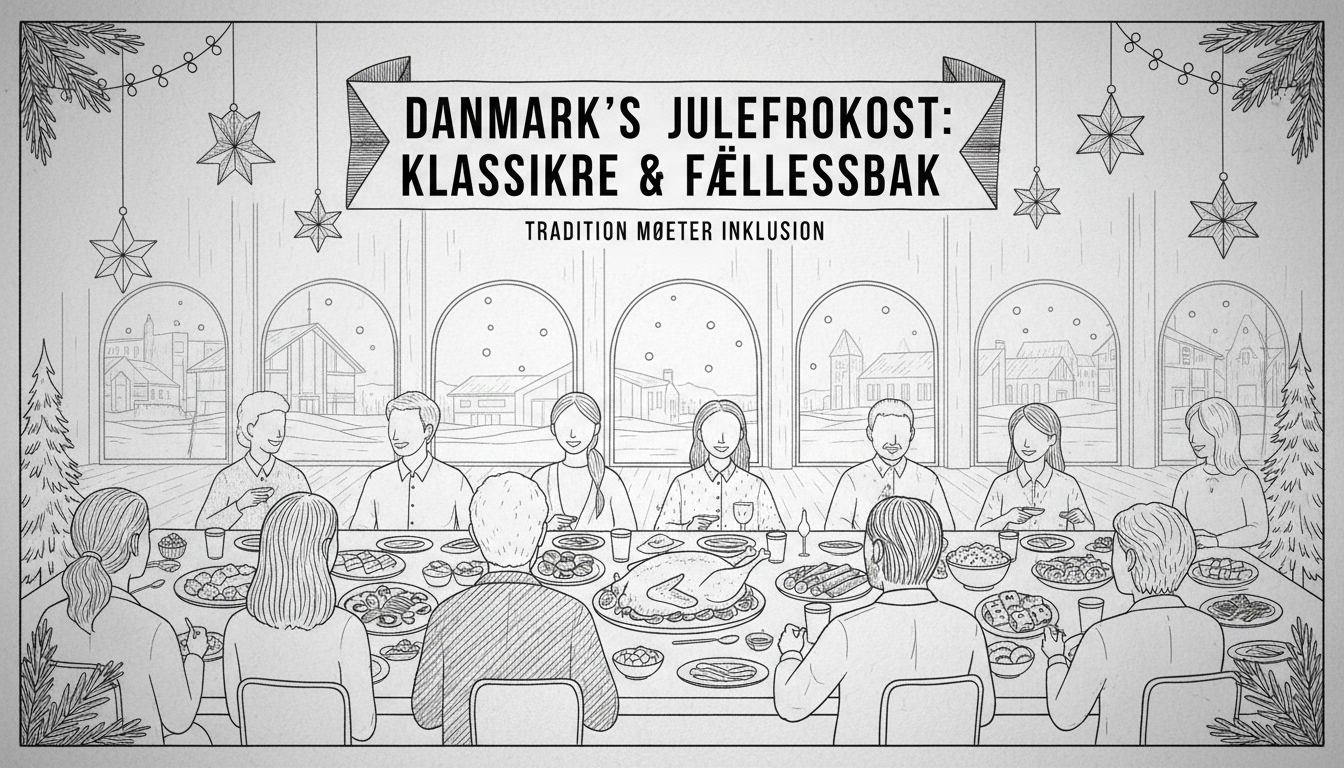
Denmark's traditional Christmas lunches still feature herring and liver pate as essential classics. Yet a significant shift is occurring beneath the surface of these festive meals. Catering companies nationwide report a surging demand for inclusive menus that accommodate diverse dietary needs, marking a quiet evolution in a cherished national tradition.
This change reflects broader movements within Danish society. The insistence on meat-free, halal, and allergy-friendly options at company parties and family gatherings speaks to changing demographics and social awareness. While the smørrebrød table remains a cultural anchor, its composition is becoming more considerate and varied.
The Unchanging Core of Tradition
For decades, the Danish julefrokost has followed a familiar script. Herring in various marinades, crispy pork, warm liver pate, and cheese form the foundation. These dishes are more than food; they are ritual. They connect Danes to generations past and provide a shared cultural experience in the darkest months. Catering firms confirm this core demand remains incredibly strong. Companies and families continue to order the classics, seeking the comfort and nostalgia they provide.
This tradition-bound approach is a hallmark of Danish social culture, where specific rituals create cohesion. The Christmas lunch, often a lengthy affair with snaps and singing, is a prime example. The food is a central character in this social play. Abandoning the classics entirely seems unthinkable for most. Yet, the script is now receiving subtle but important edits.
A New Demand for Dietary Inclusion
The major change is not in removing traditions but in expanding them. Caterers are fielding a sharp increase in special requests. Menus now routinely require clear labeling for allergens like nuts, gluten, and shellfish. Separate vegan and vegetarian platters are becoming standard, not an afterthought. Requests for halal-prepared meats are also rising, reflecting the dietary practices of Muslim employees and guests.
Bjarne Siersbæk, commercial manager for Catering Danmark, observes this trend firsthand. "They want the classics," he says, "but we see more and more special orders for dishes and menus where we accommodate allergens as well as vegan and vegetarian alternatives." This sentiment is echoed by other major catering suppliers across Copenhagen and other urban centers. The trend points to a collective understanding that participation in the tradition should not come at the cost of personal health, ethics, or religious observance.
Reflecting a Changing Social Fabric
This culinary shift is a direct mirror of Denmark's evolving demographics and social values. With nearly 14% of residents having foreign backgrounds, workplaces and friend groups are more diverse. The national conversation around sustainability and climate has also pushed plant-based eating into the mainstream. Furthermore, greater awareness of food allergies and intolerances has made accommodation a priority, not a privilege.
From a social policy perspective, the inclusive Christmas lunch acts as a microcosm of integration. It represents a practical, everyday negotiation of diversity. When a workplace ensures halal options or vegan smørrebrød, it sends a clear message of belonging. It says the tradition is big enough to include everyone at the table. This is integration in practice—not about abandoning Danish culture, but about allowing it to be shared and experienced by all present.
The Catering Industry Adapts
The response from the catering industry highlights a pragmatic and service-oriented adaptation. Menus are now designed with modularity. A classic spread is supplemented with dedicated alternative platters. Kitchen procedures are adjusted to prevent cross-contamination for allergy-sensitive guests. Staff training includes knowledge about ingredients to answer guest questions confidently.
This is not a simple task. It requires careful logistics and additional preparation. However, caterers view it as an essential evolution of their service. The goal is to preserve the festive, communal spirit of the julefrokost while ensuring no one feels excluded. The successful caterer today is one who can provide both the perfect pickled herring and the perfect plant-based paté.
Analysis: Tradition Versus Inclusivity
This trend presents a fascinating case study in how national traditions evolve. Denmark often fiercely protects its cultural practices. Yet here, we see tradition not being dismantled but becoming more elastic. The core symbols—the herring, the snaps, the togetherness—remain untouched. The change is in the acknowledgment that a single, rigid menu cannot serve a modern, diverse population.
Experts in social cohesion would likely view this positively. Shared rituals are vital for community building, but they risk becoming exclusionary. By adapting the ritual's details while keeping its heart, Danish society is strengthening the tradition's relevance. It becomes a unifying force precisely because it makes room for difference. The Christmas lunch, therefore, transforms from a static display of heritage into a living, inclusive celebration.
What This Means for Danish Culture
The implications extend beyond the dining table. This shift suggests a maturation in Denmark's approach to integration and community. It moves from a theoretical discussion to a tangible action: modifying a beloved tradition to welcome newcomers and respect evolving values. It demonstrates that Danish culture is not a fragile artifact but a resilient practice capable of adaptation.
For newcomers, being able to participate fully in such a key tradition without compromise is a powerful form of acceptance. For Danes exploring plant-based diets, it validates their choices within a cultural framework. For anyone with allergies, it means safety and inclusion. The result is a stronger, more relevant communal practice. The tradition survives not by staying frozen in time, but by learning to breathe with the times.
Ultimately, the Danish Christmas lunch is telling a new story. It is a story where the taste of tradition and the principle of inclusivity are no longer in conflict. The herring and the vegan option can share the same table. This quiet revolution on the smørrebrød board reflects a broader, hopeful trend: a society learning to hold fast to its identity while making sure there is a place for everyone.