
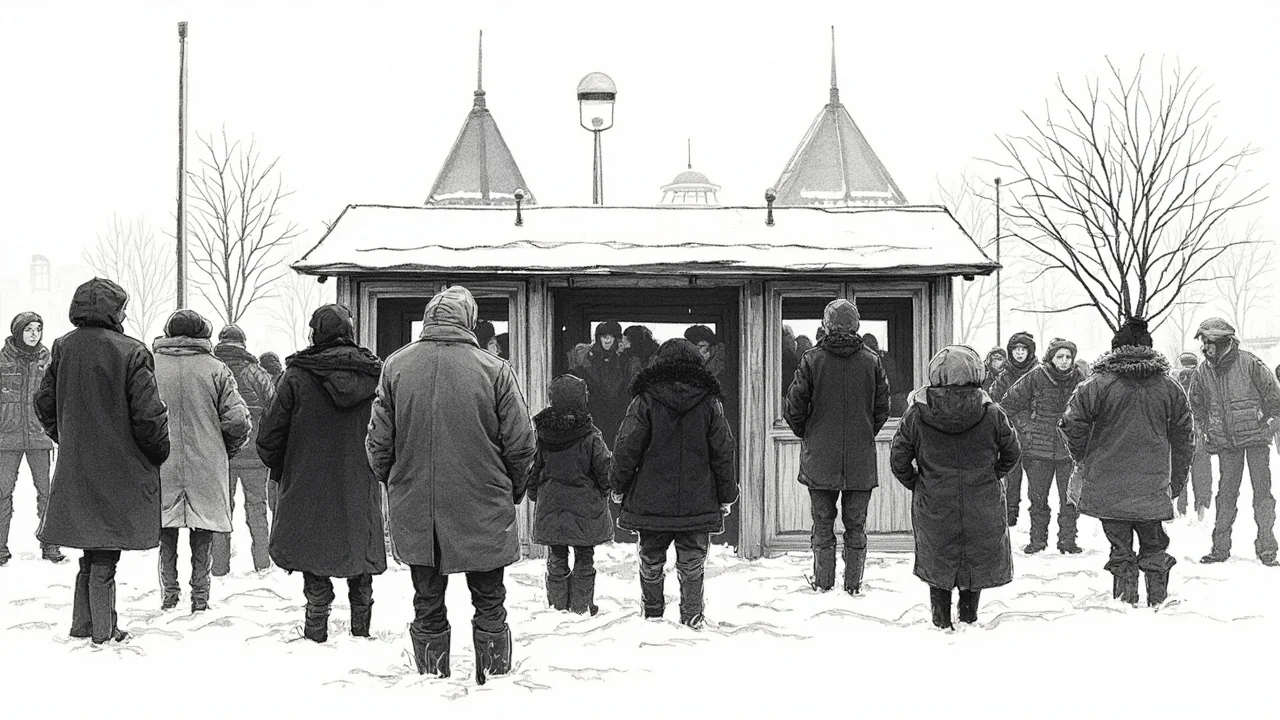
Denmark's winter shelters and warming centers are facing extraordinary pressure as the coldest temperatures in five years grip the nation. With the mercury plunging to -19.4°C in parts of Jutland, organizations like Blue Cross Denmark report their 13 shelters are at full capacity, struggling to accommodate an unusually high number of people seeking refuge from the bitter cold. This surge in demand exposes the fragile safety net for Denmark's most vulnerable citizens during extreme weather events.
A Frigid Night in Copenhagen and Beyond
At the Grace emergency shelter and day center in Copenhagen, only 16 beds are available each night. The demand is so high that staff have resorted to drawing lots to determine who gets a place to sleep. Those turned away are referred to other organizations, but with shelters across the capital and major cities like Aarhus reporting similar overcrowding, options are slim. "These are the harsh conditions we operate under, as we don't have permission to house more people," said Thomas Røddik Korneliussen, communications chief for Blue Cross Denmark. The crisis is not confined to metropolitan areas. In Herning, in Central Jylland, the organization is scrambling to arrange extra sleeping spaces to ensure no one is left outside. "It's just really cold in Central Jylland," Korneliussen noted, highlighting the nationwide scope of the challenge.
This intense cold, with widespread double-digit frosts, directly threatens the health and safety of people experiencing homelessness. Shelters do more than provide a roof; they offer warm meals, a respite from life-threatening conditions, and a point of human contact. The current situation forces a difficult triage, where the basic need for warmth and shelter cannot be guaranteed for all who seek it. The system, often operating at the limits of its capacity even in milder weather, is now stretched to a breaking point.
The Strain on Volunteers and the System
The unprecedented demand creates a secondary crisis: a shortage of helping hands. Blue Cross Denmark, which relies heavily on volunteers to run its services, has issued a public call for extra support. "We are keeping our operations running, and we will do so in this situation as well, but we need extra volunteers," Korneliussen stated. This need underscores how Denmark's social welfare model, renowned for its comprehensive safety net, depends on civic engagement and charitable organizations to address acute, frontline crises. Municipal social services provide the framework, but the immediate, human response during a cold emergency often falls to non-profits and their volunteers.
This dynamic raises important questions about preparedness and resource allocation. While Danish municipalities have cold weather protocols, the extremity of this winter's conditions appears to have exceeded standard planning assumptions. The last time temperatures were this severe was five years ago, a gap long enough for institutional memory to fade and for the population of vulnerable individuals to change. The response highlights a patchwork system where shelters operated by various charities become the de facto emergency response for homelessness during weather alerts, operating with limited licenses and fixed capacities that cannot easily flex during a crisis.
Beyond the Emergency: A Policy Chill?
The scenes at overcrowded shelters represent a human symptom of broader, more entrenched challenges within Danish society. While the immediate cause is meteorological, the volume of people seeking help points to persistent issues of housing affordability, mental health support, and integration. For some seeking shelter, the cold is a seasonal amplifier of a year-round struggle. Experts in social policy often note that homelessness is rarely just about the lack of a physical structure; it is frequently tied to complex personal circumstances, including unemployment, addiction, and fractured social ties.
Denmark's strong welfare system is designed to prevent citizens from falling through the cracks, yet these shelters are full. This suggests gaps exist, particularly for those who may not fully navigate the system due to language barriers, administrative complexities, or personal crises. The data on shelter usage, if collected systematically, could provide valuable insights for municipal social planners. How many are long-term homeless versus those in a temporary crisis? How many are Danish citizens versus migrants or refugees? Answering these questions is crucial for moving from crisis management to preventive policy.
A Look Ahead as the Weather Thaws
The Danish Meteorological Institute predicts slightly milder weather later this week, which will provide immediate relief to shelters and their guests. However, the respite will be temporary. Winter is far from over, and another cold snap could bring the same desperate scenes within days. The experience of this past week serves as a stark stress test for Denmark's capacity to protect its most marginalized residents. It proves that even in one of the world's most organized and socially conscious societies, extreme weather can overwhelm community resources.
The true test for Danish social policy will come after the thaw. Will this crisis prompt a review of shelter capacities and cold-weather emergency plans in Copenhagen, Aarhus, and smaller cities like Herning? Will there be increased funding or coordination between municipalities and charitable organizations to build a more resilient response network? The volunteers and staff at Blue Cross Denmark and similar organizations perform heroic work, but they should not have to operate a system based on lottery draws for a lifesaving bed. As climate patterns shift and extreme weather events may become more frequent, designing a shelter system that is both compassionate and capable of scaling under pressure is not just charitable work—it is a critical component of public safety and social responsibility. The cold may fade, but the need for a lasting solution remains.