
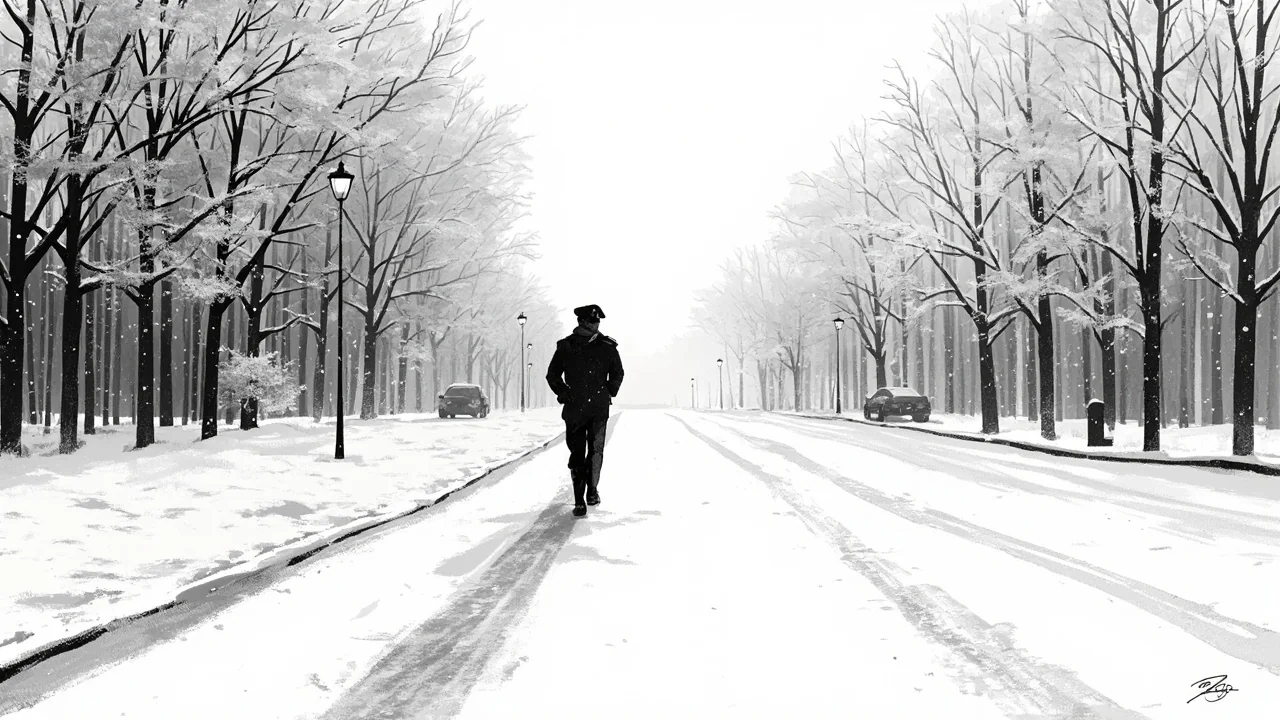
Denmark's police forces are urging extreme caution as a severe cold snap grips the nation, creating treacherous driving conditions. Southeast Jutland Police issued a stark warning Saturday, noting that road salt loses effectiveness in extreme cold. This advisory comes as the Danish Meteorological Institute forecasts temperatures plunging to -15°C in Jylland, with widespread frost and icy patches expected to linger. The combination of clear skies, calm winds, and existing snow cover is creating a perfect recipe for black ice, a nearly invisible hazard for motorists.
Authorities are not mincing words. The standard winter preparedness playbook is being rewritten for this intense freeze. Police advise drivers to leave early, pack emergency kits including a phone, snow shovel, and reflective vests, and to continuously check weather updates along their entire route. The Road Directorate confirms the risk, stating that while major snowdrifts have subsided except on Bornholm, smaller roads remain covered in snow and ice. This situation presents a classic Nordic winter challenge, testing the limits of infrastructure and public readiness.
The Science Behind the Slippery Streets
At the heart of the police warning is a critical piece of chemistry often overlooked by the public. Road salt, primarily sodium chloride, works by lowering the freezing point of water. However, its efficacy plummets as temperatures drop below approximately -7°C to -10°C. In the predicted -15°C lows, salt becomes largely ineffective, failing to melt existing ice or prevent new ice from forming. This leaves physically clearing the roads or using abrasive materials like gravel as the only reliable countermeasures on many secondary routes.
"When we get into this deep cold, our primary tools become blunt," explains a municipal road maintenance supervisor from a Jutland commune, speaking on standard operational protocols. "The gritting trucks go out, but we shift focus from melting to providing traction. It's a different kind of battle." This scientific reality forces a change in strategy from authorities and a necessary shift in mindset for drivers, who may be accustomed to salted roads clearing quickly.
A Nation's Seasonal Preparedness Tested
This cold snap acts as an annual stress test for Denmark's winter readiness. The Danish model relies on a coordinated response between the national Road Directorate, regional police districts, and local municipalities responsible for actual road clearing. The police role is primarily advisory and responsive, warning the public and handling accidents, while municipalities execute the physical work. This weekend's warnings highlight the communication chains between DMI's forecasts, the Road Directorate's network monitoring, and local police disseminating direct public guidance.
There is also a cultural dimension to this event. Danes are generally considered proficient winter drivers, but prolonged mild winters can lead to complacency. The sudden arrival of severe, salt-defying cold requires a reactivation of deeper winter driving skills: increased following distances, gentle steering and braking inputs, and heightened situational awareness for shaded areas and bridges that freeze first. The police advice to carry a shovel and reflective gear is a direct nod to the possibility of becoming stranded in remote, cold areas where help may be delayed.
Beyond the Headlines: The Human Impact
While not a crisis on the scale of flooding or storms, this weather directly impacts daily life and safety. For the elderly or vulnerable, the fear of icy pavements can mean isolation, preventing trips to the grocer or pharmacy. Cyclists, a cornerstone of Danish transport, face significantly heightened danger from icy bike paths. Public transportation, while more robust, can also experience delays due to the need for caution, creating a ripple effect through commutes and weekend plans.
The economic impact, though subtle, is real. Fewer people venturing out affects retail and hospitality. Accident rates, even minor fender-benders, place a burden on insurance systems and repair shops. There is also an increased energy demand as households and businesses crank up heating against the penetrating frost. These interconnected consequences show how a simple weather forecast translates into a broad societal event.
Expert Perspectives on Risk Mitigation
Safety experts emphasize that the core message from authorities is about risk management, not instilling fear. "The goal is not to stop people from living their lives," says a traffic safety consultant with the Danish Road Safety Council. "It's about making them conscious participants in their own safety. Checking the specific route weather, not just the general forecast, is key. A main road might be clear while your residential street is an ice rink."
They point to the advice to "continuously hold oneself orientated about the weather and conditions along the entire travel route" as the most crucial, yet most often ignored, recommendation. Modern apps and connected vehicle systems can help, but they warn against over-reliance. "Your eyes on the road surface and the feel of the car are still the primary sensors. If something looks wet and shiny in these temperatures, assume it's ice."
Looking Ahead: A Pattern of Extremes?
This weekend's deep freeze raises broader questions in a time of changing climate patterns. While Denmark is no stranger to cold winters, meteorologists are observing shifts in volatility. Periods of mild, wet weather can be abruptly followed by intense cold spells, leaving less time for systematic public adaptation. This places a premium on clear, timely communication from authorities, exactly as seen in this weekend's coordinated warnings from police, DMI, and the Road Directorate.
The proactive stance taken—issuing warnings before widespread problems occur—reflects a learned approach from a society adept at managing winter. It is a blend of practical advice (the snow shovel) and behavioral guidance (leaving early, driving attentively). As the sun shines over a frozen landscape this Sunday, the true test will be in the public's reception of these messages. Will the sight of clear skies lead to a false sense of security, or will the warnings about the invisible threat of black ice resonate? The answer will be written on the roads themselves.