
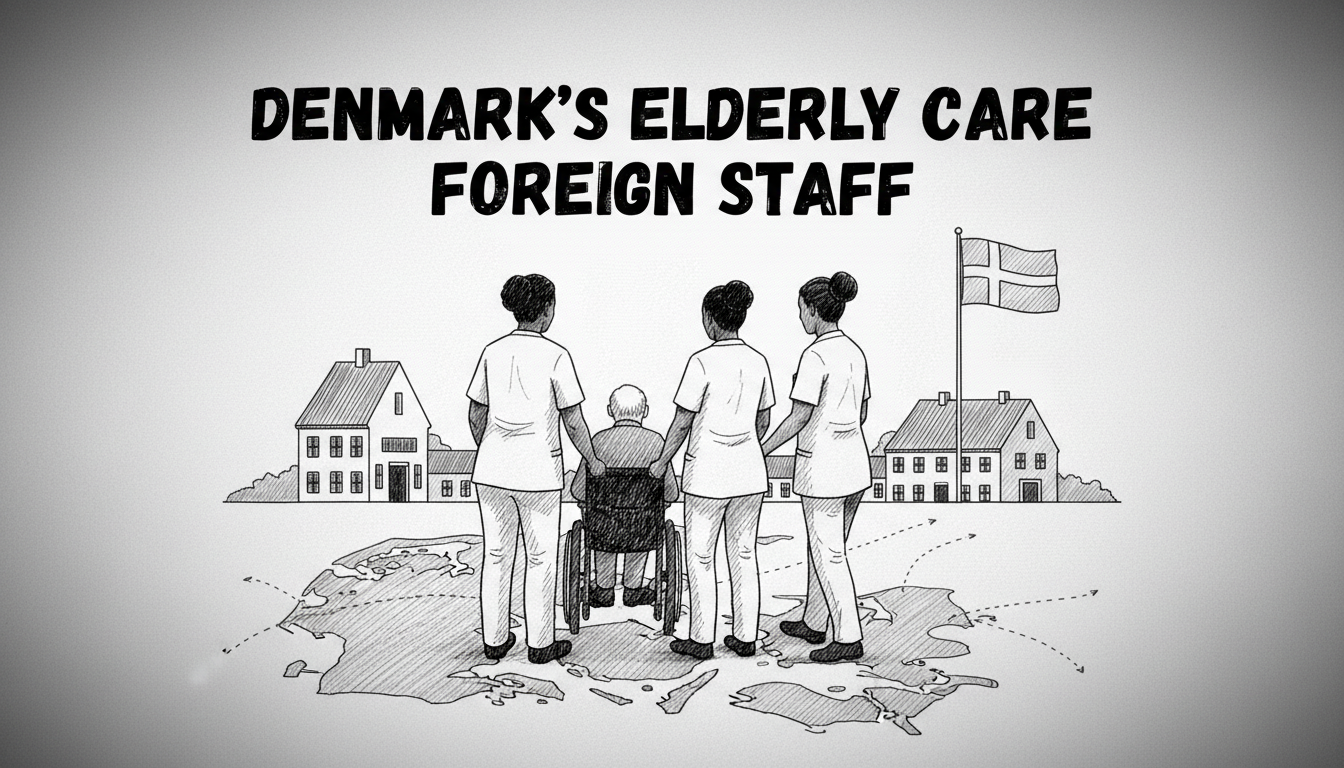
Danish elderly care would collapse without foreign workers, new data reveals to surprised researchers. As the government finalizes recruitment deals with India and the Philippines, the existing care system is already deeply dependent on an international workforce. This reliance highlights a fundamental tension within Danish society news, where a cherished welfare model meets modern demographic reality.
On a quiet morning in a Copenhagen municipality care home, Maria, a caregiver from the Philippines, helps an 87-year-old Dane with her morning routine. Their conversation mixes basic Danish with warm smiles and patient gestures. Scenes like this unfold daily across Denmark, underpinning a system under strain. "We are the backbone now," Maria says during a short break. She asked not to use her full name, reflecting a common unease among workers about their pivotal yet sometimes precarious role.
A System Under Demographic Pressure
Denmark's population is aging rapidly. Statistics Denmark projects the number of people aged 80 and over will increase significantly in the coming decades. This creates an unsustainable equation for a tax-funded system built on a large working-age population. The domestic labor supply is simply insufficient. "The math is brutally simple," says Klaus Petersen, a professor specializing in welfare state history at the University of Southern Denmark. "We have more older people needing care and fewer young people to provide it. Without immigration, the service level promised by the Danish welfare system would be impossible to maintain."
This demographic shift forces a quiet revolution in care homes. Where Danish-speaking staff were once the absolute norm, teams are now linguistically and culturally diverse. Managers in municipalities from Aarhus to Helsingør describe a patchwork of nationalities keeping their services running. The exact percentage of foreign workers in Danish elderly care is not officially aggregated nationwide, but local reports and union surveys indicate it is substantial and growing every year.
Government Seeks Solutions Abroad
In response, the Danish government is actively pursuing bilateral agreements to recruit care personnel. Negotiations with India and the Philippines are the most prominent current efforts. These agreements aim to create structured pathways for qualified workers, contrasting with the more ad-hoc recruitment of the past. The goal is to ensure a steady flow of labor to fill thousands of vacant positions.
Social Policy Minister Pernille Rosenkrantz-Theil has framed the strategy as both pragmatic and ethical. "We need to ensure we get the skilled workers our elderly deserve," she said in a recent parliamentary debate. "And we must do it through fair agreements that respect the needs of the sending countries." This nod to ethical recruitment is crucial. Experts warn against simply extracting talent from developing nations, which can cripple their own health systems—a phenomenon known as brain drain.
Integration Successes and Silent Struggles
The daily reality for many foreign care workers involves a dual challenge: performing physically and emotionally demanding work while navigating life in a new country. Community centers in Copenhagen and other major cities have become vital hubs. They offer Danish language classes tailored for care sector terminology and provide a space for social connection.
Fatima Al-Zahra, senior integration reporter for Nordics Today, has followed this trend for years. "The data shows these workers are essential, yet their integration is often an afterthought," she notes. "We celebrate their labor, but we need to better support their lives. This includes proper credential recognition, competitive wages, and clear paths for career advancement. Their contribution is more than economic; it's the human kindness that defines our care standards."
Some workers face hurdles having their foreign qualifications fully recognized, leading to roles below their skill level. Others report feeling culturally isolated outside of work. Yet, many also speak of deep reward in their jobs and appreciation from the elders they assist.
The Ethical Dimensions of Global Care Chains
The recruitment drive opens complex questions for Denmark immigration policy. Is it right to solve a domestic shortage by drawing skilled workers from nations that also face care deficits? Professor Petersen urges a cooperative approach. "The ideal model is a true partnership," he argues. "This could include Denmark supporting training infrastructure in partner countries or agreements that include knowledge-exchange programs. We must move beyond a simple extraction mindset."
Within Denmark, the situation also tests the social contract. The Danish welfare model was built on principles of universalism and high trust. Its sustainability now depends on a group who, initially, are outside that historic community. How Denmark treats these workers—offering fair conditions, inclusion, and respect—will be a defining test of its social values in the 21st century.
Looking Toward an Uncertain Future
The current strategy offers a short-to-medium term solution. Long-term challenges remain. Automation and technology may alter some tasks, but the core of elderly care is human connection. Improving working conditions and wages to attract more Danes into the sector is a parallel goal often cited by unions. However, demographic projections suggest foreign recruitment will be a cornerstone of Danish elderly care for decades.
The sight of an international caregiver helping a Danish senior is no longer an exception. It is the system's new normal. This dependency reshapes communities, workplaces, and the very fabric of Danish society. It prompts a difficult but necessary question: Can Denmark preserve its famed welfare model without redefining what it means to be a part of the society that sustains it? The answer is being written every day, in care homes across the nation, by the hands of workers from around the world.