
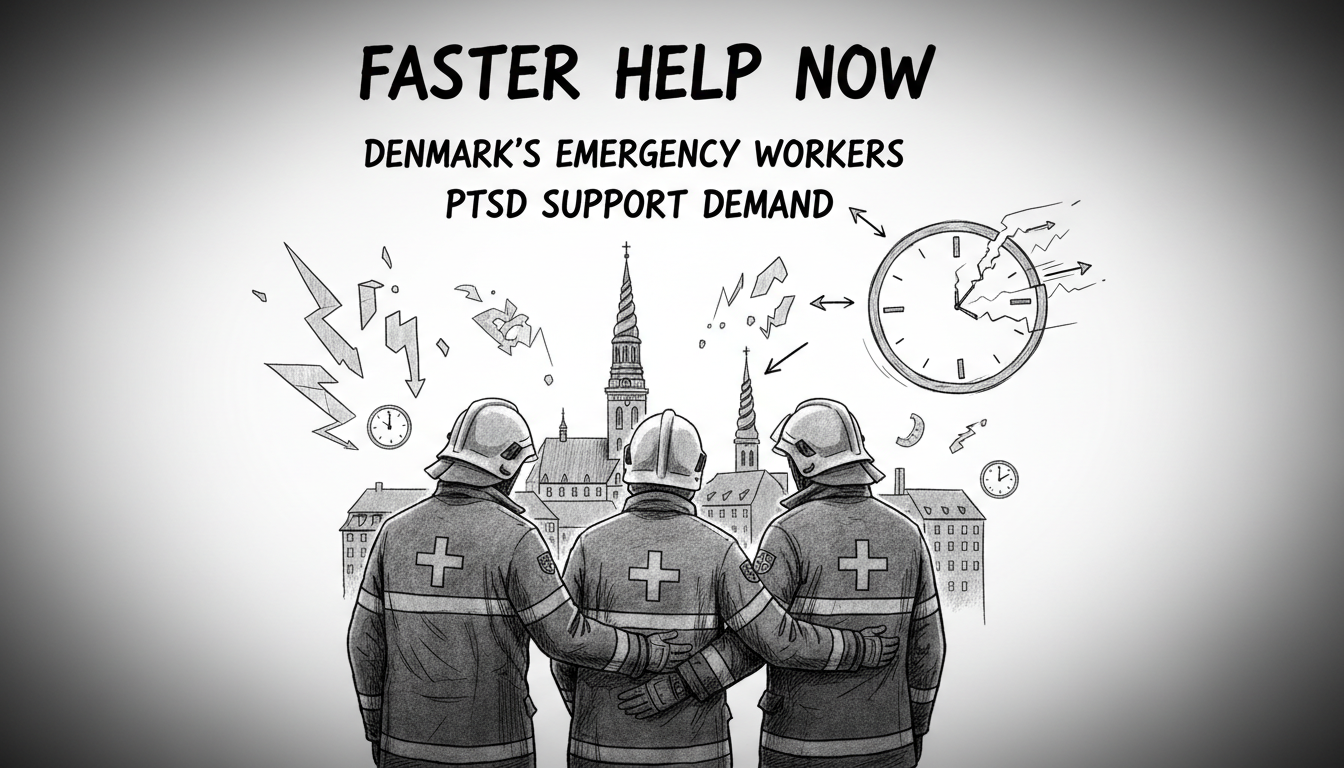
Denmark emergency workers mental health is under pressure as those responding to the nation's 514,000 annual emergency calls face long waits for psychological support. For paramedics, police officers, and firefighters, exposure to death, violence, and human suffering is a routine occupational hazard. Yet when the psychological toll manifests as PTSD, the system designed to help them often moves too slowly. This gap between the immediate trauma of the job and the delayed clinical response is creating a crisis within Denmark's celebrated welfare state.
I have spoken with several first responders who describe a system that feels disconnected from their reality. They return from harrowing scenes—fatal accidents, violent assaults, pediatric emergencies—only to encounter waiting lists and bureaucratic hurdles. The very people hailed as everyday heroes during crises can feel abandoned when they need professional care. This contradiction lies at the heart of a growing advocacy movement pushing for reform.
The Human Cost Behind the Sirens
A Copenhagen-based paramedic, who asked to remain anonymous due to workplace stigma, shared his experience. "You compartmentalize to get through the shift," he told me. "But some images don't fade. I sought help after a particularly bad pediatric case. I was told the wait for a specialist through the public system could be months. That's months of nightmares, irritability with my family, and dreading the next alarm." His story is not unique. While national statistics on PTSD prevalence among Danish emergency personnel are scarce, international studies consistently show these groups face significantly higher risks than the general population.
The problem is systemic. Denmark's public healthcare system, while comprehensive, is straining under broad demand. Access to psychologists and specialized trauma therapy requires a referral from a general practitioner, and waiting times can vary dramatically by region. For a worker experiencing acute symptoms, this delay can mean the difference between recovery and a debilitating chronic condition. The City of Copenhagen's health administration acknowledges the challenge but points to budget constraints and prioritization within the broader mental health sector.
A System Playing Catch-Up
Experts stress that the nature of emergency work requires a tailored approach. "Early intervention is critical for trauma," explains Dr. Karen Mikkelsen, a clinical psychologist specializing in occupational health. "The window for preventing PTSD from becoming entrenched is relatively small. For emergency workers, we need protocols that bypass general waiting lists and provide immediate, specialized assessment. Their work is a known risk factor; the support should be a guaranteed part of their employment safety net."
Some Danish municipalities and agencies have begun implementing internal programs. The Danish Emergency Management Agency and larger police districts have established peer support networks and some contracted, faster-track psychological services. However, these initiatives are patchy and not universally available. A firefighter in a smaller municipality may have vastly different access to care than a colleague in the capital region. This inequality highlights a fragmented approach to a national issue.
Organizational culture also plays a significant role. The traditional "tough it out" mentality, while fading, still persists in some high-risk professions. Seeking help can sometimes be misperceived as weakness or an inability to handle the job. Changing this requires proactive leadership and clear messaging that psychological injury is a legitimate occupational hazard, no different than a physical one. The Danish Union of Teachers, which also represents some social emergency personnel, has made mental health support a key bargaining point in recent negotiations, signaling a shift in professional priorities.
The Search for Sustainable Solutions
Advocates are calling for a multi-pronged solution integrated into Denmark's social policy framework. First, they demand guaranteed and expedited access to trauma-focused psychologists for all emergency personnel, funded through a combination of state and municipal resources. Second, they emphasize prevention through mandatory, regular stress management and resilience training from the start of employment. Finally, they want to see structured peer support programs rolled out nationally, creating a first line of defense within the teams themselves.
Finland and Norway offer comparative models, with more established, state-coordinated mental health programs specifically for their emergency services. Denmark has studied these approaches but has been slower to implement a unified national strategy. The cost of inaction, however, may be higher. Burnout, early retirement, and long-term sick leave due to psychological injury carry significant economic and human costs for Denmark's welfare system. Investing in timely care is not just an ethical imperative but a pragmatic one.
The Road Ahead for Denmark's Frontline
The conversation is moving beyond recognizing the problem to demanding concrete action. Political parties on both sides of the aisle have begun to include first responder mental health in their social policy discussions. The upcoming municipal budget negotiations will be a key test of whether this political attention translates into allocated funds. For the men and women who answer those 514,000 calls, change cannot come soon enough. They uphold their duty to society in its most desperate moments. The question now is whether Danish society can swiftly uphold its duty to care for them in return. The strength of the welfare state is tested not just by its broad coverage, but by its speed and specificity when its protectors need help the most.