
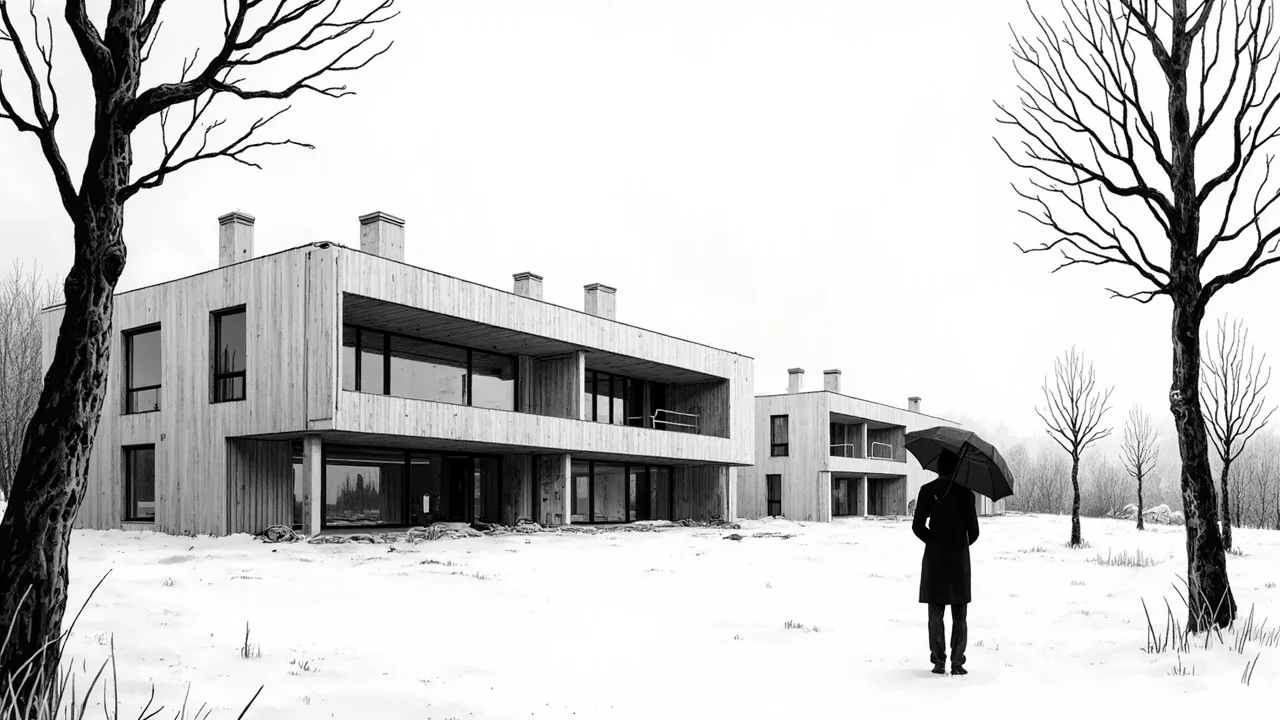
Denmark's ambitious conversion of a historic psychiatric hospital into luxury apartments has resulted in a 20 million kroner loss for its housing association. The Bindesbøll Byen project in Aarhus, a symbol of architectural preservation and modern living, stands with 50 of its 231 unique apartments empty two years after completion. This financial shortfall highlights a growing tension within Danish society between cultural heritage ambitions and the practical realities of the housing market.
Workers' Cooperative Housing Association (AAB) reports a 16 million kroner loss in rental income for 2025. The association anticipates a further 4.5 million kroner deficit in 2026. These figures represent a significant financial hit for a project celebrated for transforming a protected 19th-century hospital complex. Director Morten Homann acknowledges the loss but frames it as an expected cost of stewardship. "This was not something you do for the money," Homann explains, "but because you take on a responsibility to preserve something for posterity and create some completely unique homes."
A Calculated Risk in a Unique Setting
The project's challenges stem from its very uniqueness. Each apartment in the converted Bindesbøll complex is distinct, a result of adapting historic hospital wards into modern living spaces. This individuality, while a major selling point, has paradoxically slowed the rental process. Prospective tenants are taking longer to decide, viewing multiple options before committing. The two-bedroom apartments have proven particularly difficult to fill. Homann suggests the decision-making process is more deliberate because the homes are not standard units. "They are as unique as they are," he says. "We have 231 homes, and they are almost all different. Therefore, people will look at several of the homes before they decide."
This slower uptake was anticipated in the association's financial planning. The projected 2026 loss of 4.5 million kroner is actually lower than initial internal forecasts. The association entered the project with eyes open to the financial risks of operating a listed building. Maintenance and operational costs for a preserved historic structure are inherently higher than for new construction. These costs are directly reflected in the rental prices, creating the project's central economic dilemma.
The Premium Price of Preservation
The financial data reveals a stark premium. According to 2025 statistics from the Landbyggefonden, the average rent for public housing in Aarhus is 80.3 kroner per square meter per month. At Bindesbøll Byen, the price is 133 kroner per square meter. This represents a 66 percent premium over the city's average. In a Danish housing market where affordability is a persistent political issue, this price point automatically narrows the potential tenant pool. It targets a demographic seeking luxury and character, not just shelter.
Homann defends the pricing as a necessity, not a deterrent. "Because it is a listed building, it is simply more expensive to operate," he states. He points to sustained high interest in the complex as evidence that the market exists. The association's strategy appears to be one of long-term value over short-term profit. They are banking on the timeless appeal of the architecture and location, situated in the leafy Risskov district near the coast, to ensure full occupancy and stable returns over decades, not just years.
A Broader Reflection on Danish Housing Policy
This project sits at a complex intersection of Danish social policy. On one hand, Denmark has a strong tradition of preserving its architectural heritage and integrating historical structures into contemporary life. On the other, the country faces ongoing challenges in providing affordable, adequate housing, particularly in its major cities. The Bindesbøll Byen case study asks whether substantial public or cooperative resources should be allocated to high-end conversions when housing shortages persist.
The project was not developed under classic market logic. As a cooperative housing association, AAB's mandate blends social responsibility with financial sustainability. Their decision to absorb millions in losses for a prestige project could spark debate about the role of such associations. Should they focus exclusively on expanding the affordable housing stock, or do they have a cultural mandate to undertake complex, costly preservation projects that enrich the urban fabric?
The Human Element Behind the Numbers
Beyond the millions in lost rent, the story touches on a human desire for distinctive living. The apartments that have been rented suggest a demand for homes with history and soul, not just efficient square meters. The slow rental pace indicates that tenants are making careful, considered choices about a significant life investment. In a homogenizing global property market, Bindesbøll Byen offers something rare. The financial loss can be interpreted as the price of providing that rarity, of refusing to let a landmark become a demolition statistic.
The director's calm acceptance of the deficit is telling. It reflects a philosophical approach to property development that values legacy and quality over immediate balance sheets. This perspective is increasingly rare in a world driven by quarterly returns. It aligns with a Scandinavian design principle where longevity, craftsmanship, and integration with environment are paramount. The project is a bet that these values still command a premium, even if it takes time for the market to recognize it fully.
Looking Ahead: Patience as a Strategy
The immediate future for Bindesbøll Byen involves patience. The housing association is prepared to weather another year of losses as the complex finds its audience. The strategy relies on word-of-mouth, architectural tourism, and the inherent appeal of the finished homes to gradually fill the vacancies. There is no plan for significant price reductions or marketing overhauls. The belief is that the product itself—a piece of living history—will ultimately succeed.
This case will be watched closely by other municipalities and housing associations contemplating similar heritage conversions. It provides a real-world dataset on the costs and timelines of such projects. The 20 million kroner question is whether this model is replicable or if it remains a one-off passion project. Can the Danish welfare model, famed for its pragmatism, comfortably accommodate ventures where financial loss is an accepted part of preserving cultural capital? The empty, expensive apartments in Risskov are a physical manifestation of that unresolved tension between utility and beauty, between social need and architectural ambition.