
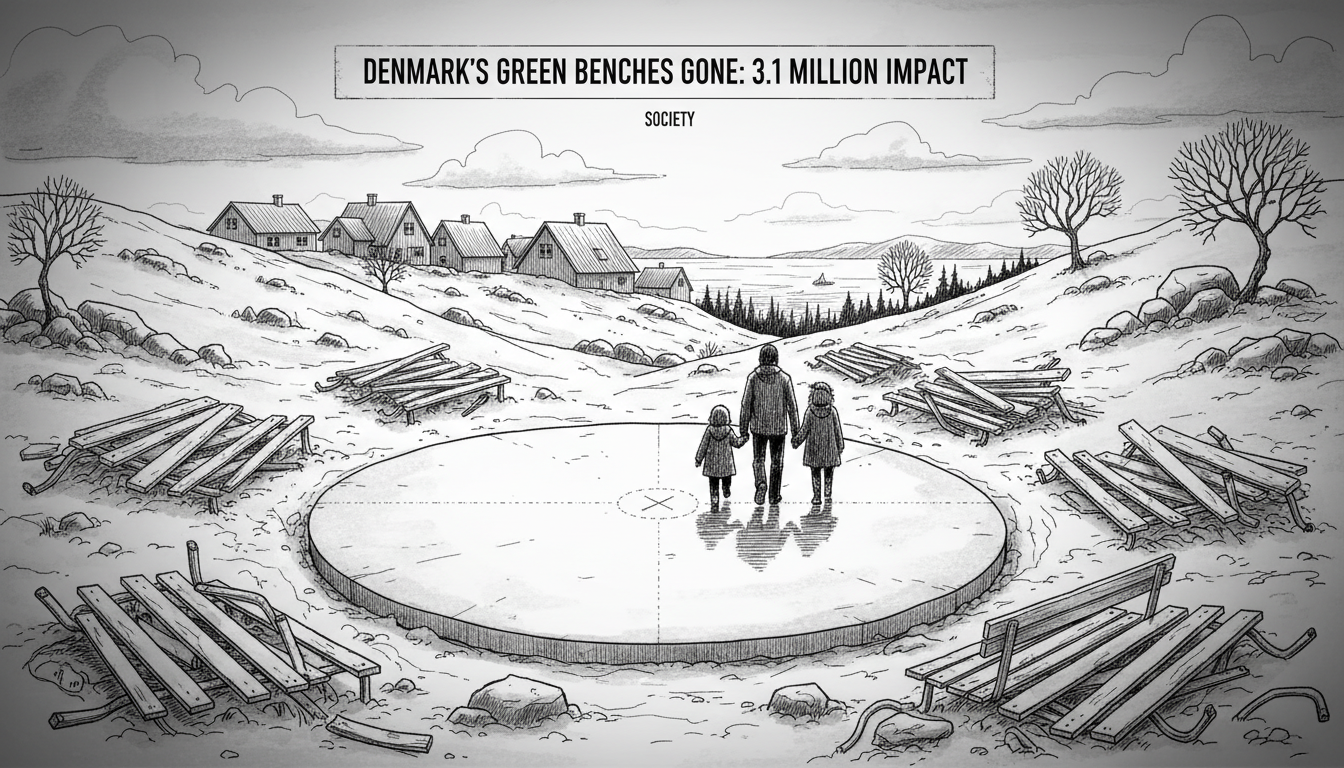
Copenhagen’s urban planning ambitions to become the world's first carbon-neutral capital by 2025 are reshaping its very streets. In the historic center, along Ny Vestergade, a quiet but telling reversal is underway. The iconic green benches, once bolted into the asphalt where cars used to park, are being removed. This small change in a single street reveals the larger, complex negotiation happening across Denmark between visionary policy and the daily rhythms of city life.
For years, Copenhagen has systematically reclaimed public space from automobiles. The strategy converts parking spots into plazas, wider sidewalks, and bicycle lanes. The installation of benches along Ny Vestergade was a physical symbol of this priority shift. It placed people and lingering conversation above vehicle storage in the shadow of the National Museum and the Parliament. Now, their removal asks a poignant question about who these changes ultimately serve.
From Parking Spots to People Places
The transformation of Ny Vestergade followed a clear pattern in Copenhagen's recent development. City planners identified underused street space dedicated to stationary cars. They replaced it with durable, simple green benches, a design classic in Danish public furniture. This created a new linear pocket park, encouraging residents and tourists to sit and engage with the historic cityscape. The move aligned perfectly with documented goals to boost walkability and reduce carbon emissions from private transport.
Statistics underscore the context. Copenhagen, named the world's safest city in 2023 by the Economist Intelligence Unit, often achieves this through design that prioritizes human-scale environments. The carbon-neutral 2025 target is a driving force behind reallocating space. Yet, the removal of these benches suggests that even well-intentioned designs must pass a practical test of function and public sentiment.
The Friction of Urban Innovation
Urban planning experts note that such projects exist within a web of competing interests. "Creating a more livable city is not a linear process," says Lars Gemzøe, a renowned Danish urban designer. "It involves experimentation. Sometimes a bench is not just a bench. It can be a barrier for delivery vehicles, a obstacle for street cleaning, or simply placed where people do not naturally gather. The key is municipal agility—the ability to adapt based on observation and feedback."
The situation on Ny Vestergade highlights this need for ongoing assessment. Initial plans may have envisioned bustling social activity, but the reality might have been different. Perhaps the benches were underused, or they inadvertently created a new problem for local businesses needing access. The decision to remove them is not necessarily a failure of the broader policy, but rather a calibration of its application. It reflects the continuous dialogue between a top-down sustainability vision and the granular reality of street-level use.
Listening to the City's Rhythm
This incident speaks to a core challenge in Danish social policy and urban integration: implementation. Successful integration into Danish society often hinges on accessible, welcoming public spaces where community can form organically. These benches were meant to be infrastructure for that social interaction. Their adjustment shows Copenhagen's municipality is monitoring not just the installation of amenities, but their actual role in the daily lives of the city's 3.1 million metro area inhabitants.
Local business owners and residents often have the most nuanced understanding of a street's ecosystem. Their feedback is critical. Was pedestrian flow hampered? Did the loss of parking disproportionately affect certain visitors or services? The removal of the benches indicates this feedback loop is active. It suggests the city is willing to iterate, a sign of pragmatic governance alongside ambitious goal-setting.
The Balance of Access and Ambition
Copenhagen's journey toward carbon neutrality and enhanced livability is a carefully managed evolution. Every removed parking space and every installed bench is a small battle in a larger campaign to redefine urban priorities. The story of the benches on Ny Vestergade is a microcosm of this campaign. It demonstrates that the path to a greener, more people-centric city is paved with both bold actions and necessary corrections.
The ultimate goal remains a city where public space fosters community, sustainability, and accessibility. Sometimes that means installing benches to invite people to stay. Sometimes it means removing them to solve an unforeseen issue or improve the design. The constant is the commitment to the principle that streets are for more than cars. This flexible, learning-by-doing approach may well be the key to achieving Copenhagen's world-leading ambitions, ensuring the city's transformation benefits the diverse needs of all who use it.
As the last bench is lifted from the asphalt on Ny Vestergade, the space returns to a state of potential. What comes next will be instructive. Will it be a new street furniture layout, a bike rack, or simply open space? The next chapter for this patch of asphalt will offer another clue in understanding how a visionary city learns, adapts, and builds its future in real time.