
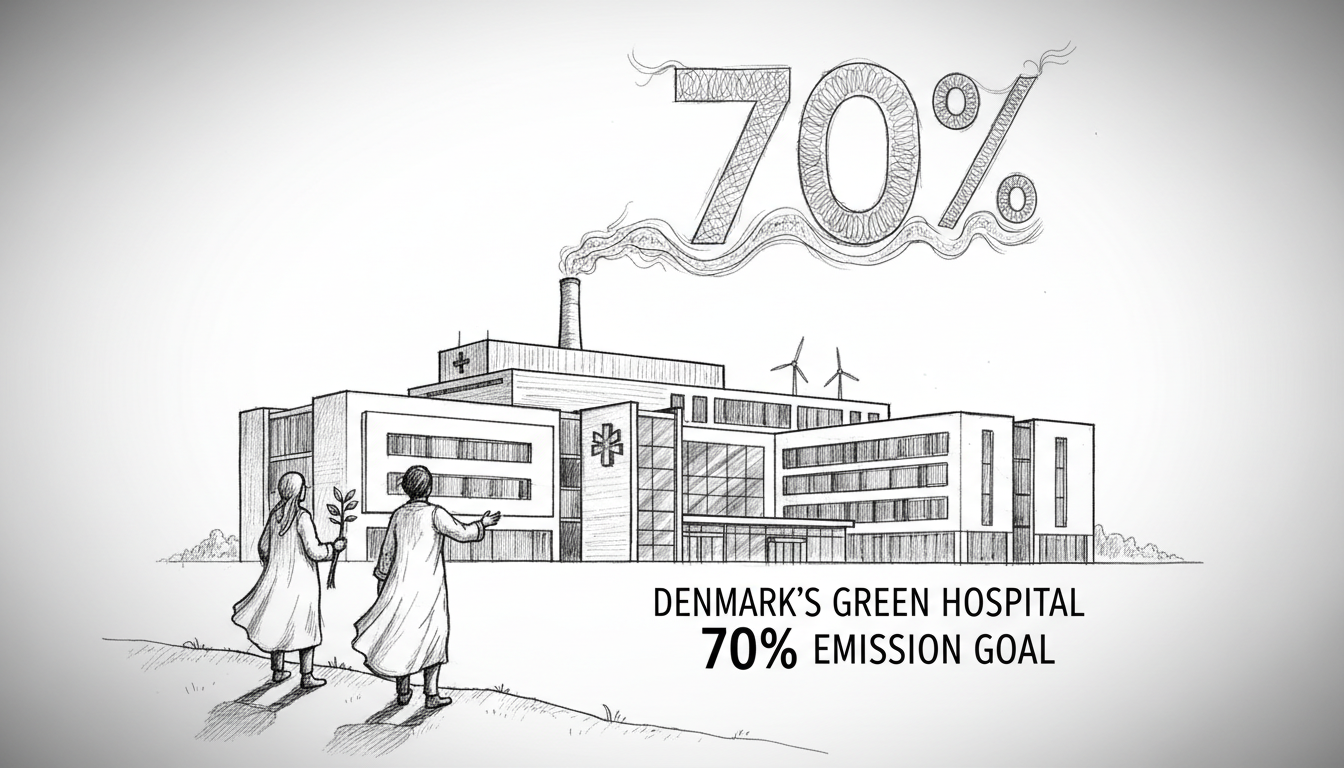
Denmark sustainable architecture advances with Bispebjerg Hospital's new 'Fælleshuset', an education center constructed from recycled bricks and designed to shelter birds and bees. This modern building stands in stark contrast to the hospital's historic 1913 structure, yet it pays homage through its thoughtful integration. The project highlights Copenhagen's push to merge urban development with environmental stewardship, targeting a national reduction in greenhouse gas emissions.
A Modern Nod to History
Bispebjerg Hospital's original building has been a Copenhagen landmark for over a century, known for its distinctive architectural style. The new Fælleshuset, or Community House, deliberately echoes this legacy while embracing contemporary eco-principles. Its facade uses reclaimed stones, reducing waste and conserving resources. Large circular windows not only provide natural light but also create a visual dialogue with the older hospital's design. This approach represents a growing trend in Danish construction where heritage meets innovation.
The building's thin outer wall includes specific habitats for starlings, swifts, and bees. These features promote local biodiversity, a key concern in urban areas facing habitat loss. By incorporating wildlife niches, the design moves beyond human-centric architecture to support ecosystem health. Such details reflect Denmark's broader commitment to green urban planning, where buildings serve multiple functions for people and nature.
The Sustainability Blueprint
Construction and operation of buildings account for 30 to 40 percent of global energy-related CO2 emissions. Fælleshuset tackles this problem head-on with a focus on low-carbon materials and energy efficiency. Recycled bricks form the primary exterior, cutting down on manufacturing emissions. The design prioritizes natural ventilation and lighting to minimize energy use. These choices align with Denmark's national target to slash greenhouse gas emissions by 70 percent by 2030 compared to 1990 levels.
Danish municipalities often mandate sustainable standards in public projects, and Copenhagen leads with ambitious climate plans. This hospital extension exemplifies how public institutions can model environmental responsibility. The building's emphasis on 'natural' materials like stone and wood reduces reliance on synthetic products. It also aims for significant CO2 savings over its lifecycle, setting a benchmark for future healthcare facilities in Scandinavia.
Expert Insights on Green Design
Architectural experts describe Fælleshuset as a case study in biophilic design, which integrates natural elements to enhance well-being. 'Integrating nature into built environments can lower stress and improve outcomes for patients and staff,' says a Copenhagen-based architect specializing in healthcare spaces. The inclusion of animal habitats directly in the walls is a practical application of this philosophy. It creates a living building that adapts to seasonal changes and supports local species.
Sustainability analysts note that using recycled materials is crucial for reducing the construction industry's carbon footprint. 'Every ton of recycled brick saves approximately 0.8 tons of CO2 compared to new production,' an analyst from a Danish environmental institute explains. This data underscores the project's tangible impact. Moreover, the building's compact form and efficient layout further decrease energy demands, contributing to Denmark's emission goals.
Community and Healthcare Benefits
Fælleshuset serves as an education center for hospital staff, fostering a culture of sustainability within healthcare. Training programs here will cover green practices and patient care innovations. The design promotes social interaction through shared spaces, aligning with Danish welfare principles of community and collaboration. Natural light and greenery in interior areas are shown to boost mood and productivity, benefiting both learners and visitors.
From a social policy perspective, such investments in public infrastructure reflect Denmark's integration of environmental and health priorities. The building acts as a social hub, potentially hosting community events to engage local residents. This multifunctionality is typical of Danish social centers, which aim to strengthen communal ties. For a neighborhood like Bispebjerg, which has a diverse population, inclusive spaces can support social cohesion.
Denmark's Broader Environmental Agenda
Denmark's building sector is undergoing a green transformation driven by strict regulations and public demand. Copenhagen's municipal policies often exceed national standards, requiring new constructions to incorporate biodiversity features. Fælleshuset fits into this framework, demonstrating how hospitals can lead by example. The project received funding and support from local authorities, highlighting the role of government in advancing sustainable architecture.
Statistics from the Danish Energy Agency show that energy consumption in buildings has dropped by 20 percent since 1990 due to efficiency measures. Initiatives like this hospital extension build on that progress. Experts argue that scaling such designs across Scandinavia could significantly cut regional emissions. However, challenges remain, including higher upfront costs and the need for skilled labor in green construction.
Looking Ahead
Bispebjerg Hospital's Fælleshuset sets a precedent for future healthcare projects in Denmark and beyond. Its combination of historical respect and environmental innovation offers a template for aging urban institutions. As climate targets tighten, more buildings must adopt similar principles. The question is whether other sectors will follow healthcare's lead in prioritizing both human and planetary health.
Danish society continues to balance tradition with change, and this building embodies that dynamic. It shows how sustainable architecture can be both functional and inspiring. With Copenhagen aiming to be carbon-neutral by 2025, projects like this are critical stepping stones. The ultimate test will be in replicating this success across other hospitals and public spaces, ensuring that green design becomes the norm, not the exception.