
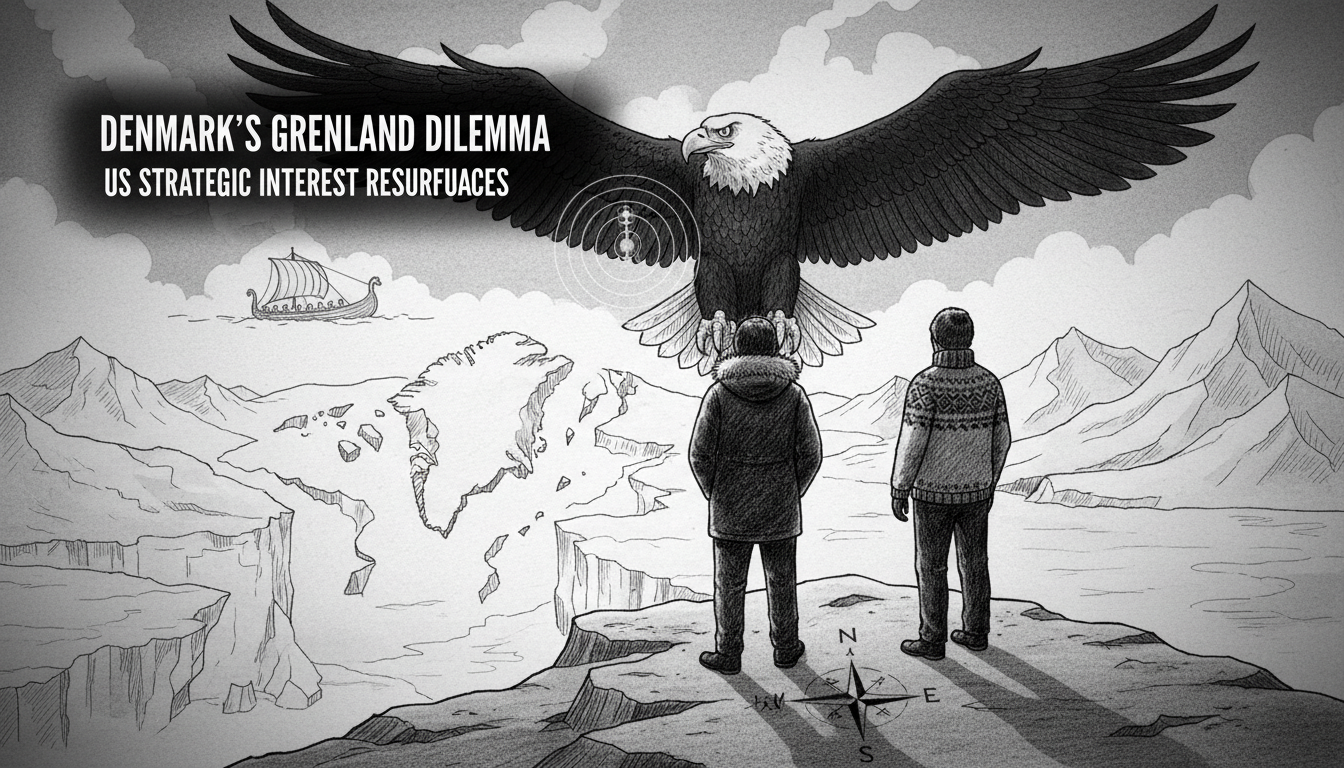
Greenland’s strategic importance to the United States has resurfaced as a major diplomatic topic for Denmark, reviving a complex historical negotiation. The recent political discussion around potential acquisition, while startling to many, is simply the latest chapter in a 170-year story of American geopolitical calculation. This enduring interest places Copenhagen in a delicate position, balancing its NATO alliance with the US against its constitutional duty to Greenland, a self-governing territory. For Danish society, the episode highlights the ongoing challenge of navigating Greenland’s evolving relationship with both Copenhagen and global powers.
A Century of American Ambition
The United States' formal interest in Greenland dates to the 19th century, rooted in its location between North America and Europe. This strategic calculus became urgent during World War II when Denmark was occupied by Nazi Germany. The US preemptively established protective forces on the island, a move that fundamentally altered its status. After the war, in 1946, the Truman administration made a concrete offer to purchase Greenland from Denmark for $100 million in gold. The Danish government refused, but the episode cemented Greenland’s role in American defense planning. The subsequent Cold War transformed this interest into a permanent military presence. The Thule Air Base, now called Pituffik Space Base, became a cornerstone of US nuclear detection and space surveillance networks. Its location in northern Greenland, just 1,500 kilometers from the North Pole, is irreplaceable for monitoring potential missile launches across the Arctic.
The Geopolitical Chessboard Today
Modern analysts view Greenland through multiple lenses: military strategy, climate change, and resource economics. As polar ice recedes, new shipping routes and access to mineral deposits are becoming feasible. Greenland is estimated to hold significant deposits of rare earth elements, crucial for modern electronics and green technology. This potential resource wealth intersects with its enduring military value. “Greenland is a strategic piece of real estate in the changing Arctic,” says a Copenhagen-based foreign policy analyst who requested anonymity due to the topic's sensitivity. “For the US, it’s about maintaining a strategic advantage near Russia’s northern flank and securing early-warning capabilities. For Denmark, it’s about managing an alliance obligation while respecting Greenlandic autonomy.” This creates a unique policy triangle involving Nuuk, Copenhagen, and Washington.
The Autonomy Factor and Danish Responsibility
Any discussion of Greenland’s future must acknowledge its political status. Greenland is an autonomous territory within the Kingdom of Denmark. It governs its own internal affairs, including resource management, while Denmark retains control over foreign, security, and defense policy. This division of responsibility is central to the current dilemma. The Greenlandic government in Nuuk has repeatedly and firmly stated it is not for sale and is focused on achieving full independence. Its path to sovereignty is tied to economic self-sufficiency, often linked to extracting its natural resources. Danish officials must therefore navigate a narrow path. They must uphold the US-Denmark defense alliance, which includes the Thule base agreement, while fully supporting Greenland’s right to self-determination. A blunt acquisition proposal ignores this layered sovereignty and risks damaging trust. “The relationship is based on partnership, not ownership,” a Greenlandic political leader said in a recent interview. Danish social policy has long emphasized supporting Greenland’s development within the kingdom, making a transactional proposal appear anachronistic.
Analysis: Implications for Danish Foreign Policy
The renewed talk of purchase, though not an official policy, forces a reckoning within Denmark’s foreign ministry. It underscores how Greenland’s significance extends far beyond Danish society news and into high-stakes global strategy. The episode has likely spurred confidential reviews of all existing agreements concerning Greenland and US activities there. Experts suggest Denmark’s response will focus on reinforcing the existing framework of cooperation. This means affirming the critical role of the Thule base for NATO security while actively investing in Greenland’s economic and social development to strengthen the internal bond. The alternative—a Greenland that feels economically cornered—could accelerate moves toward independence pursued with other international partners, potentially outside the Western alliance. For Denmark’s integration model, it’s a stark reminder that its most significant “integration” project is with Greenland itself, a relationship continually being defined and renegotiated.
Looking to a Melting Future
The fascination with Greenland will only intensify as the Arctic transforms. The fundamental question is not who owns the island, but how its people, its governing authorities in Nuuk and Copenhagen, and its strategic partners manage intersecting interests. Climate change, the driver of new accessibility, is also an existential threat to Greenland’s environment and traditional ways of life. Future negotiations will likely center on joint ventures for resource extraction, environmental protections, and enhanced security cooperation, not outright transfer of sovereignty. For Denmark, the task is to be a steadfast and respectful partner to Greenland while managing its oldest and most powerful ally. The ultimate solution will not be found in a one-time purchase, but in continuous, nuanced diplomacy that acknowledges Greenland is not merely a strategic asset, but a nation determining its own future.