
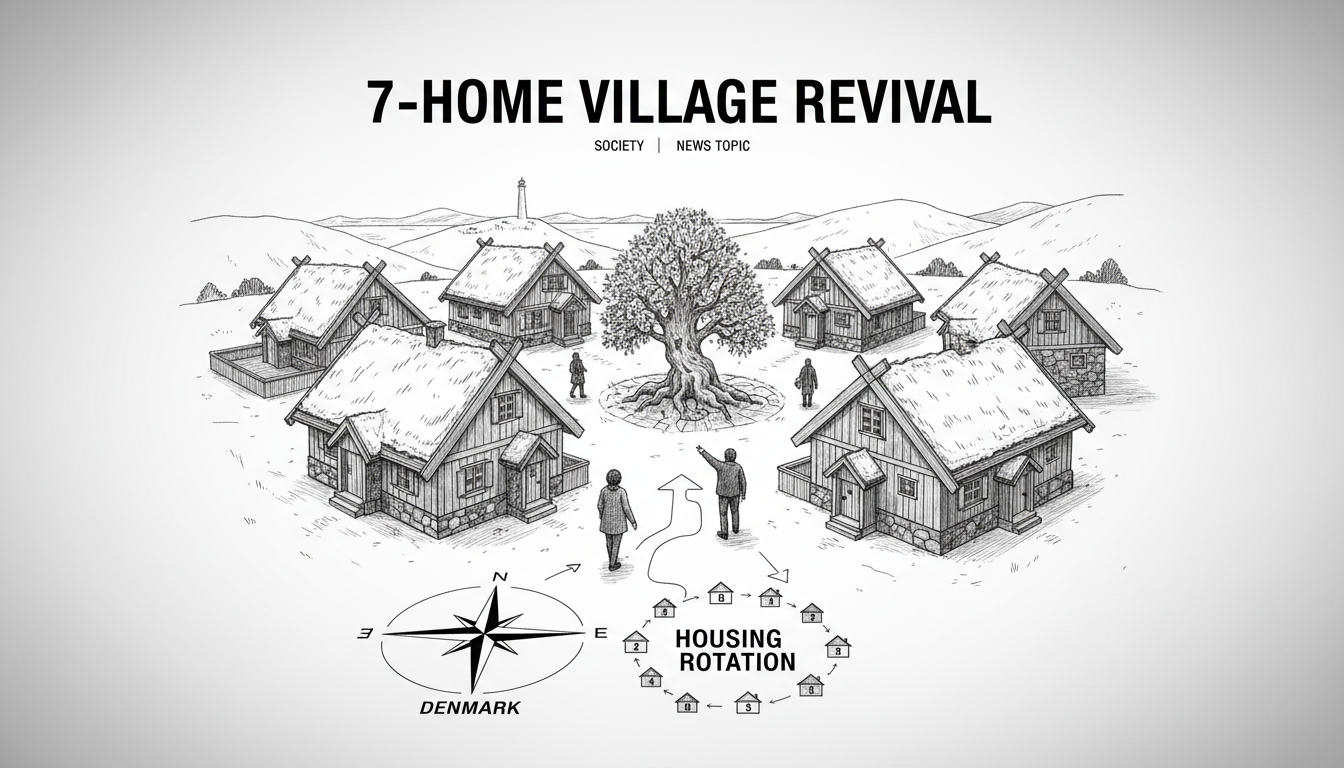
Denmark's rural housing crisis affects 20% of the population, with villages emptying as services vanish. A housing rotation scheme now swaps senior-owned homes for rental apartments, aiming to reverse depopulation by keeping elders local and attracting young families.
The Rural Exodus: A Demographic Time Bomb
Approximately 20% of Danes live in rural areas, a figure that masks severe decline. Population density outside cities falls yearly, straining infrastructure and local economies. Ringkøbing-Skjern, Denmark's largest municipality by area, epitomizes this struggle. Homes stand empty while young people leave for urban jobs, creating a cycle of decay. 'It's a shame,' says Steffen Damsgaard, chairman of Landdistrikternes Fællesråd (The National Association of Rural Districts). 'We have people who want to move in, but no one wants to build.'
This exodus hits business hard. Local shops close, agricultural trade suffers, and tax revenues drop. For Copenhagen-based policymakers, revitalizing these areas is critical to national economic balance. The Øresund region's boom contrasts sharply with village stagnation, prompting urgent action.
Astrup's Blueprint: Success in Seven Homes
In Astrup, a village within Ringkøbing-Skjern, housing rotation works. Seven new rental apartments were built for elderly residents, who moved from their large parcel houses. Younger families then purchased those homes, injecting new life into the community. This swap allows seniors to stay in their network without maintenance burdens, while children fill local schools.
'It gives a rotation in the village,' Damsgaard explains. 'Seniors can remain where they've lived for years.' Surveys by his organization and Forenet Kredit confirm that older homeowners prefer downsizing locally if options exist. Without them, they either migrate to cities or cling to oversized properties, blocking family influx.
Astrup's model shows economic sense. Construction jobs emerged, property values stabilized, and community services gained renewed demand. For business, this represents a micro-stimulus: every moved family spends locally, supporting trades from plumbing to retail.
The Investment Drought: Capital Hesitates
Despite Astrup's win, investment in rural rental housing lags. Developers shy from villages under 2,000 inhabitants, citing low returns and high risks. This creates a catch-22: without attractive housing, rotation fails, deepening depopulation. Damsgaard urges a state-funded pool for public housing in these areas. 'We need to unlock that lock,' he says, emphasizing that private capital alone won't suffice.
From a trade perspective, this gap misses opportunities. Danish construction firms could find new markets, and material exports might rise if projects scale. Yet, investor appetite remains low, even with government incentives like support for senior communities and commercial property conversions. Social- og Boligminister Sophie Hæstorp Andersen acknowledges the issue. 'I agree we must develop our villages,' she stated. Her initiatives include better financing for public housing, but specifics on funding pools are pending.
Economic Ripples: Beyond Brick and Mortar
Housing rotation isn't just about homes; it's an economic lever. Successful villages bolster Denmark's agricultural exports by maintaining rural workforces. They also ease pressure on Copenhagen's overheated housing market, potentially cooling price hikes that affect labor mobility. 'Every family that moves to a village represents trade stability,' notes a Copenhagen Business School analyst. 'Local economies revive, supporting dairy, renewable energy, and tourism sectors.'
For seniors, downsizing frees capital, often reinvested locally or in pensions, stimulating financial markets. Young families gain affordable space, boosting birth rates and long-term consumer spending. In Astrup, this dynamic already shows: school enrollments rose, and a shuttered shop reopened. Nationally, such trends could slow urban congestion, benefiting productivity across the Øresund region.
Policy Pathways: Government Steps In
Minister Andersen's response highlights shifting priorities. Her recent proposals include state backing for senior co-housing and repurposing empty commercial buildings. These align with broader EU rural development funds, but Denmark's approach remains distinct. By targeting villages with under 2,000 residents, the government aims for precision—a lesson from past blanket policies that failed.
Yet, challenges persist. Zoning laws, construction costs, and bureaucratic hurdles delay projects. Business leaders call for faster permitting and tax breaks to attract investors. 'Copenhagen's districts thrive because of flexible rules,' says a real estate CEO. 'Rural areas need similar agility.'
Experts stress multi-faceted solutions. Housing rotation must pair with job creation, digital infrastructure, and transport links. Otherwise, new families might leave again. Denmark's history of rural initiatives offers caution: success requires sustained commitment, not one-off builds.
Future Forecast: Scaling the Model
Can Astrup's seven-home success scale nationwide? Possibly, but with caveats. Each village needs tailored plans, considering demographics and economic base. Pilot projects in other regions are planned, with outcomes closely watched by Nordic neighbors facing similar depopulation.
Investment trends will decide. If state pools materialize, construction could boom, creating jobs and boosting GDP. If not, rural decline may accelerate, affecting national trade balances. Denmark's renewable energy sector, often rural-based, also has stakes—stable communities support wind and solar projects critical for export.
For now, housing rotation offers hope. It's a pragmatic fix in a complex puzzle, blending social care with economic savvy. As Damsgaard puts it, 'Rotation keeps hearts and homes full.' The question remains: will Denmark fund its villages back to life?