
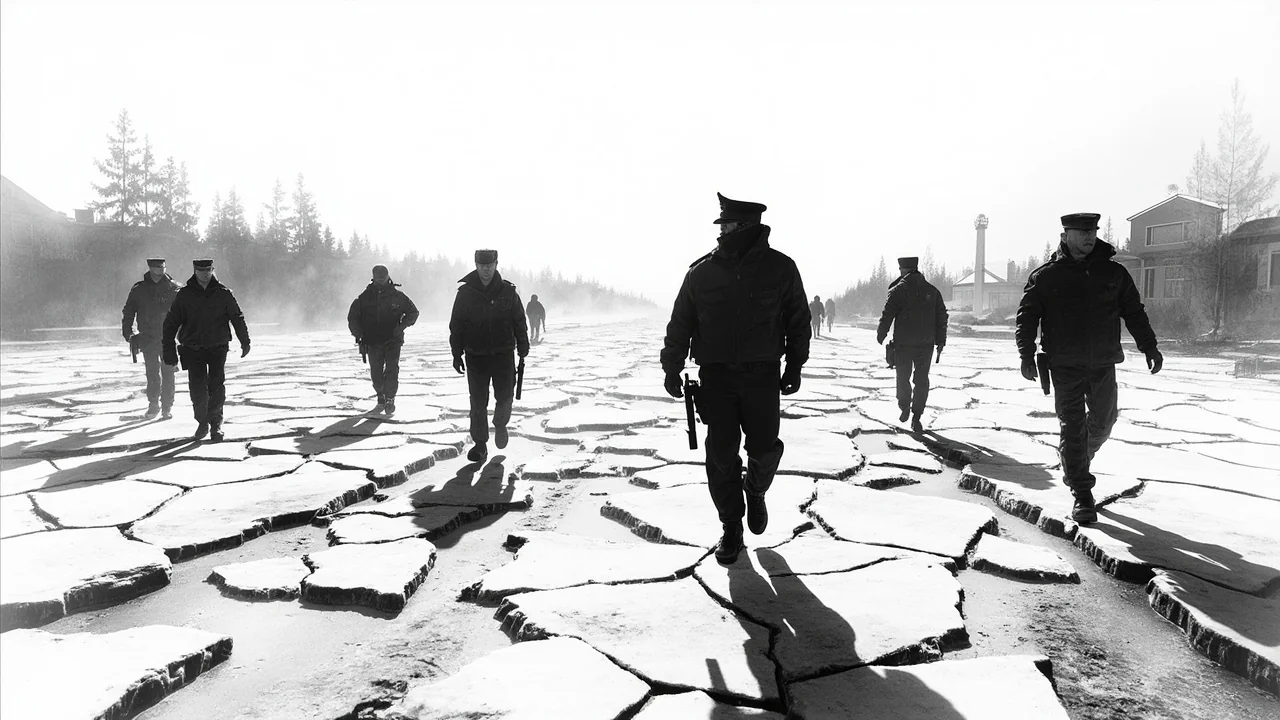
Danish police received over fifty reports on Sunday about people venturing onto unsafe ice at Copenhagen's lakes and other urban waterways. The warnings came despite clear municipal rules and the tragic history of winter drownings. This annual ritual of testing thin ice reveals a complex clash between human nature, public safety systems, and Denmark's relationship with its fleeting winter landscape.
Vagtchef Anette Ostenfeldt from Copenhagen Police confirmed the high volume of calls. "We got the same reports from Utterslev Mose and Kastellet," she said. "We strongly advise against it because the ice has not been declared safe yet. It is foolish, and it is dangerous." Her frustration was palpable, underscored by a clear desire to avoid rescue missions. "Fortunately, there are no reports yet of anyone falling through. And we still want to avoid having to go fish people out."
A System of Local Control
The responsibility for declaring ice safe lies entirely with Denmark's 98 municipalities. This decentralized system means rules and thresholds vary significantly from one town to the next. In Copenhagen, the ice must be between 16 and 18 centimeters thick before the city gives the official green light. Other municipalities use a minimum requirement of 13 centimeters. There is no national standard, a fact that can confuse citizens who move between areas or hear different advice.
This local approach reflects the Danish welfare model's emphasis on municipal autonomy. Each council assesses its own ponds, lakes, and coastal inlets based on local knowledge, salinity, and current flow. However, it creates a patchwork of regulations that the national police force must then enforce. The police message is universal: if the municipality hasn't declared it safe, it isn't safe. Yet, as Sunday proved, this official caution is often ignored.
The Allure of the Frozen City
The past week has seen proper winter weather grip Denmark, blanketing the country in snow. The night to Sunday was the coldest in five years, with temperatures plummeting to minus 18 degrees Celsius in some areas, according to the Danish Meteorological Institute (DMI). This sudden, picturesque freeze transforms urban spaces. Copenhagen's Søerne, a series of five rectangular lakes bordering the inner city, become a shimmering white plain. The temptation is immediate, especially for families and young people.
"There is a deep-seated, almost romantic, connection to winter here," says Lars Jensen, a social anthropologist who has studied Nordic seasonal behaviors. "For a few days, the city is remade. The ice offers a new playground, a shortcut, a novelty. The official warnings can feel like they are denying people access to a fleeting part of their own environment." He notes this is particularly acute in cities, where natural ice is rare. The behavior is less about recklessness and more about seizing a temporary opportunity, though the consequences can be fatal.
The Grim Statistics Behind the Warnings
Police and rescue services dread these periods of early or late freezing. Every year, Danes drown after falling through ice. According to the Danish Lifesaving Society, an average of 20-30 people die from drowning annually in Denmark, with a significant portion occurring during winter months in ice-related incidents. Many victims are children or teenagers. The ice near shores, affected by ground warmth, or around inlets and outlets with moving water, is often deceptively thin.
Rescue operations are high-risk. "Going out after someone who has fallen through is one of the most dangerous things we do," a Copenhagen Fire Brigade officer explained on background. "The ice that failed for them will fail for us. We have to use boats, ladders, and special suits, and every second counts due to cold shock and hypothermia." The economic cost of these operations is substantial, diverting emergency resources from other calls.
Education Versus Enforcement
Municipalities and organizations like the Lifesaving Society run annual safety campaigns. The core advice is simple: never go on the ice unless it has been officially declared safe. They teach that clear, blue ice is strongest, and that snow-covered ice is insulating and often weaker. Yet, the message competes with social media images of people skating on seemingly perfect natural ice, often in Sweden or Norway where conditions are more consistently stable.
Enforcement is challenging. Police can fine individuals for trespassing on unsafe municipal ice, but this is rarely practical. The goal is prevention through visibility and persuasion. "We patrol these areas and tell people to get off," says Ostenfeldt. "But we cannot be everywhere at once. Ultimately, it comes down to personal responsibility." This emphasis on individual accountability is a cornerstone of Danish social policy, but it meets its limit when faced with a collective, seasonal temptation.
A Cultural Paradox in the Welfare State
This recurring scenario presents a subtle paradox. Denmark is a society built on rules, collective agreement, and a deep trust in official institutions—the very foundation of its successful welfare model. Citizens generally follow complex social and tax codes for the common good. Yet, here is a clear, simple safety rule that a significant number of people choose to break, testing the limits of the state's protective role.
It highlights a tension between the state as a guardian and the individual's desire for spontaneous experience. The municipality, in this case, acts as the ultimate safety inspector, a role it plays in everything from building codes to restaurant hygiene. But you cannot easily inspect a city's impulse to play on a frozen lake after a long, dark autumn.
Looking Ahead to a Colder Future
Climate change adds a new layer of uncertainty. Winters are becoming more volatile, with periods of intense cold followed by rapid thaws. This makes ice even more unstable and unpredictable. The DMI notes that while extreme cold snaps still occur, the overall trend is toward milder, wetter winters. This could make safe, thick ice an even rarer urban phenomenon, potentially increasing its allure and the dangerous attempts to access it.
The scene at Søerne on Sunday is a Danish winter tradition in its own right—the police warnings, the daring individuals, the collective holding of breath. It is a small, annual drama about risk, rules, and the human desire to connect with nature, even in the heart of the capital. As the deep freeze continues, the authorities hope the message finally sinks in before the sound of cracking ice is followed by screams, and a preventable tragedy mars the winter's beauty.
Will the appeal of the frozen lakes always outweigh the stark warnings? As temperatures fluctuate, this question remains, quite literally, on thin ice.