
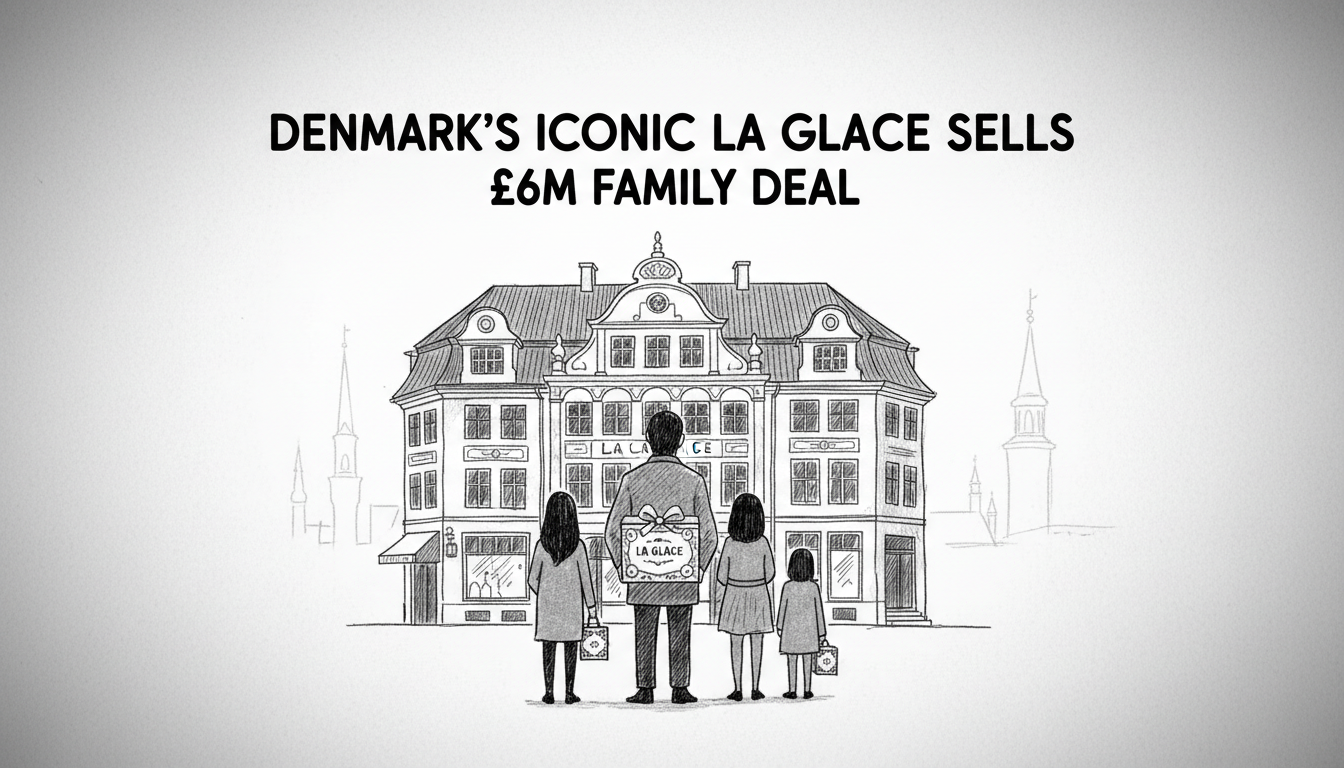
Denmark's most iconic pastry shop, La Glace, has been sold in a multi-million kroner property deal that keeps the 154-year-old business firmly in family hands. The property at Skindergade 43 in central Copenhagen transferred ownership for 40 million Danish kroner (approximately $5.8 million USD) according to official records. The sale concludes founder Marianne Stagetorn Kolos's more than thirty-year ownership, transferring the asset to a company owned by her daughters, Maria and Laura Stagetorn Kolos, who assumed daily operations last October.
This transaction is not merely a real estate deal but a carefully orchestrated succession plan for a cornerstone of Danish cultural and culinary heritage. In a city where trendy cafes come and go, La Glace represents continuity, tradition, and a specific type of Copenhagen elegance. The sale secures its future while honoring its past, a complex recipe that many family-owned businesses struggle to perfect.
A Sweet Handover in Skindergade
The mechanics of the deal are straightforward in legal terms but rich in familial significance. The commercial property housing the confectionery was sold by Marianne Stagetorn Kolos to a company wholly owned by her two daughters. This structure provides a clear financial framework for the generational transition that began operationally last fall.
"This was always the plan, to ensure La Glace could continue for another 150 years," a source close to the family explained. The daughters have been involved in the business for years, learning the intricate craft and operational management under their mother's guidance. The October takeover of daily management served as a probationary period, ensuring a smooth transition before the final property transfer was completed.
For Copenhagen's business community, the sale at 40 million DKK reflects the immense value locked in prime real estate within the historic city center. Skindergade, located just off the main pedestrian street Strøget, is in the heart of the capital's retail and tourism district. Property values here have remained strong, supported by consistent high-foot traffic and Copenhagen's enduring appeal as a destination.
The Icing on a 154-Year-Old Cake
To understand the weight of this transaction, one must appreciate what La Glace represents. Founded in 1870 by Nicolaus Henningsen, it is Copenhagen's oldest confectionery. It has survived wars, economic depressions, and countless shifts in culinary fashion by adhering to its core philosophy: exceptional quality, traditional methods, and an unwavering commitment to the experience.
Walking into La Glace is a step back in time. The interior, with its wood paneling, stained glass, and historic portraits, has changed little over the decades. Its cake displays are legendary, featuring classics like the "Sports Cake"—a layered confection of whipped cream, chocolate, and nougat that has been on the menu since 1891. It is a place where generations of Danes have celebrated birthdays, confirmations, and anniversaries. For tourists, it is a mandatory pilgrimage site, a living museum of Danish hygge and culinary craftsmanship.
Marianne Stagetorn Kolos, who purchased the business in the early 1990s, is widely credited with safeguarding this legacy while ensuring commercial viability. She maintained the traditional recipes and atmosphere while navigating the challenges of modern retail, supply chains, and staffing. Her tenure was marked by a deep respect for history and a sharp business acumen.
The Challenging Recipe of Succession
This sale provides a textbook case study in successful family business succession, a process that often fails. According to industry analysts, only about 30% of family-owned businesses survive into the second generation, and far fewer make it to the third. The challenges are manifold: navigating family dynamics, fair valuation, tax implications, and preparing the next generation for leadership.
"What we see with La Glace is a best-practice scenario," notes Karen Møller, a Copenhagen-based consultant specializing in family enterprises. "The succession was planned well in advance. The next generation received extensive training within the business. The transfer of operational control preceded the legal and financial transfer, allowing for a period of adjustment. And crucially, the business stays within the family, preserving its soul."
Møller points out that many iconic Danish brands have been lost to investment funds or large corporations after family successors were not ready or willing to take over. The fact that Maria and Laura Stagetorn Kolos have actively chosen this path speaks to the strength of the brand and their personal commitment. The use of a dedicated company for the purchase is also a standard, prudent move for asset protection and clear financial management.
A Property Deal in a Pressured Market
From a pure real estate perspective, the 40 million DKK price tag offers a glimpse into Copenhagen's commercial property landscape. The building at Skindergade 43 is not large, but its location is prime. It sits in a coveted zone where retail, hospitality, and history intersect, guaranteeing high visibility and customer flow.
While residential prices in parts of Denmark have seen corrections, prime commercial real estate in central Copenhagen has maintained relative stability. This is driven by limited supply and consistent demand from both established businesses and international brands seeking a flagship presence. A heritage asset like La Glace, with its built-in customer base and global recognition, carries a premium beyond its square meterage.
"You're not just buying bricks and mortar here," says real estate analyst Peter Vestergaard. "You are buying over a century of brand equity, customer loyalty, and a unique position in Danish cultural history. That intangible value is significant and is clearly reflected in the transaction price. It's a resilient asset."
The Future of a Copenhagen Institution
For customers, the change will likely be invisible. The cakes will be the same. The wait for a table in the ornate upstairs salon on a Saturday afternoon will be just as long. The sisters have publicly committed to preserving the traditions that define La Glace. The challenge for the new generation will be balancing this reverence for tradition with the inevitable need for evolution.
They will face modern pressures their predecessors did not: intense competition from a booming Copenhagen cafe scene, soaring ingredient and energy costs, shifting consumer habits, and the logistical demands of a workforce in a tight labor market. The question is whether they can gently modernize operations—perhaps in supply chain, digital presence, or sustainability practices—without diluting the essence that customers cherish.
There is also opportunity. The global reputation of Nordic cuisine has never been higher. La Glace has the potential to expand its reach carefully, perhaps through curated collaborations or premium product lines, while keeping its physical heart unchanged on Skindergade.
A Lesson in Legacy
The sale of La Glace is ultimately a story about preserving identity in a world of constant change. In a neighborhood where international chain stores are ever-present, La Glace stands as an independent, family-run holdout. Its value is measured not just in kroner but in its role as a communal touchstone.
The successful intra-family transfer offers a model for other longstanding Danish businesses, from small workshops to larger manufacturers, facing the succession dilemma. It demonstrates that with clear planning, mutual respect, and a shared vision, legacy can be both an asset and a guiding principle for the future.
As Marianne Stagetorn Kolos passes the literal keys to her daughters, she secures more than a financial future. She ensures that the smell of freshly baked cake, the clatter of porcelain, and the particular ambiance of a Copenhagen afternoon at La Glace will continue to be a part of the city's rhythm for decades to come. In an era of disposable trends, that continuity is perhaps the most valuable ingredient of all.