
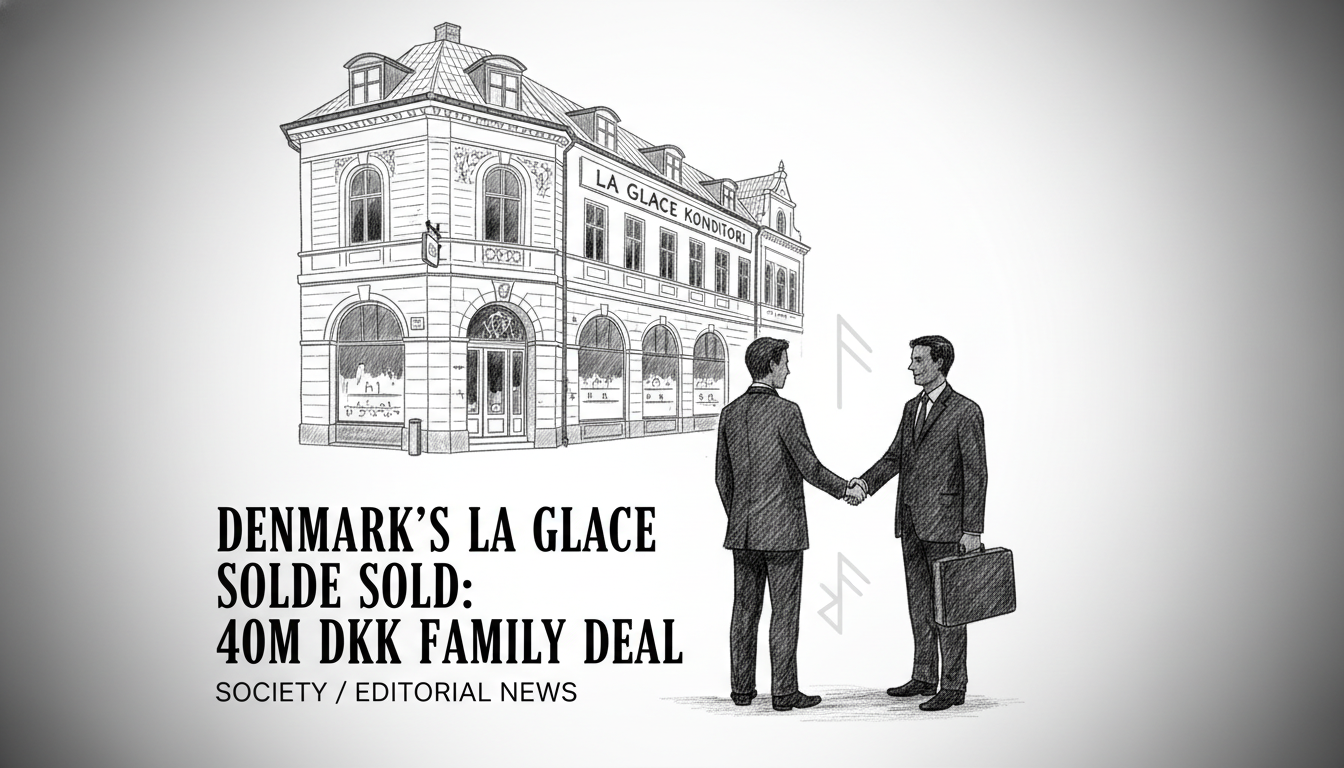
Denmark's most iconic confectionery, La Glace in Copenhagen, has been sold in a 40 million kroner property deal that keeps the 154-year-old business firmly in family hands. The transaction, recorded in the official property register, transfers the Skindergade 43 building to a company owned by the founder's granddaughters, Maria and Laura Stagetorn Kolos, who assumed operational control last October. This move secures the future of a Copenhagen institution while highlighting the immense value of prime retail real estate in the historic city center.
A Sweet Transition of Power
The sale formalizes a generational shift that has been carefully planned for years. Marianne Stagetorn Kolos, who owned and managed La Glace for over three decades, has passed the physical asset and the business legacy to her daughters. "This isn't just a transaction; it's the continuation of a story that began in 1870," said a family representative. The 40 million DKK price tag for the building alone underscores the significant asset value behind the brand, separate from the thriving confectionery business it houses. The deal ensures that La Glace, known for its layered 'Sports Cake' and elegant afternoon tea service, remains under the stewardship of those intimately familiar with its traditions.
The Recipe for a 40 Million Kroner Valuation
Property experts note the sale price reflects more than just bricks and mortar. "You are purchasing a piece of Danish cultural heritage located in one of Copenhagen's most desirable retail corridors," explained Jens Berthelsen, a commercial real estate analyst based in the Øresund region. "Skindergade, nestled between the Strøget pedestrian street and the historic university district, commands premium prices. When you combine that location with a globally recognized brand operating from the premises, the valuation becomes clear." The transaction aligns with a trend of high valuations for flagship retail spaces in Copenhagen's inner city, where tourism and local foot traffic continue to drive commerce. Unlike a standard commercial sale, this deal carries the implicit condition of preserving the building's primary tenant and its character—a factor that likely shaped the negotiation.
Balancing Tradition in a Modern Market
The new owners, Maria and Laura Stagetorn Kolos, face the classic challenge of any heritage business: honoring the past while securing a profitable future. They took over daily operations in October, giving them several months of runway before the property transfer. Their immediate task is to maintain the loyal customer base—a mix of Copenhageners celebrating special occasions and tourists making a pilgrimage—while navigating rising costs for ingredients and labor. "The strength of La Glace is its unwavering commitment to quality and tradition," said business historian Karen Møller. "Their challenge won't be attracting customers, but managing the economics of a high-end, labor-intensive craft in a modern economy. The fact that the family retains the property removes the pressure of commercial rent, giving them a significant advantage."
Industry observers will watch to see if the sisters introduce subtle changes, perhaps expanding the branded product line or enhancing the digital customer experience, while the iconic green interior and marble tables remain untouched. The confectionery sector in Copenhagen has become increasingly competitive, with new artisan bakeries and international patisseries opening regularly. La Glace's strategy has historically been one of quiet confidence, relying on its unparalleled history and reputation rather than flashy marketing.
The Family Business Succession Blueprint
This transaction serves as a case study in successful family business succession, a critical issue for Denmark's economy where many enterprises are family-owned. The process involved a clear, phased transition: operational control first, followed by the transfer of the major physical asset. This approach provides stability for the business and allows the new generation to establish its leadership before taking on full financial responsibility. "Too many family businesses fail at this handover point," noted Lars Bo Jeppesen, an advisor with the Danish Family Business Association. "The La Glace model—a gradual transition within the family, with clear steps and professional legal structuring—is textbook. It preserves legacy, provides security for the retiring generation, and empowers the next."
The use of a dedicated company owned by the daughters to purchase the property is a standard but prudent legal move, separating the real estate asset from the operating business. This can provide flexibility for future financing and clear ownership lines.
What the Future Holds for a Copenhagen Icon
With the deal complete, the focus returns to Skindergade 43 and the daily ritual of creating cakes and confections. The sale guarantees that La Glace will continue to define its corner of old Copenhagen for the foreseeable future. In a city rapidly modernizing, such institutions provide an anchor to history and a consistent standard of quality. The real estate transaction, while significant, is ultimately a footnote in the longer story of the confectionery. The true test for the new generation will be measured not in kroner, but in the consistency of the whipped cream, the density of the cake layers, and the continued sound of satisfied customers in the bustling, historic rooms. For now, Copenhagen can rest assured that its sweetest piece of heritage remains in trusted hands, with its future secured by a 40 million kroner vote of family confidence.
Will the next 154 years taste as sweet?