
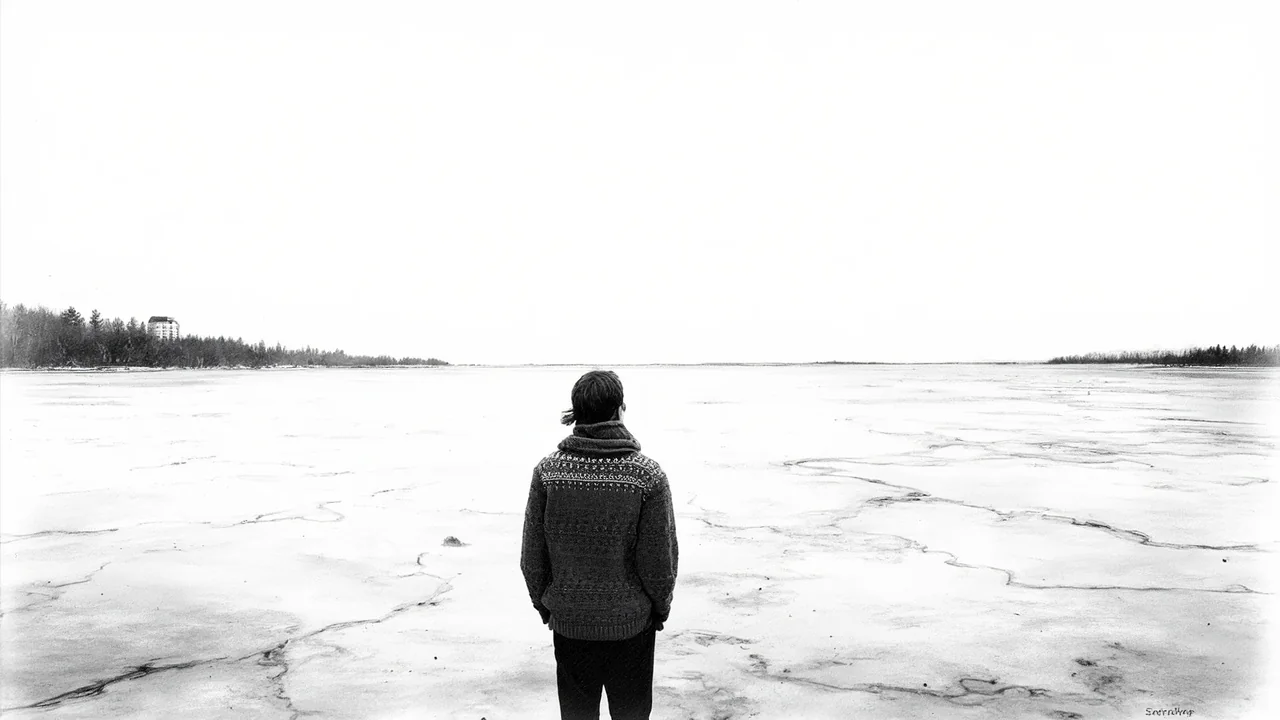
Denmark's frozen lakes and ponds present a tempting but deadly winter illusion. The mercury has plunged below zero across the country, creating a crisp, white veneer on urban waterscapes. Yet a strict nationwide prohibition remains firmly in place, enforced by municipalities and police. The core message from Danish authorities is unequivocal: the ice is dangerously thin, and venturing onto it is illegal until official permission is granted.
This blanket ban exists despite the picturesque scenery. Operations chief Tim Simonsen from Copenhagen's emergency services frames the risk with chilling clarity. He warns the public to "stay away, otherwise it will go snap." Falling through ice into freezing water induces immediate cold shock and incapacitating muscle paralysis. Survival timelines shrink to mere minutes.
The Arbiters of Safety
Municipalities hold absolute authority over local frozen waters. They conduct regular thickness measurements at designated points before any activity can be sanctioned. The safety thresholds are not arbitrary. They are engineering standards designed to support human weight with a significant safety margin. Copenhagen, for instance, requires a formidable 16 to 18 centimeters of solid, blue ice before even considering permission.
Other regions have slightly lower, but still strict, benchmarks. Measurements on Friday in Vejle Municipality showed ice at just 5 centimeters thick in several locations. This is less than half the required 13-centimeter minimum there. The variation in rules highlights a localized, evidence-based approach to public safety.
| Municipality | Minimum Ice Thickness Required | Current Status (Sample) |
|---|---|---|
| Copenhagen | 16-18 cm | Far below minimum |
| Vejle | 13 cm | ~5 cm measured |
| Faaborg-Midtfyn | 13 cm | Below minimum |
A Forecast of Persistent Danger
Meteorological experts pour cold water on any hope for a quick change. DMI climatologist Mikael Scharling is openly pessimistic about the prospect of safe ice forming during this cold snap. "It takes many days of frost to get a thick enough ice cover. I doubt we will reach it," he states. He points to a forecast that brings milder temperatures back by mid-week, cutting the freezing period short.
This scientific assessment is echoed by Copenhagen's technical and environmental administration. They have officially stated there is no prospect of the ice becoming thick enough on the city's ten monitored lakes during this period. The official blue sign stating 'Traffic on the ice is permitted' will not be posted.
The Physiology of Ice-Cold Danger
The human body reacts catastrophically to immersion in near-freezing water. The initial 'cold shock' causes an involuntary gasp, often leading to drowning if the head is submerged. Within seconds, hyperventilation and a racing heart follow. Muscle function, particularly in the limbs, deteriorates rapidly, making self-rescue almost impossible. Even if pulled out quickly, the risk of cardiac arrest remains high as cold blood returns to the core.
This is why emergency services like Hovedstadens Beredskab issue such stark warnings. Their message is particularly directed at parents. Simonsen emphasizes the need for a direct conversation with children and teenagers about the very real dangers. The allure of a frozen playground is powerful, but the consequences are fatal.
Analysis: A Culture of Precaution
This incident offers a clear window into Denmark's operational safety culture. The system prioritizes prevention and centralized control over individual assumption of risk. It is not enough for ice to look solid or for an individual to feel confident. Objective, measured data collected by authorities is the only acceptable standard.
The differing thresholds between municipalities are not a weakness. They reflect local conditions like water salinity, underwater currents, and historical data. The shared principle is an uncompromising commitment to preventing accidents before emergency response is needed. This aligns with a broader Scandinavian approach to public welfare, where the state assumes a key role in protecting citizens from foreseeable harm, even against their own misjudgment.
Expert perspective underscores that this is not bureaucratic overreach but applied risk management. Scharling's advice is to "really look for the signage" because the danger is invisible to the untrained eye. The system is designed to compensate for that human fallibility. It removes the burden of assessing a complex physical risk from the individual and places it on municipal experts with the right tools and knowledge.
The Waiting Game
For now, Danes must admire the winter view from the safety of the shore. The promise of weekend frost is insufficient to transform the lakes into safe communal spaces. The authorities' stance is unified and non-negotiable. The blue permission signs remain in storage, awaiting a more sustained and profound cold that this winter has yet to deliver.
This annual ritual highlights a delicate balance between enjoying Nordic nature and respecting its hidden dangers. It underscores a societal agreement: communal safety, enforced through clear rules and expert assessment, trumps the individual's fleeting desire for winter fun. As the brief freeze yields to softer temperatures, the lakes will remain silent and untouched, their thin, forbidden ice a testament to a policy that would rather disappoint than mourn.