
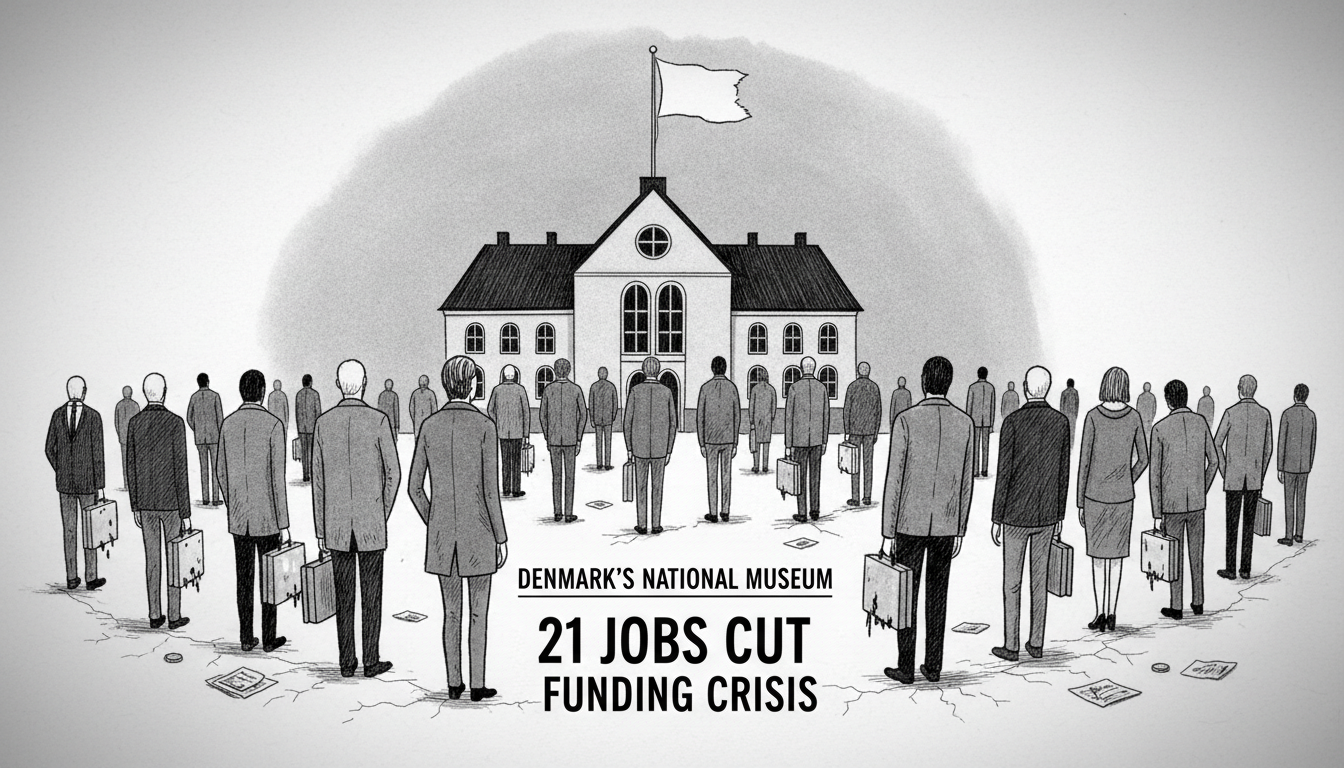
Denmark's National Museum is laying off 21 employees and seeking a 7 million kroner emergency grant from the Ministry of Culture. This marks the third major staff reduction under Director Rane Willerslev's eight-year tenure, revealing a persistent financial instability at the heart of the nation's premier cultural institution. The layoffs follow what the museum describes as a significant miscalculation in its financial planning, a recurring problem that now threatens its core operations and cultural mission.
A Recurring Pattern of Financial Mismanagement
Director Rane Willerslev recently announced the cuts, framing them as a necessary response to a critical budget shortfall. The museum's financial timeline has also shifted, with initial projections for 2025 now pushed to 2026. This is not the first time the institution has faced such a crisis. In a previous instance, the museum publicly admitted to a "fatal calculation error" that led to financial turmoil. The repetition of such severe budgetary failures points to systemic issues beyond simple market fluctuations or reduced visitor numbers. It suggests a fundamental problem in financial governance and long-term planning at a state-funded entity.
Experts in cultural policy see a worrying trend. "When a national museum of this stature faces repeated financial crises, it's a symptom of a deeper problem," says a Copenhagen-based cultural economist who requested anonymity due to ongoing work with ministry agencies. "It's not just about state appropriations. It's about management's ability to forecast, plan, and execute a sustainable budget. The public and the staff bear the cost of these failures." The museum operates under the Ministry of Culture and is a cornerstone of Denmark's cultural heritage, housing collections that span Danish history and world cultures.
The Human Cost of Institutional Failure
The 21 positions being eliminated represent more than just numbers on a spreadsheet. They are curators, researchers, conservators, and educators—the very people who preserve, interpret, and present Denmark's history to the public. Each layoff diminishes the museum's intellectual capital and operational capacity. For the remaining staff, morale is likely to be severely impacted, creating an atmosphere of uncertainty and anxiety. This brain drain can have a long-term corrosive effect on the quality of exhibitions, research, and public engagement.
A former department head at a major Danish museum, now working in the private sector, commented on the broader impact. "These cuts are never just administrative," they said. "They directly affect collection care, exhibition development, and educational outreach. When you lose experienced staff, you lose institutional memory and expertise that cannot be quickly replaced. It's a slow erosion of the museum's ability to fulfill its mandate." The request for a 7 million kroner supplementary grant is a stark admission that internal measures are insufficient to solve the crisis, forcing the institution to seek a taxpayer-funded bailout.
Systemic Pressures on Danish Cultural Funding
The National Museum's troubles occur within a wider context of pressure on Danish cultural funding. While the Danish welfare system is robust, cultural institutions often compete for finite resources within the state budget. Visitor numbers can be unpredictable, and the costs of maintaining historic buildings, conserving fragile artifacts, and mounting modern exhibitions continue to rise. Furthermore, there is an ongoing political and public debate about the role and funding of large cultural institutions versus supporting smaller, local venues.
This environment demands exceptional financial acuity from museum leadership. The repeated miscalculations at the National Museum, therefore, are particularly damning. They indicate an institution struggling to adapt to the financial realities of 21st-century cultural stewardship. The emergency grant request will now place the decision in the hands of politicians, intertwining the museum's operational crisis with broader political considerations about cultural priorities and fiscal responsibility.
A Test of Leadership and Public Trust
For Director Rane Willerslev, this third round of layoffs in eight years represents a severe test of his leadership. While external factors exist, the pattern suggests internal financial controls have been inadequate. The museum's board and the Ministry of Culture will face tough questions about oversight and accountability. Why have these errors been allowed to recur? What changes in governance and financial management will be implemented to prevent a fourth crisis?
Public trust is also on the line. The National Museum is not a private company; it is a national treasure held in trust for the Danish people. Its funding comes from the public purse, and its mission is a public service. Repeated financial mismanagement and staff cuts risk being perceived as a betrayal of that trust. It raises concerns about whether the institution is being stewarded effectively for future generations.
Looking Ahead: An Uncertain Future for Danish Heritage
The immediate future for the National Museum is one of contraction and uncertainty. The coming months will reveal which specific departments and functions are hardest hit by the layoffs. The quality and scope of the museum's future exhibitions and research projects are now in question. Will it become a quieter, less ambitious institution? More fundamentally, the crisis prompts a necessary debate about the value Denmark places on its central cultural institutions and how to fund them sustainably.
Is the solution simply more state funding, or does the museum need a radical overhaul of its business model? Could it generate more of its own revenue through partnerships, commercial activities, or major donor programs? The path forward requires honest reckoning with past failures and a clear, transparent plan for financial stability. The preservation of Denmark's cultural memory should not be perpetually jeopardized by avoidable accounting errors. The true cost of these mistakes is measured not just in kroner, but in lost knowledge, diminished public access, and a weakened cultural foundation for the nation.