
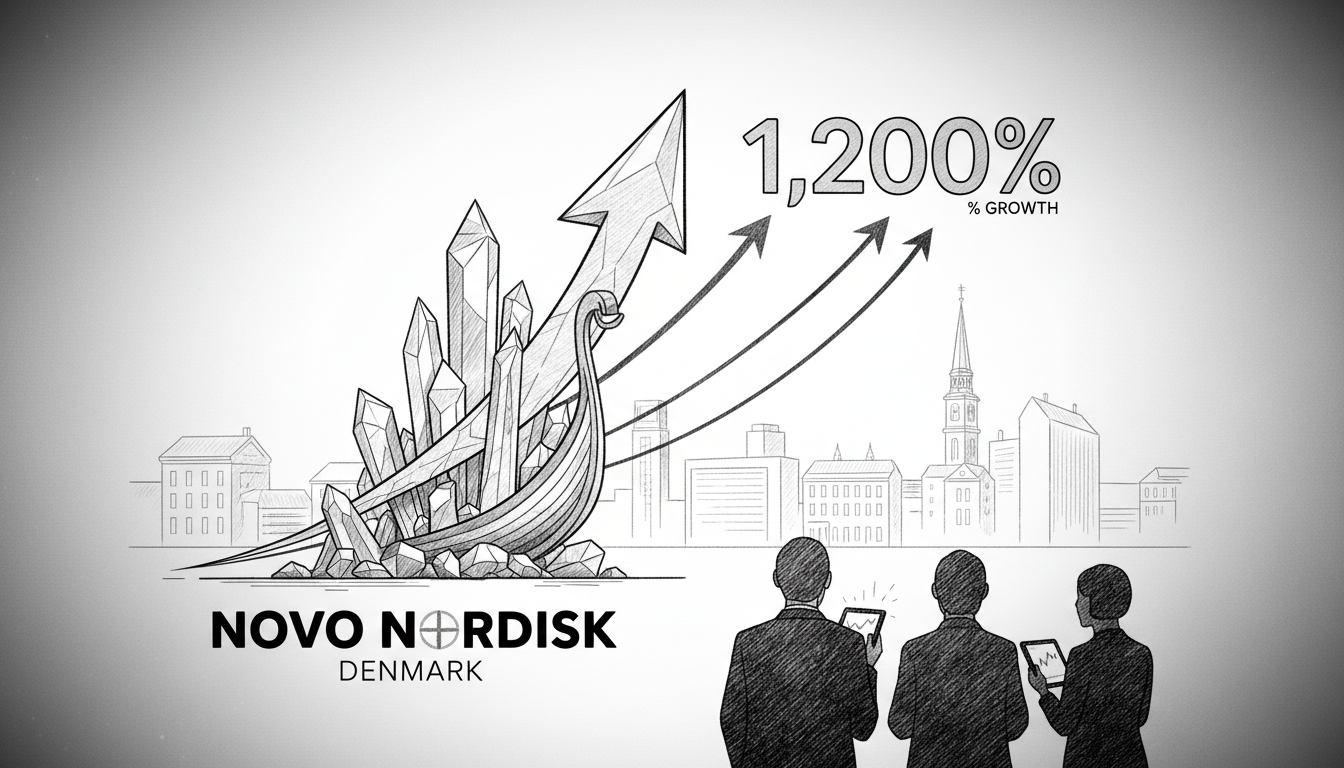
Denmark's Novo Nordisk stock delivered a pre-Christmas surge for investors as trading opened on the Copenhagen Stock Exchange Tuesday morning. The pharmaceutical giant's share price climbed sharply, continuing a historic rally that has reshaped the Danish economy. This latest uptick reinforces Novo Nordisk's position not just as a corporate leader but as a pillar of national financial stability. For thousands of Danish shareholders, the gains translate directly into holiday spending power and long-term security.
A Corporate Colossus Reshaping Denmark
Novo Nordisk's influence extends far beyond its Bagsværd headquarters. The company now represents a staggering portion of the total market capitalization of the Copenhagen Stock Exchange. Its performance single-handedly influences the OMXC25 index, making its trajectory a daily concern for the entire Danish investment community. This concentration creates a unique economic dynamic where national financial news often reads as a report on a single company's fortunes. The success of drugs like Ozempic and Wegovy has fueled an unprecedented valuation climb, with the share price increasing over 1,200% in the past decade. Analysts note this growth reflects a perfect alignment of scientific innovation and global health trends.
“When Novo Nordisk sneezes, the Danish market catches a cold, or in this case, enjoys a tremendous boom,” said Lars Kjærgaard, a senior market analyst at a Copenhagen-based investment firm. “We are witnessing a company outgrowing its home market in terms of financial impact. Its weight forces institutional investors globally to pay attention to Copenhagen.” This dominance brings both prosperity and vulnerability, tying national economic indicators closely to clinical trial results and FDA approvals overseas.
The Shareholder Effect: From Pensions to Pocket Money
The ripple effects of Tuesday's rise are felt across Danish society. Novo Nordisk is a cornerstone of Danish pension funds, meaning its performance impacts the retirement savings of millions. It is also one of the most widely held stocks by private Danish investors. For many families, annual returns from Novo shares have become a predictable supplement to income, sometimes funding everything from home renovations to university tuition. This broad-based ownership model means corporate success stories are directly felt in living rooms, creating a rare public alignment between corporate and citizen welfare.
“For generations, Danes have viewed ‘Novo’ as a safe harbor,” explained financial commentator Helle Thorning. “It’s more than a stock; it’s part of the national identity, like Lego or Carlsberg. People buy a few shares for their children or grandchildren as a long-term nest egg. The recent explosive growth has turned many of those modest investments into significant assets.” This cultural embeddedness distinguishes Novo Nordisk from other blue-chip companies, fostering a deep sense of public stakeholding in its success.
Global Health Demand Fuels Financial Engine
The core driver of Novo Nordisk's valuation remains the overwhelming global demand for its diabetes and obesity treatments. With hundreds of millions of people worldwide affected by these conditions, the addressable market is vast. The company's ability to innovate and scale production to meet this demand is what analysts scrutinize. Each positive research update or new market authorization sends signals directly to the trading floors. The company's pipeline of future treatments ensures that investor interest looks beyond current blockbuster drugs, toward sustained long-term growth.
Competition is intensifying, particularly from American pharmaceutical rivals. This competitive landscape requires constant investment in research and development, a cost that Novo Nordisk's current revenue comfortably supports. “They are in a virtuous cycle,” noted Dr. Astrid Nielsen, a biotechnology sector specialist. “Revenue from existing drugs funds the R&D for next-generation treatments, which secures future revenue. Their challenge is operational: scaling up production to literally global proportions without compromising quality.” This execution risk is a key factor monitored by investors alongside pure scientific innovation.
The Double-Edged Sword of Economic Dependence
Denmark's economic reliance on Novo Nordisk presents a complex policy picture. The corporate tax revenue from the company contributes significantly to the national welfare budget, funding schools, hospitals, and infrastructure. Municipalities in the Greater Copenhagen area, where many employees live and work, benefit from local taxes and economic activity. This financial contribution strengthens the Danish welfare model. However, such dependence on a single corporate entity also poses a strategic risk. A significant setback for the company could have disproportionate effects on national finances and market stability.
This concentration has sparked debate among economists and policymakers. Some advocate for measures to encourage similar success in other sectors to diversify the economic base. Others argue that nurturing a global champion is a valid strategy in itself. The Danish government walks a fine line, creating a stable regulatory and research environment that supports Novo Nordisk's growth while building robust public finances that can withstand sector-specific volatility. The company's success also impacts the Danish krone and influences the national central bank's monetary policy considerations.
Looking Beyond the Holiday Rally
While the pre-Christmas surge provides a festive headline, the long-term outlook involves navigating a series of complex challenges. Patent expirations, global pricing pressures on pharmaceuticals, and the logistical hurdles of supplying a global patient population are constant realities. The company's continued investment in Denmark, including major facility expansions, signals a commitment to its home base. Yet, its truly global operations mean decisions are made with a worldwide perspective.
The question for Denmark is whether Novo Nordisk's story is a replicable model or a singular phenomenon. Can the ecosystem that produced this life science titan—combining university research, public healthcare data, and venture capital—be harnessed to create the next champion? As trading closed on Tuesday, Danish shareholders had reason to celebrate. The broader Danish society, from policymakers to pensioners, continues to assess how to live with, and plan beyond, the fortunes of a corporate giant that has become synonymous with national economic health. The story of Novo Nordisk is no longer just about medicine or markets; it is a central chapter in the modern narrative of Denmark itself.