
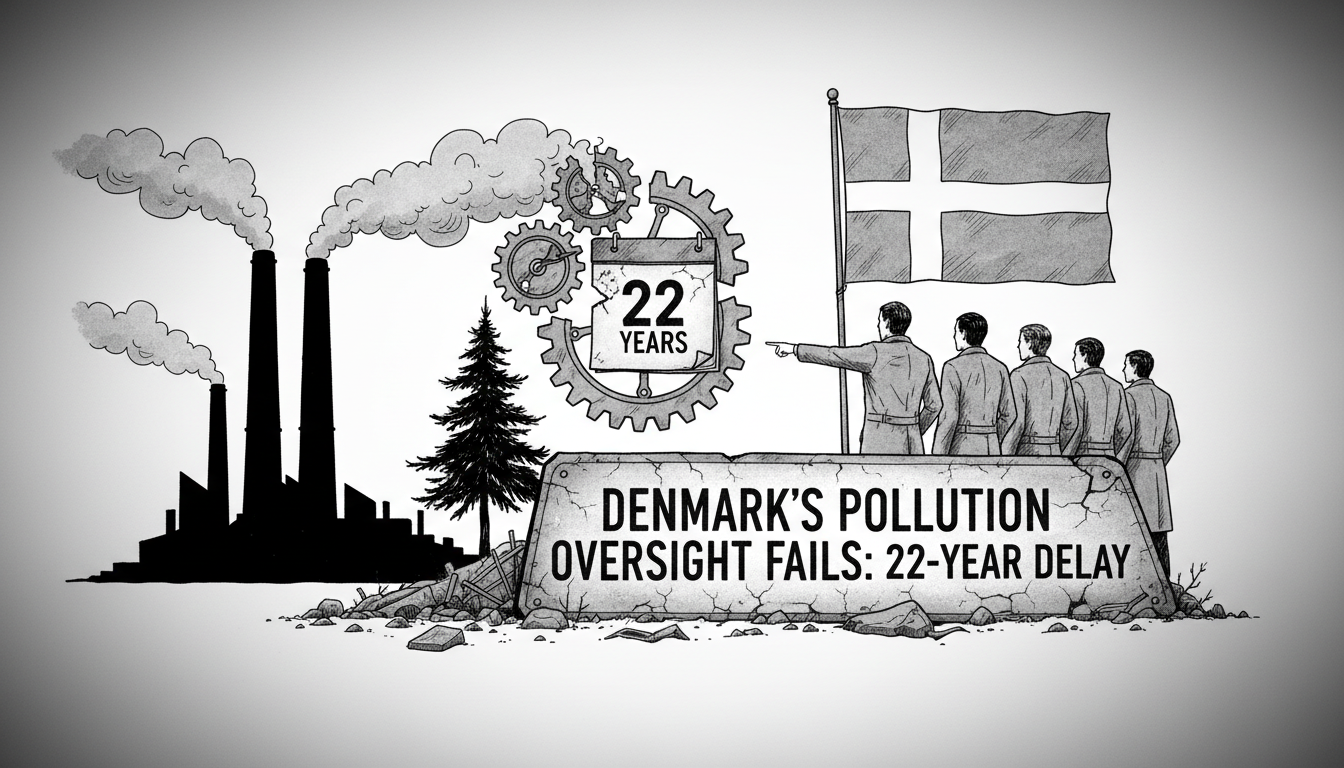
Denmark's environmental authorities have allowed a dairy company to wait nearly 22 years for a mandatory permit re-evaluation, exposing critical failures in pollution control that could cost the country millions in EU fines. A scathing report from the State Auditors, presented this week, reveals systemic delays and inadequate oversight by the Ministry of Environment and the Environmental Protection Agency (Miljøstyrelsen) over highly polluting industries. This lapse threatens Denmark's green reputation and poses significant financial risks for businesses and taxpayers alike, according to the audit.
The Dairy That Waited 22 Years
The report highlights a concrete case where a Danish dairy—unnamed in public documents but understood to be a medium-sized operation—faced a 22-year delay in revising its environmental permit. Under Danish and EU law, permits for polluting facilities must be reviewed regularly to ensure compliance with evolving standards. This prolonged inaction means the company potentially operated under outdated regulations, risking unchecked emissions into water and air. For context, Denmark's environmental framework mandates reviews every 8-10 years for such industries, but backlog and resource shortages have crippled enforcement. The dairy's experience is not isolated; auditors found numerous similar delays across sectors like manufacturing and energy, undermining legal safeguards.
Business implications are immediate. Companies in Copenhagen's industrial zones and the Øresund region face uncertainty, as permit delays can stall investments and expansion. Jens Klarskov, CEO of the Danish Industry Federation, said in a statement, "This regulatory paralysis hurts competitiveness. Businesses need clarity to plan green transitions, but these delays create legal limbo that deters innovation." The dairy sector, a key export earner with revenues exceeding 30 billion DKK annually, is particularly vulnerable to environmental scandals that could tarnish brand integrity abroad.
Auditors Expose Systemic Failures
The State Auditors' report, based on a year-long investigation, concludes that authorities are failing to meet legal obligations. It cites poor data management, insufficient staffing, and fragmented coordination between the Ministry of Environment and the Environmental Protection Agency. As a result, Denmark lacks a comprehensive overview of its 1,200 most polluting companies, many clustered in business districts like Nordhavn and Herlev. Auditors note that only 40% of required permit reviews were completed on time over the past five years, leaving gaps in pollution monitoring. Environment Minister Magnus Heunicke acknowledged the criticism, pledging to address shortcomings, but offered no specific timeline for reform.
Experts warn that these failures contravene EU directives, including the Industrial Emissions Directive, which Denmark has championed. Professor Eva M. Jensen, an environmental law scholar at Copenhagen University, explains, "Denmark prides itself on leadership in green policy, but this audit shows a stark implementation gap. Prolonged permit delays accumulate environmental damage, affecting public health and potentially leading to litigation from affected communities." She adds that the backlog could stem from budget cuts; the Environmental Protection Agency's funding has remained static since 2018 despite rising caseloads.
Billion-Krone EU Fine Looming
Financial risks are substantial. The European Commission can impose daily fines for non-compliance with environmental laws, and Denmark has already faced warnings over air quality issues. Auditors estimate that continued negligence could trigger fines upwards of 100 million DKK, based on precedent from other member states. Such penalties would strain public finances and impact trade relations, as EU fines often come with heightened scrutiny of export sectors. Renewable energy companies, a growth area for Danish exports, might also suffer if oversight failures erode trust in the country's regulatory framework.
Trade figures underscore the stakes. Denmark's green technology exports, including wind turbines and water treatment systems, totaled 120 billion DKK last year, but environmental scandals could dampen foreign demand. Lars Sandahl Sørensen, CEO of the Confederation of Danish Industry, noted, "Our green brand is a trade asset. If authorities cannot enforce rules at home, it undermines our credibility in markets like Germany and Sweden, where environmental standards drive procurement decisions." The Copenhagen Stock Exchange has seen volatility in shares of companies tied to heavy industry, reflecting investor concerns over potential regulatory crackdowns.
Business Community Reacts
Reaction from the corporate sector has been mixed. While industry groups call for streamlined processes, environmental NGOs demand stricter enforcement. Kim Christensen, head of the Danish Ecological Council, argued, "This isn't just about bureaucracy; it's about preventing pollution that harms ecosystems and climate goals. The 22-year delay symbolizes a broken system that prioritizes convenience over compliance." Small and medium-sized enterprises (SMEs), which comprise 70% of Danish businesses, express frustration over unequal treatment, as larger firms may have resources to navigate permit delays, whereas SMEs face higher compliance costs.
In response, the Ministry of Environment has proposed a digitalization initiative to track permits more efficiently, but auditors caution that technology alone won't solve core issues. A pilot program in the Region Zealand area aims to reduce review times to under 5 years, yet nationwide rollout remains uncertain. Historical context reveals this is not a new problem; similar audits in 2015 flagged oversight gaps, but little changed due to political shifts and budget constraints.
Path to Reform: What's Next?
The path forward requires urgent action. Auditors recommend hiring additional inspectors, setting clear performance metrics, and improving inter-agency collaboration. They also suggest aligning permit reviews with Denmark's 2030 carbon neutrality targets, integrating climate considerations into industrial approvals. Minister Heunicke has committed to presenting a reform plan by year-end, potentially including legislative changes to speed up processes.
International comparisons offer lessons. Sweden and Norway have more robust systems, with average permit review times under 3 years, supported by higher agency funding. Denmark could adopt best practices from these neighbors, especially in leveraging digital tools for real-time emissions monitoring. However, experts stress that without increased investment—estimated at 50 million DKK annually—progress will be slow.
As Denmark grapples with this crisis, the broader question remains: can a country known for environmental innovation fix its own backyard failures before EU fines and reputational damage take hold? The coming months will test whether political promises translate into tangible improvements, with businesses and citizens watching closely. For now, the 22-year wait stands as a stark reminder that even green leaders must vigilantly guard their standards.