
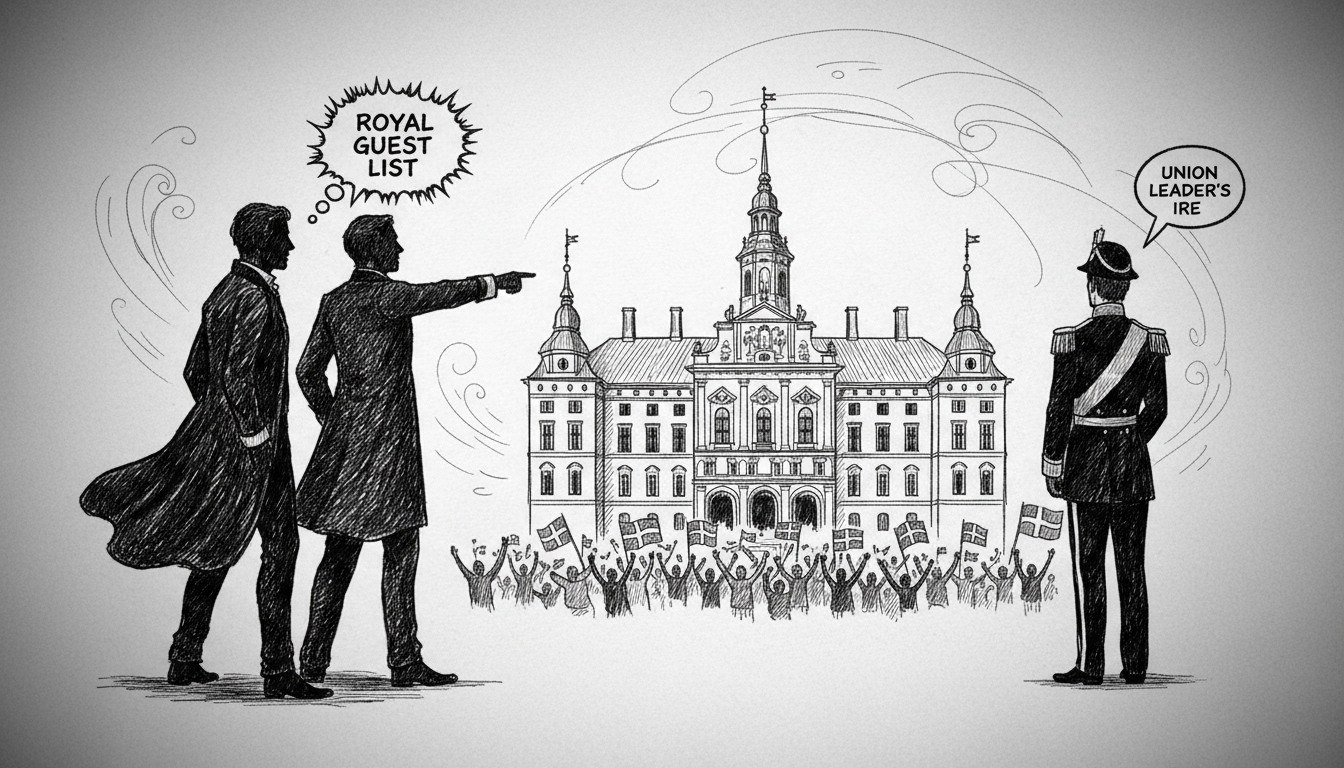
Denmark's royal New Year's reception guest list has drawn sharp criticism from a prominent union leader, highlighting a perceived disconnect between the new monarch's vision and the nation's workforce. The annual event at Christiansborg Palace, a centuries-old tradition for the Danish Royal Family, saw King Frederik X and Queen Mary host dignitaries, military officers, and public officials. Yet the absence of key labor representatives has sparked a debate about inclusivity and the monarchy's symbolic role in modern Danish society. "It almost cries out to heaven," said the chairman of the Danish Union of Teachers, expressing his surprise at the oversight. This controversy arrives precisely as King Frederik X seeks to define his reign following his mother's historic abdication.
A Modern Monarchy's First Major Test
The New Year's receptions are more than glittering parties. They are a core constitutional function where the sovereign engages with the pillars of the state. For royal commentators, the curated guest list acts as a subtle manifesto. It signals priorities and acknowledges which sectors the Crown views as essential to national life. The transition from Queen Margrethe II to King Frederik X was always going to bring scrutiny. Would his list reflect continuity or a decisive break with tradition? The early answer suggests a modernization of form, but perhaps not of substance. The inclusion of diverse public officials shows an effort to represent the state's machinery. However, the omission of organized labor's leadership reveals a significant blind spot in a country built on social partnership.
The Voice Missing from the Palace Halls
The criticism came swiftly from Anders Bondo Christensen, chairman of the Danish Union of Teachers. His union represents over 90,000 educators, a cornerstone of the Danish welfare model. "When you look at who is invited, it is a very traditional representation of official Denmark," he noted. His surprise underscores a feeling that the new king's promised contemporary approach has yet to materialize in this key symbolic arena. Denmark's social fabric is woven from a strong tradition of cooperation between employers, unions, and the state. This model, known as the Danish Model, is credited with maintaining social peace and economic flexibility. Excluding its representatives from a major state event sends an unintended message. It risks framing the monarchy as aligned with officialdom rather than the collaborative spirit that defines much of Danish public life.
Analyzing the Symbolic Snub
This is not merely about a single missed invitation. It touches on the monarchy's delicate function as a unifying national symbol above day-to-day politics. The royal household's protocol office crafts these lists with immense care. Every name carries weight. The inclusion of military officers and nobility speaks to history and continuity. The presence of state administrators reflects the government's work. But who represents the people who teach Danish children, build infrastructure, and provide healthcare? Their absence is conspicuous. It creates a narrative of a monarchy celebrating the structure of society while overlooking the individuals who sustain its daily operations. In a nation proud of its egalitarian values, this perception can be damaging. The royal family's popularity often hinges on its ability to reflect and respect all layers of Danish society.
The Challenge for King Frederik X
King Frederik X faces a unique challenge. He must honor the monarchy's ancient traditions while making the institution relevant for 21st-century Denmark. His mother, Queen Margrethe II, mastered this balance through personal artistry and deep historical knowledge. King Frederik has signaled a desire for a more accessible, informal monarchy. His first New Year's reception was an opportunity to put that philosophy into practice. The updated guest list shows some modernization, yet the criticism suggests it did not go far enough. The king's stated focus on climate and social cohesion requires engaging with all societal actors. Building bridges with the labor movement could be a powerful way to demonstrate that his reign will be one of substantive connection, not just stylistic change.
A Broader Conversation on Representation
The union leader's comments have ignited a broader discussion beyond palace walls. What should a representative snapshot of Denmark look like in 2024? The guest list controversy mirrors ongoing debates in Danish society about integration, social policy, and who gets a seat at the table. Municipalities and social centers across the country work daily on inclusion. The royal court's choices are analyzed through this same lens. Does the list reflect the nation's diversity in profession, background, and contribution? Statistics on education and employment are often cited in policy debates about integration. Similarly, the composition of a royal event is a statistic of sorts—a quantitative measure of who is deemed worthy of symbolic recognition by the head of state.
The Path Forward for Royal Relations
The Danish monarchy's strength lies in its ability to evolve. This incident presents a learning opportunity. The royal household can engage with the feedback, perhaps ensuring broader representation at future events. Other Nordic monarchies frequently include labor and civil society leaders in official functions, reinforcing their role as patrons of the entire national community. King Frederik X could use this moment to initiate a dialogue. A meeting with union leaders or a visit to a major workplace would be a strong, visible response. It would show that the monarchy listens and adapts. The goodwill towards the new king remains high, but it is maintained through attentive, inclusive gestures. The New Year's reception is just one event, but its symbolism resonates throughout the Danish welfare system.
A Question of National Identity
Ultimately, this debate is about more than protocol. It is a conversation about Danish identity and values. The monarchy is a mirror held up to the nation. What do we see reflected in its choices? A commitment to all who contribute to society, or a hierarchy of status? King Frederik X now has the chance to adjust the angle of that mirror. His reign is just beginning, and its tone will be set by such decisions. The union leader's public surprise is not an attack but an invitation—a call for the monarchy to fully embrace its role as a unifying force for every Dane. The response will be watched closely, not just in union halls, but in homes and communities across the kingdom, as people assess what kind of monarchy this new era will bring.