
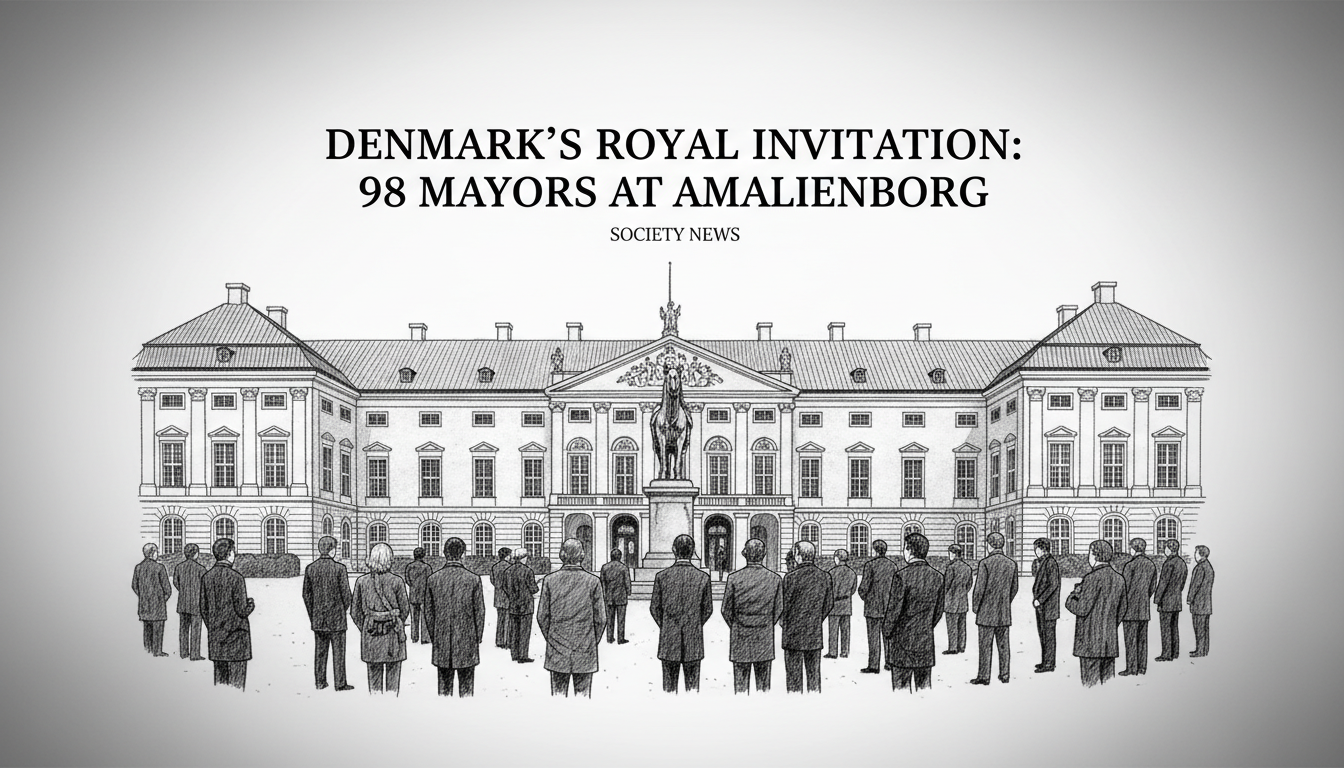
Denmark's Royal Family has extended a unifying New Year's invitation to all 98 of the nation's mayors. The gathering at Amalienborg Palace this week marks a significant symbolic gesture, placing local governance at the heart of the monarchy's annual ceremonial calendar. For Rosa Lykke Yde, Mayor of the small island municipality of Læsø, the invitation was a profound recognition of her community's place in the Danish whole. This collective invitation, a notable departure from more selective past guest lists, underscores a deliberate focus on Denmark's municipal foundations during a period of national conversation about cohesion and local identity.
A Palace Gathering for Local Leaders
The New Year's receptions at Amalienborg are a cornerstone of the Danish monarchy's public role. Traditionally held over several days in January, they serve as a bridge between the Crown and the pillars of Danish society. Guests typically include government ministers, judges, military leaders, and cultural figures. The decision to dedicate an entire reception solely to mayors, from the largest urban centers to the smallest rural communes, sends a clear message. It elevates the practical, daily work of local governance to a level of national prestige. "It makes perfect sense that the royal couple invited all the mayors," one local government analyst noted, highlighting the non-partisan, unifying potential of the gesture. In a country where the welfare state is largely administered locally, the mayors are the operational backbone of the Danish social contract.
The Weight of Recognition in the Municipalities
For the invited mayors, the event carries both personal and professional significance. An invitation to Amalienborg is widely considered a high honor, a tangible sign of respect from the nation's highest institution. For Mayor Rosa Lykke Yde of Læsø, representing a municipality of just under 1,800 inhabitants, the invitation reinforces that her community's voice matters on the national stage. This experience is shared by mayors from other smaller or remote areas, such as Fanø or Langeland. The reception is not merely a ceremonial photo opportunity. It provides a rare, informal forum for municipal leaders to connect with each other and share common challenges outside the usual political arenas. Discussions likely touched on issues like demographic shifts, public service delivery, and regional development—topics that define daily life across Denmark's diverse landscape.
Symbolism in a Time of National Conversation
Royal commentators see the inclusive guest list as a strategically symbolic act. The monarchy consistently seeks to reflect and reinforce core Danish values, with community and egalitarianism being paramount. By honoring every single mayor, the Crown implicitly celebrates the principle of local democracy and the decentralized model that is key to Denmark's governance. This occurs against a backdrop of ongoing national debates about the distribution of resources and population between cities and rural areas. The royal gesture can be interpreted as a reaffirmation of the interconnectedness of all parts of the kingdom. It visually asserts that whether from Copenhagen, Aarhus, or a small island in the Kattegat, each mayor contributes to the governance of Denmark. The monarchy thus positions itself as a neutral, unifying figurehead above the political fray, connecting the state to every municipality.
The Practicalities of Palace Diplomacy
Organizing a reception for 98 mayors, plus their partners and royal hosts, is a considerable logistical undertaking managed by the Royal Household. Amalienborg's staterooms, rich with history and art, provide a backdrop that underscores the importance of the occasion. The format typically involves a receiving line, brief conversations, and refreshments, allowing for direct, if brief, interaction between the royal family and each guest. This personal touch is a hallmark of these events. For King Frederik X and Queen Mary, who have emphasized modern connectivity during their reign, engaging directly with local leaders offers invaluable grassroots insight. They hear firsthand about local triumphs and trials, from school closures and elder care to climate adaptation projects and business development. This information flow, however subtle, informs the royal family's understanding of the nation they represent.
Beyond the Ceremony: Local Governance's Central Role
The prominence given to the mayors reflects a fundamental truth about Danish society: the municipality is where the welfare state meets the citizen. Denmark's 98 municipalities are responsible for critical areas including primary education, child daycare, elderly care, local roads, and cultural facilities. They collect income taxes and have significant autonomy. Therefore, strengthening the prestige and network of municipal leaders has a tangible impact on national welfare. When mayors from different political stripes meet on common ground at Amalienborg, it can foster cooperation that transcends municipal borders. The event indirectly highlights the heavy responsibilities borne by local governments, which are often the first point of contact for citizens navigating public services or seeking community support.
A Unifying Gesture with Historical Roots
While this year's blanket invitation to all mayors is notable, the monarchy's link to local governance is deep-rooted. Historically, the Crown's authority was exercised through local representatives. Today's constitutional monarchy has transformed that relationship into one of symbolic support and recognition. The New Year's reception tradition itself is a modern evolution of court ceremonies, adapted to a democratic society. By choosing to spotlight mayors, the royal family taps into this history while reinforcing a contemporary democratic ideal. It acknowledges that national stability and identity are built from the community upward, not just governed from the capital downward. In a fragmented media and political landscape, such clear, unifying symbols from a respected institution carry substantial weight.
The Lasting Impact of a Royal Handshake
The ultimate impact of the reception extends beyond the evening at Amalienborg. For the mayors, the experience returns with them to their city halls and community centers. It lends added legitimacy to their office and can energize their work. For the public, it is a visual reminder of the structure of their democracy and the monarchy's role within it. The event generates local news stories across the country, each community proudly covering their mayor's participation. This nationwide media ripple effect amplifies the unifying message. In essence, the royal family has used its unique platform to conduct a masterclass in soft diplomacy. They have strengthened the connective tissue between the center and the periphery of Danish society without uttering a single political word. The invitation list itself was the statement. As Denmark continues to navigate the complexities of the 21st century, the strength of its local communities will be paramount. This royal recognition serves as a timely reminder of that foundation, proving that sometimes, the guest list is the most powerful speech of all.