
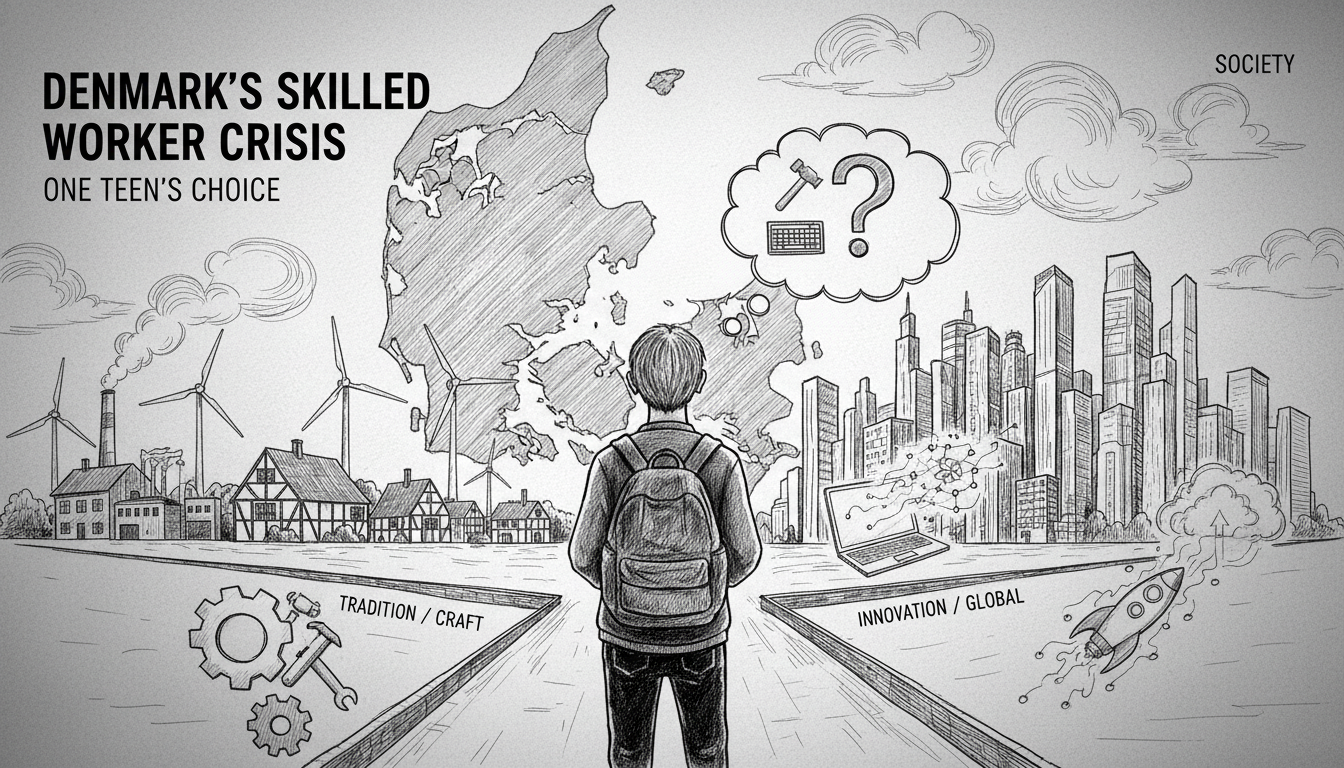
Denmark's vocational training system faces a critical shortage of young applicants in its capital region. In a classroom filled with the scent of sawdust and the hum of machinery, 17-year-old Kasper Vedby Andersen is an outlier. While most of his peers in Copenhagen and North Zealand are navigating the academic halls of gymnasium, Kasper is mastering the precise angles of a dovetail joint. His choice to become a carpenter makes him a statistical rarity in an area desperate for his future skills. This personal decision highlights a significant national challenge: a growing disconnect between educational prestige and economic need.
The Vanishing Apprentice
Kasper's path is not the norm in Greater Copenhagen. Here, the cultural momentum strongly favors academic education. The gymnasium, seen as a gateway to university and white-collar professions, remains the default ambition for many families. This trend has created a stark geographic imbalance in Denmark's apprenticeship pipeline. Employers across the city and wealthy North Zealand suburbs report workshops sitting empty, waiting for young people who never arrive. "We have the work, we have the tools, and we have the will to teach," says Lars Bjerg, a master carpenter who runs a small firm in Gentofte. "What we don't have are enough young people like Kasper walking through the door. It's a quiet crisis for our trade."
This shortage isn't about a lack of opportunity. Danish social policy has long championed vocational education through well-structured apprenticeship programs. These combine practical training with formal schooling, leading to a recognized certification and direct entry into the workforce. The Danish welfare system is designed to support such paths, yet perception lags behind policy. Many students and parents still view vocational training as a secondary option, a perception experts say is outdated and damaging to the economy.
The Prestige Problem and Economic Reality
Analysts point to a deep-seated social bias as a core issue. "There is an ingrained hierarchy in educational choices," explains Dr. Anette Fisker, a sociologist who studies Danish labor markets. "Academic routes are associated with status and long-term security, while vocational paths are sometimes mistakenly seen as limiting. We need to change that narrative, especially when the economic reality is so different." The data supports her argument. Graduates from many skilled trades enter a job market with immediate vacancies, often securing higher starting salaries than their university-educated counterparts burdened by student debt.
Initiatives from Danish municipalities and the government aim to bridge this gap. Career days in schools now feature more tradespeople, and some programs allow gymnasium students to sample vocational courses. The challenge is scaling these efforts and shifting a cultural mindset concentrated in urban and affluent areas. In Copenhagen's integration landscape, this issue takes on another dimension. For some newcomer communities, skilled trades offer a clear and stable route into Danish society, yet accessing these networks and apprenticeships remains a hurdle.
A Personal Calculation in a Systemic Gap
For Kasper, the decision was pragmatic. "I like seeing what I've built at the end of the day," he says, smoothing the edge of a wooden panel. "Sitting at a desk all day wasn't for me. Here, I'm learning a craft, I'll have a job when I finish, and I won't have a big study debt." His reasoning cuts to the heart of the problem-solution dynamic. The systemic shortage of skilled workers exists precisely because not enough individuals are making Kasper's calculation. The demand from employers is clear and vocal, but the supply of young apprentices is not meeting it.
This mismatch has real consequences for Denmark's social policy goals. A lack of local carpenters, electricians, and plumbers drives up renovation and construction costs, affecting housing affordability. It also forces businesses to look abroad for talent or turn down work, potentially stifling local economic growth. The sustainability of Denmark's renowned welfare model relies on a robust, diversified workforce where skilled trades play an essential role.
Building a New Path Forward
Addressing the shortage requires a multi-pronged approach. Experts suggest earlier and more hands-on exposure to trades in primary schools, before gymnasium becomes the assumed destination. Strengthening partnerships between vocational colleges and local businesses in Copenhagen is also critical, ensuring training aligns with the specific needs of the metropolitan economy. Success stories like Kasper's need to be amplified to show vocational training as a positive, deliberate choice rather than a fallback plan.
The solution lies in reframing the narrative around value and success. It involves showcasing the entrepreneurship, technology, and creativity inherent in modern trades. Danish society must reconcile its respect for practical skill with its pursuit of academic achievement, recognizing both as pillars of a healthy economy. For now, Kasper represents a vital but insufficient trend. His story is one of individual clarity in a landscape of collective uncertainty. As he continues his training, the question remains: how many more will follow him, and how quickly can Denmark's social and educational institutions pave the way?