
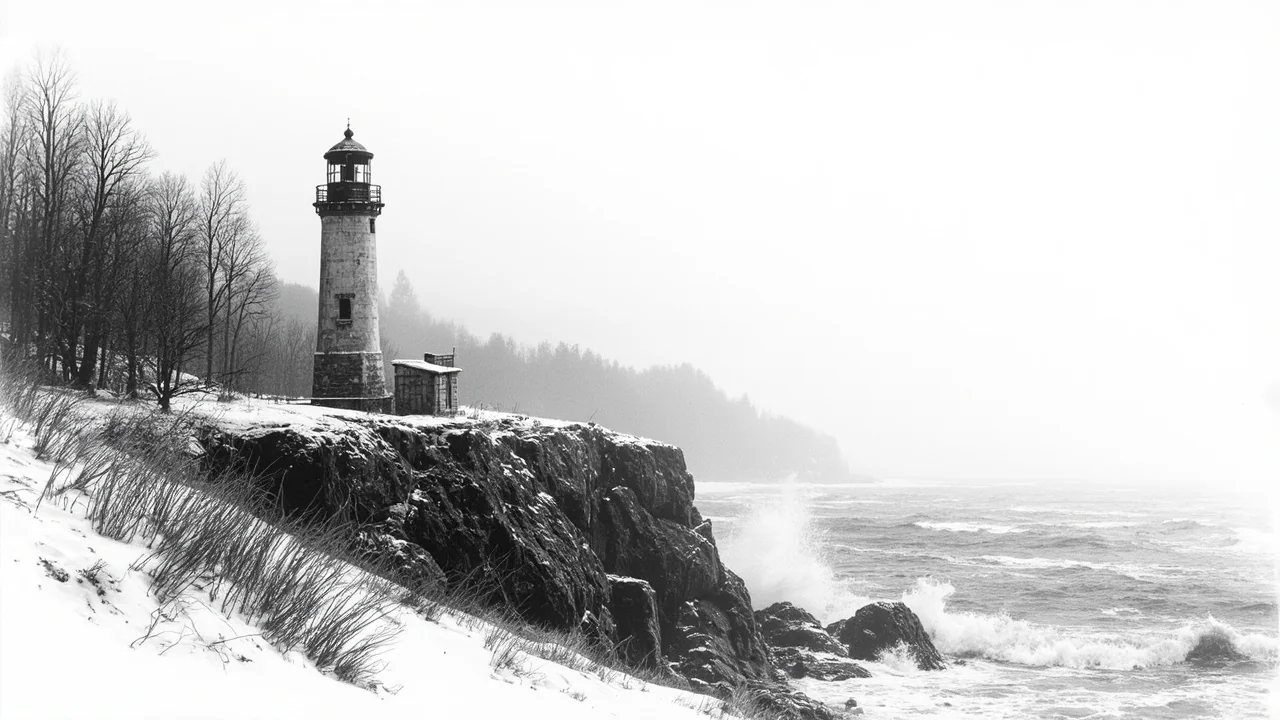
Denmark's latest winter storm has singled out its most isolated community for the harshest punishment. While much of the nation contends with blowing snow and sub-zero temperatures this Saturday, meteorologists confirm the island of Bornholm will bear the brunt of the severe weather throughout the entire weekend. The persistent conditions highlight the unique vulnerabilities faced by Denmark's remote populations when extreme weather strikes.
"It is the people of Bornholm who are hardest hit. In fact, for the whole weekend," said Jesper Eriksen, the duty meteorologist at the Danish Meteorological Institute (DMI). His forecast paints a picture of relentless wind whipping up existing snow, creating hazardous whiteout conditions across the island's roads and towns. This scenario repeats a familiar, burdensome pattern for many Danes, yet its impact is profoundly unequal.
A Weekend of Relentless Wind and Snow
The Saturday weather mirrors what the country has grown accustomed to from Friday, marked by strong winds and swirling, drifting snow. Jesper Eriksen notes this snow blowing is particularly severe in southern and eastern Denmark. A minor consolation exists: the winds are not predicted to be quite as fierce as the day before. However, this slight reprieve offers little practical comfort.
"But there can still be snow blowing around. Also, for example, in North and West Jutland, where there is the most snow for the wind to throw around," Eriksen added. The snowpack accumulated from previous storms becomes a weapon for the gales, reducing visibility and challenging municipal road clearing efforts across multiple regions. Temperatures will remain firmly below freezing, dancing between the freezing point and five degrees of frost.
The Geographic Disparity of a Storm's Wrath
When assessing the storm's focal point, the meteorologist's gaze turns decisively eastward. Bornholm, situated in the Baltic Sea far from the Jutland peninsula, finds itself directly in the path of the most persistent and punishing conditions. This geographic isolation, often a source of cultural pride and natural beauty, transforms into a liability during severe weather events. The island's exposure to Baltic winds and its distance from mainland infrastructure support creates a compounded crisis.
"So it's still about driving according to the conditions. It's probably not all small and minor roads that have been cleared, so be careful when you set off," Eriksen urged all motorists. His warning carries extra weight for Bornholm's residents, where road networks are limited and alternative routes are few. The island's municipalities face a monumental task, with resources stretched thin against a continuous assault from the elements.
The Human and Systemic Toll of Isolation
The ongoing situation on Bornholm opens a broader conversation about resilience and equity within the Danish welfare system. How does a society famed for social support ensure its farthest-flung citizens are not left to weather storms alone? The physical isolation translates into tangible challenges: potential delays in emergency services, greater difficulty in maintaining supply chains for groceries and medicine, and increased social isolation for the elderly and vulnerable during extended periods of severe weather.
Local community centers and volunteer networks often become critical lifelines in these times, filling gaps where municipal services are strained. The persistent threat also impacts mental well-being, as the sense of being cut off from the mainland grows with each day of cancelled ferries and blocked roads. This repeated strain tests the famous Danish social cohesion, asking whether the promise of the welfare state extends with equal strength across every kilometer of the kingdom.
No Thaw in Sight
The most definitive part of the forecast offers little hope for a quick resolution. "The snow is not going to disappear," Jesper Eriksen stated plainly. This simple declaration underscores a weekend, and potentially a period beyond, defined by endurance. For Bornholm, it means continued disruption, economic cost for local businesses, and a test of community spirit. The snow will not melt; it will merely shift, drift, and challenge the island's resolve.
This pattern of weather raises inevitable questions about preparedness and climate adaptation for Denmark's peripheral regions. While individual storms are not directly attributable to climate change, the increasing volatility of weather patterns suggests isolated communities may face such tests more frequently. Investing in robust local infrastructure, from snow-clearing capacity to emergency communication networks, becomes not just a municipal concern but a national imperative to ensure equal security for all citizens.
Looking Beyond the Forecast
The story of this Saturday's weather is more than a meteorological report. It is a snapshot of geographic inequality in the face of nature's force. As Copenhagen and Aarhus manage the inconveniences of blowing snow, Rønne and Nexø on Bornholm confront a more entrenched battle. The Danish welfare model is built on a foundation of shared risk and collective support. This weekend, that model is being tested by Baltic winds and drifting snow on a remote island frontier.
The true measure of Denmark's societal strength will be observed not just in the meteorologist's warnings, but in the collective response to those who are, quite literally, hardest hit. It will be seen in the coordination between mainland and island authorities, the checking in on neighbors, and the relentless work to clear a path through the storm. The snow will not disappear, but neither, we must hope, will the sense of shared responsibility that binds a nation together, from the western coast of Jutland to the eastern cliffs of Bornholm.