
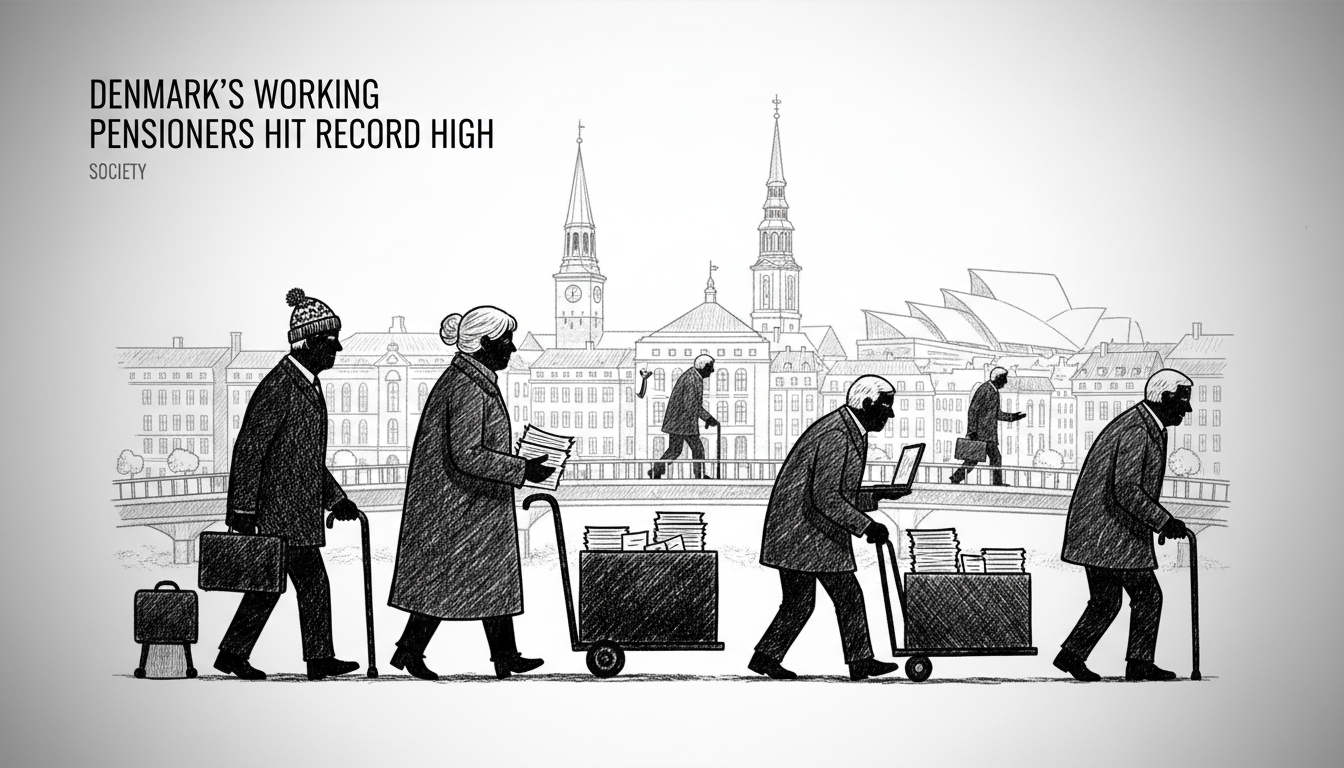
Denmark's retirement landscape is undergoing a profound shift as a record number of citizens are choosing to work past the official pension age. New figures reveal a significant milestone, with economic benefits and a desire for community driving more Danes to extend their working lives than ever before.
"It is a pretty wild change we are witnessing," said Helle Dalgsgaard, advisory manager at pension company Sampension, who calls the new numbers "a milestone." This trend marks a dramatic departure from traditional retirement patterns and carries major implications for the Danish economy, labor market, and the future of the welfare state.
A Quiet Revolution in Danish Work Life
The image of the retiree enjoying a quiet life of leisure is fading fast in Denmark. Instead, a growing cohort is actively choosing to remain in the workforce. In 2022, approximately 30% of Danes aged 65-69 were employed, a figure that has been climbing steadily for a decade. This is not a minor adjustment but a fundamental rethinking of what the later years of one's career can look like.
Experts point to a powerful combination of factors. "There are clear, economic advantages and a wish to continue being part of a community that is driving this," Dalgsgaard explained. The Danish system is designed to reward this choice. Citizens can postpone receiving their state pension (folkepension), which significantly increases the monthly payout when they eventually do retire. For many, this financial incentive is compelling, turning extended work into a savvy investment in their future financial security.
The Economic Engine Behind the Trend
This shift is partly a response to deliberate government policy. Faced with an aging population and concerns about the long-term sustainability of its comprehensive welfare model, Denmark has implemented reforms to encourage longer working lives. The official retirement age, currently 67, is linked to life expectancy and is scheduled to rise to 69 by 2035. This policy framework has set the stage, but the record numbers suggest individuals are now proactively embracing the concept.
From a business perspective, retaining experienced workers is becoming increasingly attractive. In sectors facing skilled labor shortages, particularly in Copenhagen's bustling business districts and across the Øresund region, older employees offer invaluable institutional knowledge and stability. "For employers, this trend is a potential solution to tightening labor markets," noted a senior economist from a Copenhagen-based bank. "It represents a vast, experienced talent pool that is choosing to remain active."
The economic impact is multifaceted. It boosts GDP through continued productivity, increases tax revenues, and reduces pressure on public pension payouts. For the individuals, it means higher lifetime earnings and larger pension savings. Danish pension funds, some of Europe's largest institutional investors, are closely monitoring this trend as it affects long-term payout projections and investment strategies.
More Than Just a Paycheck
While economics are crucial, the motivation for many goes deeper than kroner and ører. For a significant number, work provides essential social structure, mental stimulation, and a sense of purpose. The modern workplace, especially in knowledge-based industries prevalent in Danish cities, is often less physically demanding, making extended careers more feasible.
"The idea of a hard stop at 65 or 67 doesn't appeal to everyone," said Karen Mikkelsen, 68, who continues to work three days a week as a consultant in Aarhus. "My work gives me energy, keeps me connected, and allows me to contribute. Why would I give that up just because the calendar says I can?" This sentiment is echoed across the country, challenging the traditional narrative of retirement as a complete withdrawal from professional life.
This social dimension is critical. Denmark's strong communal culture means that the workplace is a key site for social interaction. Losing that overnight can lead to isolation for some. Continuing to work, even in a reduced capacity, helps maintain these vital social networks and contributes to overall well-being.
Challenges and the Road Ahead
The trend is not without its complexities. It raises questions about workplace adaptability. Are companies doing enough to accommodate older workers, perhaps with more flexible hours, phased retirement options, or ergonomic adjustments? There is also a risk of exacerbating inequality; those in physically demanding jobs may not have the same option to work longer, potentially creating a divide in retirement security.
Furthermore, some labor unions have expressed caution, emphasizing that the choice to work longer must remain just that—a choice. They warn against creating implicit pressure that could disadvantage those who need or wish to retire at the official age due to health or personal reasons.
Looking ahead, this milestone is likely just the beginning. As life expectancy increases and health in later life improves, the concept of a fixed retirement age will continue to soften. The Danish model, with its flexible pension system and a culture that values both work-life balance and community, appears uniquely positioned to navigate this change.
The record number of working pensioners is more than a statistical blip; it is a sign of a society adapting to demographic reality. It reflects a pragmatic approach to securing economic sustainability while acknowledging the human desire for engagement and purpose. Denmark is quietly rewriting the rulebook on aging and work, providing a real-time case study for other nations facing similar demographic challenges. The question is no longer just about when people can retire, but when they want to—and for a growing number of Danes, that answer is "not yet."