
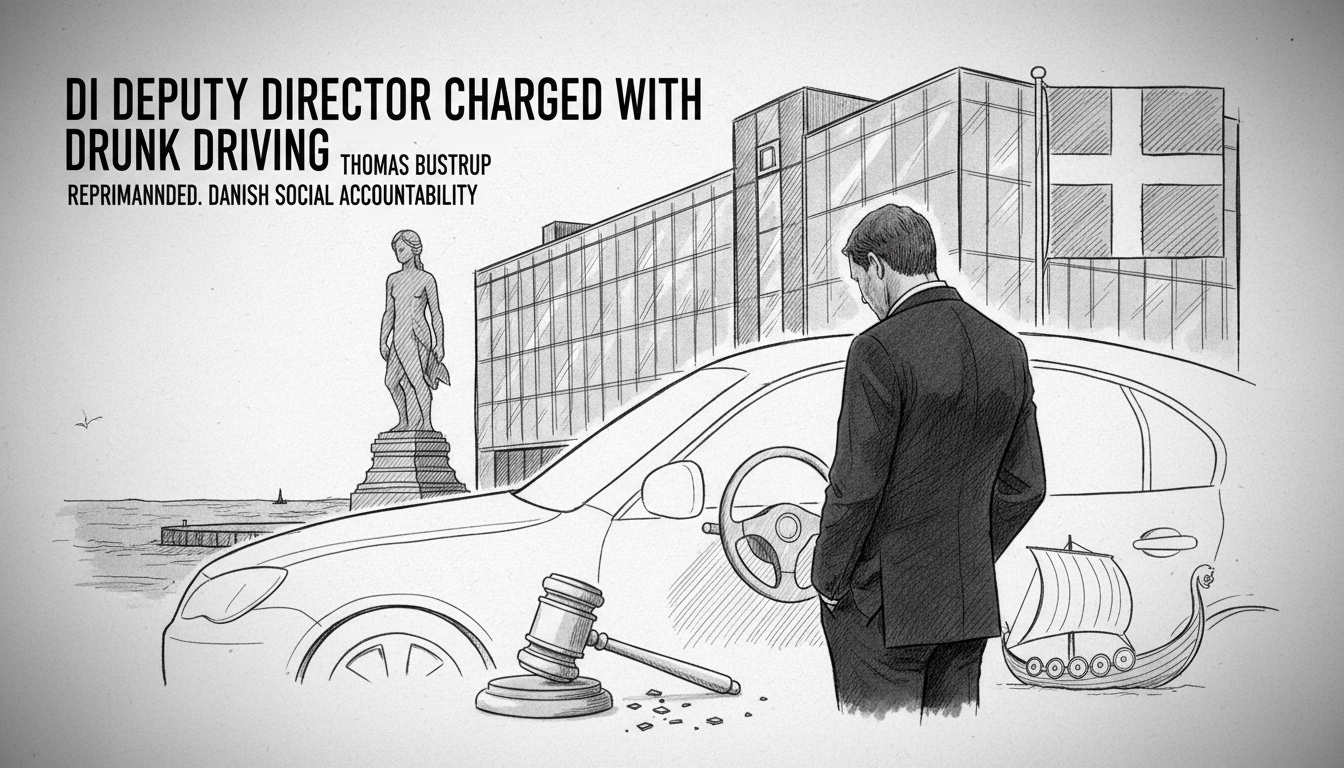
A senior business leader in Denmark faces legal consequences after a drunk driving charge. Thomas Bustrup, Deputy Director of the Confederation of Danish Industry (DI), has been formally charged and will appear in court on Bornholm. He has acknowledged the charges against him. The case raises questions about accountability and social norms within Denmark's influential business community. It also touches on the broader expectations placed on public figures in a society with strict social policies.
DI has issued an official reprimand to Bustrup following the charge. This internal disciplinary action underscores the organization's stance on the matter. In a public statement, Bustrup expressed deep regret. He said words could not describe his remorse for his actions. He stated he unequivocally and strongly distances himself from drunk driving. He also mentioned taking several measures in recent months to prevent a repeat of the situation. He acknowledged the charges and said he would accept any decision the court makes.
Lars Sandahl, the Managing Director of DI, commented on the situation with gravity. He stated that a repeat of such behavior would be completely incompatible with being a responsible employee at DI. Therefore, Bustrup received the strongest possible reprimand. Sandahl added that Bustrup had assured him necessary steps and precautions were being implemented. The goal is to ensure such an incident does not happen again. The court hearing is scheduled for early December on the island of Bornholm.
This incident occurs within a Danish societal context that places high value on rule-following and personal responsibility. The Danish welfare system and social policy framework are built on a high degree of trust and collective adherence to norms. Public figures, especially those in prominent roles representing major employer and industry groups, are held to a visible standard. A drunk driving charge is not merely a legal issue here. It is a breach of the social contract that can damage institutional credibility. For international observers, this demonstrates how social accountability in Denmark often operates through both formal legal channels and strong informal social pressure.
Bustrup has been employed at DI since 1996, holding several director positions. His long tenure makes the internal reprimand a notable step. The case will be watched closely. It tests the consistency of Denmark's approach to social policy and equality before the law. The outcome may influence public discourse on leadership ethics. It connects to ongoing debates about integration and the shared values that underpin Danish society. The message from Copenhagen's power centers appears clear. Professional standing does not exempt one from the consequences of actions that endanger public safety.