
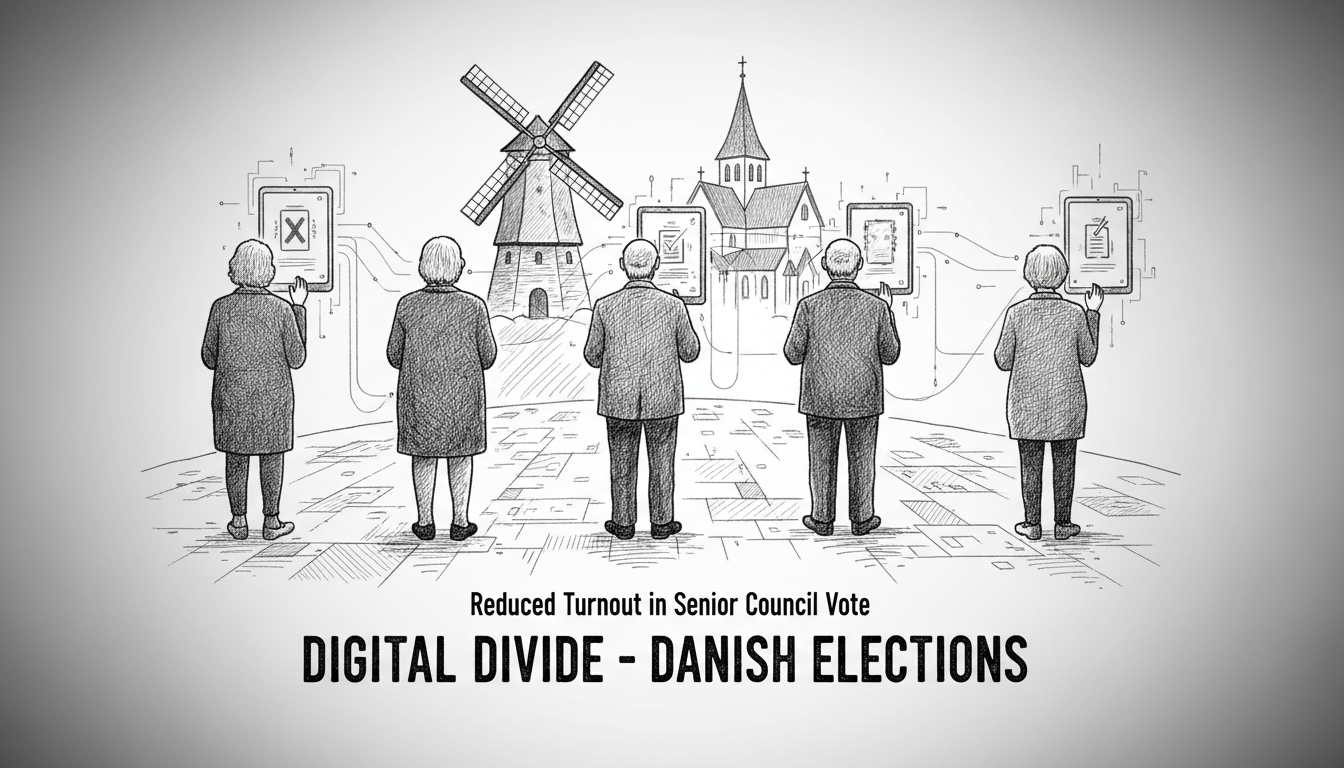
A recent experiment with digital voting methods in Denmark has produced a clear and unexpected result. Senior citizens voted in significantly lower numbers when municipalities introduced digital voting cards and tablet-based ballots. This outcome challenges assumptions about digital adoption among older populations and raises questions about accessibility in democratic processes.
The data comes from Denmark's nationwide senior council elections, which coincided with municipal and regional votes. While overall turnout in the main elections increased slightly, participation in senior council elections dropped markedly. The national average fell from 46.6 percent to 42.8 percent. The decline was most pronounced in municipalities that implemented new digital systems.
In 18 municipalities that replaced physical voting cards with digital versions sent via e-Boks or SMS, turnout fell by 10 percentage points compared to the previous election. An even steeper decline occurred in 14 municipalities where voters used iPads instead of paper ballots in polling booths. Those communities saw a 19 percentage point drop in participation.
Inger Møller Nielsen, chair of the national organization Danske Ældreråd, expressed surprise at the findings. She said in a statement that the results contradicted expectations about digital readiness. The physical voting card serves as an important reminder for this age group, she explained. Many seniors use tablets at home but find the experience unfamiliar and stressful in a voting booth. Scrolling through candidates on a screen does not feel natural or secure to them.
This development carries implications for Danish social policy and integration efforts. Senior councils exist in all 98 Danish municipalities, where elected members aged 60 and over advise local governments on elder care, housing, transportation, and community services. Lower turnout means these councils may not fully represent their constituencies. It could affect policy decisions about Denmark's welfare system and how municipalities allocate resources for aging populations.
Danish municipalities enjoy considerable freedom in organizing these elections. The poor results should prompt serious evaluation, according to Nielsen. She urged all senior councils to review their election procedures and identify improvements for the next vote in four years. The digital divide is not merely about access to technology but also about comfort and trust in using it for important civic duties.
The situation highlights a broader tension in Copenhagen integration policies and digital government initiatives. Denmark has been a leader in digitizing public services, from tax filings to healthcare appointments. This push for efficiency sometimes overlooks the human element, particularly for groups less accustomed to rapid technological change. The voting experiment reveals a gap between policy design and real-world implementation.
What happens next matters for democratic participation. Municipalities must balance innovation with inclusion, ensuring that digital tools enhance rather than hinder access. For international observers, this Danish case offers a cautionary tale. Even in a highly digital society, traditional methods retain value for certain populations and purposes. The goal should be offering choices that accommodate different preferences and abilities.
Senior councils play a vital role in shaping communities where older residents can thrive. Their legitimacy depends on broad participation. As Denmark continues to develop its social policies, finding the right mix of digital and physical voting options will be crucial. The recent election data provides clear evidence that one size does not fit all, especially when it comes to engaging citizens in later life.