
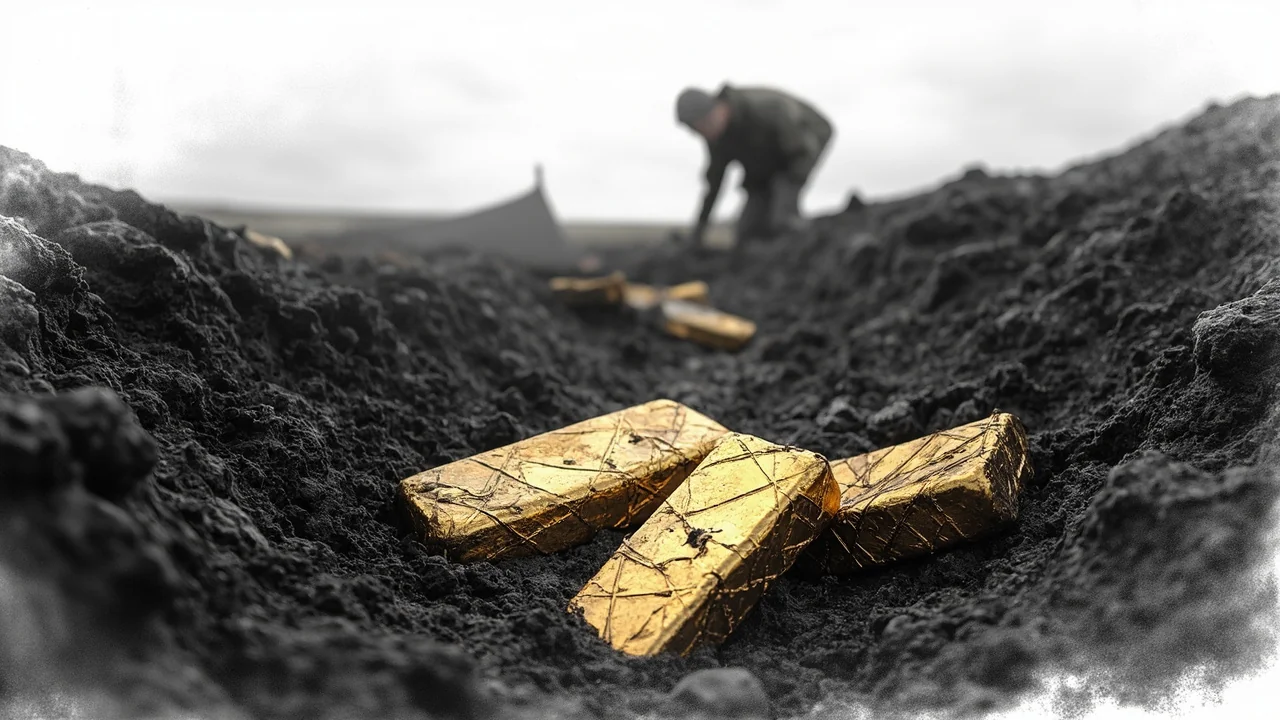
"We are enormously happy with them, as we practically never see gold in metal detector finds – and certainly not from the Viking Age," said Thomas Guntzelnick Poulsen, museum inspector at Museum Østjylland. Two rare gold bars, discovered just before Christmas, have sparked excitement among archaeologists who believe they could lead to the location of a Viking chieftain's home. The find was made by private metal detectorists in fields east of Randers and has been handed over to the museum for analysis.
A Glimpse into Viking Wealth
The two small gold bars are remarkable for their uniform shape and size, indicating they were used as a means of payment. "We are in a period, the Viking Age, where there isn't a coin economy yet. Perhaps only in Ribe or Hedeby. This is payment at the very high end when it's gold," Poulsen explained. Gold finds from this era are exceptionally rare in Denmark, making this discovery significant for understanding economic transactions before widespread coinage.
The bars suggest that high-value trade occurred in this area. Their discovery points to the presence of individuals with substantial wealth or involvement in long-distance exchange networks. This aligns with other finds from the region, providing clues about the social and economic hierarchy during the Viking Age.
Clues from the Landscape
The discovery site is not new to archaeologists. Museum Østjylland has previously identified 16 pit houses, or 'grubehuse,' in the area through preliminary surveys. These structures are understood to be workshop huts from the Viking period, hinting at significant craft activity. Additionally, a rare Arabic coin from the late 8th century was found nearby, further evidence of far-reaching connections.
"The big dream is that we find an elite residence out there. That is, where a chieftain with contacts far beyond the regional area lived. The gold is a sign of that," Poulsen stated. The combination of gold bars, workshop evidence, and foreign coins strengthens the hypothesis that a powerful individual or family was based in this location, controlling trade and production.
Navigating Danish Treasure Laws
The gold bars are considered 'danefæ,' a legal term for ancient objects made of precious metal or of cultural-historical value found in Danish soil. As such, they belong to the state and must be surrendered. Museum Østjylland will eventually transfer them to the National Museum in Copenhagen for formal assessment. However, there are plans for a local exhibition first.
"We aren't doing it right away. We would like to make a small topical exhibition where people can see them before they are transported to Copenhagen," Poulsen said. This process allows the public to engage with the find while ensuring it is preserved and studied nationally. Danish law mandates that anyone finding such treasures must report them to their local museum.
The Detectorist Boom and Archaeology
Poulsen noted that interest in metal detecting has grown significantly in Denmark. This hobby has become a valuable partner for museums, leading to numerous important discoveries that might otherwise remain hidden. The cooperation between amateur detectorists and professional archaeologists is crucial for piecing together Denmark's past, with clear protocols for reporting and handling finds.
These gold bars are a prime example of how public engagement can enrich cultural heritage. They were found on private land by individuals who followed the proper procedures, ensuring the artifacts were secured for study. This collaborative model helps map historical sites and understand settlement patterns across the country.
Unlocking the Past's Potential
What do these two small bars truly represent? They are more than just precious metal, they are physical evidence of a complex society where wealth, power, and trade intersected. Their discovery in an area with workshop huts suggests this might have been a center for production, possibly under the control of a local elite who used gold for major transactions or displays of status.
The find adds a tangible piece to the puzzle of Viking Age Jutland. While coins from Ribe or Hedeby tell one story, these raw gold bars tell another—of a economy in transition, where value was measured in weight and purity. The Arabic coin found earlier further illustrates the international links that defined the era, from the Middle East to the Baltic.
What Comes Next for the Site?
Museum Østjylland's work is far from over. The gold bars have intensified focus on the area east of Randers. Future archaeological investigations are likely to follow, with surveys and potential excavations aimed at locating the hypothesized chieftain's residence. Each layer of soil examined could reveal more about the people who lived, worked, and traded there over a thousand years ago.
The planned exhibition will offer a temporary window into this discovery, but the long-term research could reshape understanding of regional power structures in Viking Age Denmark. Will archaeologists eventually uncover the hall of a wealthy leader, or are these gold bars fragments of a larger, yet undiscovered, story? Only further exploration will tell, but for now, these two rare pieces of gold have ignited a new chapter in Danish archaeology.