
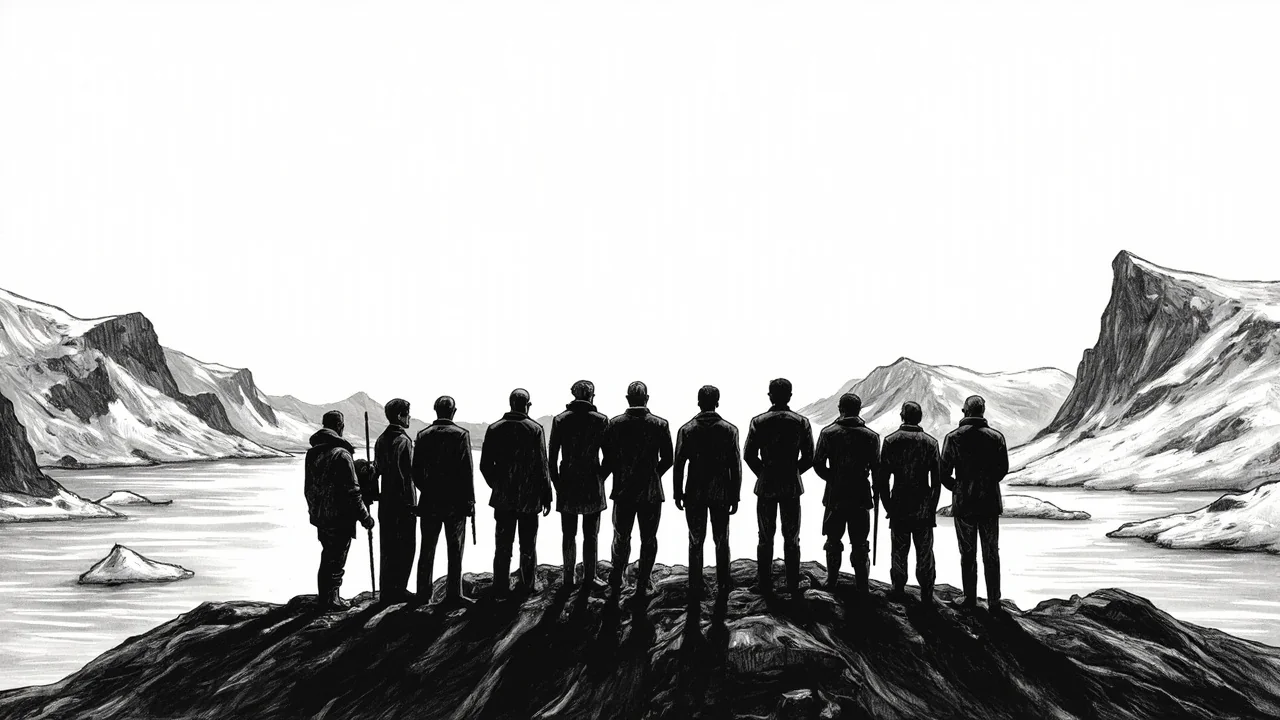
Denmark's Arctic sovereignty received a major boost on January 18 when eight allied nations jointly condemned US tariff threats linked to Greenland. Finland, France, Germany, the Netherlands, Norway, Sweden, and the United Kingdom issued a unified statement supporting Danish military exercises in the region. The diplomatic move directly challenges former US President Donald Trump's announcement of 10% tariffs on these nations, set to begin February 1, 2026, unless a deal on Greenland's resources is reached. This standoff places a remote Danish territory at the center of renewed transatlantic tension.
A Unified European Front
The joint statement explicitly endorsed Denmark's 'Arctic exercise' and affirmed it 'poses no threat,' framing the activity as a routine matter of regional security. This collective backing represents a significant diplomatic shield for Copenhagen. It transforms a bilateral pressure campaign into a multilateral dispute between the United States and a core European coalition. Nordic foreign ministers had already set the stage with their own joint statement on Greenland issued on January 6, indicating coordinated preparation for this clash. Danish Prime Minister Mette Frederiksen set a firm tone in response to the tariff threat, declaring that 'Europe will not be blackmailed.' Her statement reflects a broader European strategy to present a united front against economic coercion.
The Roots of the Dispute
The crisis stems from long-standing external interest in Greenland's strategic location and untapped mineral resources. For Denmark, Greenland is not merely a territory but a crucial part of the Kingdom with a gradually evolving relationship. The Danish constitution outlines Greenland's status, and any discussion of its future inherently involves Copenhagen's social and economic policies for the island's 56,000 inhabitants. The US tariff ultimatum, therefore, strikes at the heart of Danish constitutional sovereignty and its complex fiduciary role. It also tests the cohesion of the Danish welfare system model, which extends to Greenland, amidst external economic pressure. Analysts note that such confrontations can influence domestic Danish society news narratives around national unity and the costs of global engagement.
Economic and Social Repercussions
A 10% tariff on goods from eight major economies, including Denmark, would have immediate ripple effects. Danish exporters, particularly in agriculture and manufacturing, would face significant new barriers to their largest non-EU market. This economic pressure is designed to force political concessions on Greenland. Within Denmark, the dispute highlights the intersection of foreign policy and domestic social policy. The government's ability to maintain its high-level social services and integration programs could be strained by protracted trade tensions. Municipalities across Denmark that rely on export-oriented industries would need to assess the potential impact on local employment and community stability. The conflict underscores how global power struggles can directly influence the resources available for Denmark's social welfare system.
Arctic Security and Sovereign Rights
The allied statement's focus on the Danish Arctic exercise underscores the security dimension often overlooked in discussions about Greenland. The Arctic region is becoming increasingly militarized as sea lanes open and resource competition intensifies. Denmark, through Greenland, is an Arctic state with significant responsibilities for surveillance and stewardship. The united support from seven other nations legitimizes Denmark's security activities as part of a broader, rules-based order. This contrasts with the US approach, which frames the issue through a transactional lens. The solidarity shown helps Copenhagen resist external pressures that might otherwise compromise its long-term strategic and environmental commitments in the region.
The Path Forward and Community Impact
The deadline of February 1, 2026, creates a clear timeline for diplomacy or escalation. The coming months will test the resilience of the European coalition and Denmark's resolve. For Danish society, the dispute transcends high politics. It touches on national identity, the sustainability of the Nordic model under external stress, and the practical realities of life in an interconnected world. Community leaders in Copenhagen and other urban centers often discuss how global tensions filter down to affect social cohesion and public discourse on immigration and integration. A protracted trade conflict could shift political priorities and public spending away from domestic social initiatives. The ultimate question is whether economic weaponry can succeed in altering the constitutional relationship between Denmark and Greenland, a move the current broad alliance seems determined to prevent.
A Test of Transatlantic Ties
This confrontation represents one of the most direct tests of European unity against unilateral economic measures in recent years. The involvement of the United Kingdom, post-Brexit, alongside EU members is particularly notable. It suggests a shared European strategic interest that supersedes institutional boundaries. The outcome will likely set a precedent for how democratic nations respond to similar coercive tactics in the future. For Denmark, a nation that consistently ranks high on social trust and policy innovation, the challenge is to defend its principles without sacrificing the prosperity that underpins its society. The world will be watching to see if solidarity holds when tariff clocks start ticking.