
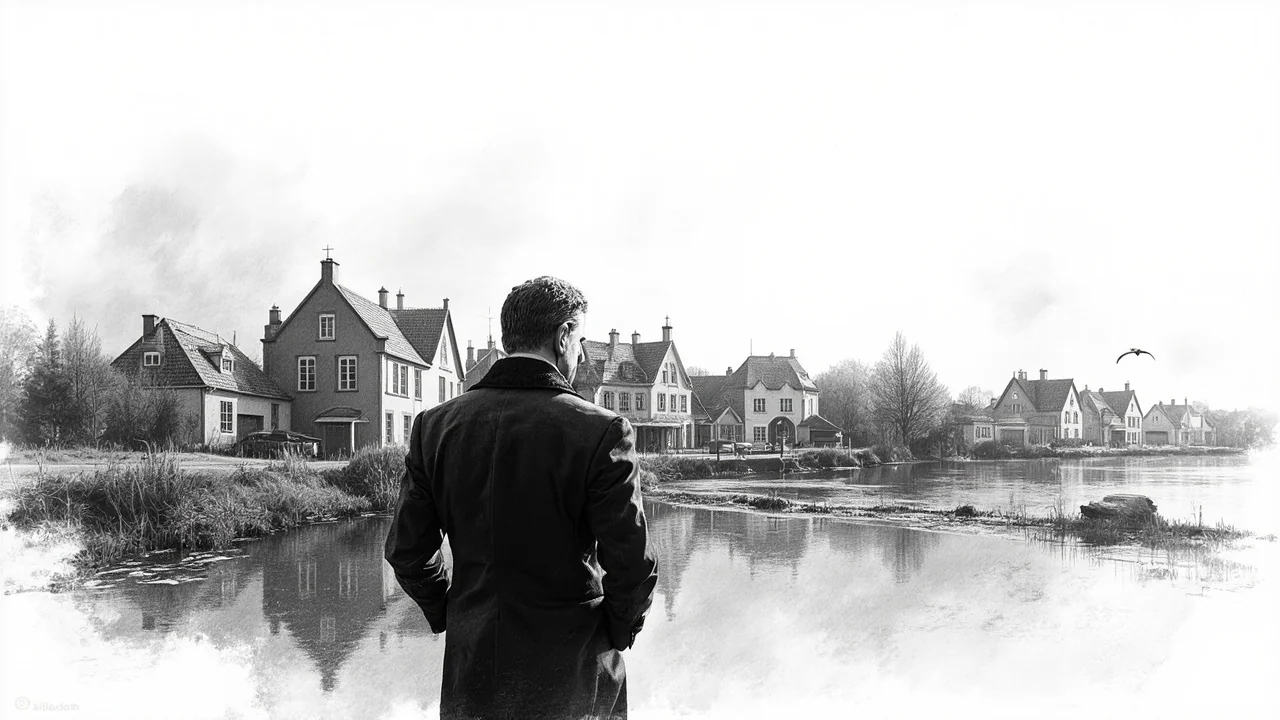
Danish fashion billionaire Anders Holch Povlsen has become one of the nation's largest private landowners through a rapid acquisition spree in central Jutland, sparking uncertainty and concern among local residents. Through his property company Constantinsborg, Povlsen has purchased at least 103 individual properties in concentrated areas near Herning and Aarhus since 2022. The scale of the buying, which has transformed ownership in several small villages, has left communities wondering about the ultimate purpose behind the accumulating hectares.
Residents Voice Concerns Over Unknown Plans
In the villages of Skarrild, Karstoft, Sønder Felding, and Stakroge, the change has been palpable. Since 2022, Constantinsborg has bought 56 farms and plots of land in these four closely situated communities. For long-time residents like Torben Buhl, the landscape of his neighborhood on Bæktoftvej has fundamentally altered. "The house over there is sold, the house over there has been torn down, and that one over there is also sold," Buhl said, noting he is now the only person on his road who still owns his own land. The lack of a clear plan from the new landlord is a common source of anxiety. "What does he want with all that land? Is he going to build solar cells, wind turbines, or something else entirely?" Buhl asked.
That sentiment is echoed in Skarrild by Christmas tree seller Ivan Baun, who has also seen new neighbors arrive as properties are sold. "I think it's unsettling that we don't know what he's going to use all that land for, and therefore what consequences it could have for our village," Baun said. He expressed broader unease about the concentration of ownership: "I can't understand that one person should be allowed to own so much."
The Scale and Strategy of the Acquisitions
The purchasing activity is not limited to those four villages. In the last 13 months alone, Constantinsborg has also acquired 47 properties in the Ejstrupholm area. The company has made additional significant purchases near Aarhus. This strategic, cluster-based buying pattern suggests a coordinated plan beyond simple asset collection, though the company has not publicly disclosed its intentions. The acquisitions position Povlsen, already Denmark's wealthiest person through the Bestseller clothing empire, among the country's top private landowners. The business move represents a significant shift of rural assets into the portfolio of a single investor, a trend observed in other agricultural markets but now accelerating in Denmark.
A Convenient Exit for Some Sellers
While the sales have created community-wide uncertainty, for some individual sellers, the offers from Constantinsborg arrived at an opportune time. Søren Green on Nr. Grenevej in Skarrild was the first in the area to sell to Povlsen's company in 2022. He and his wife were nearing 70, and none of their children wanted to buy the farm and continue its operation. "We were called up and got an offer before it was put on the market. It came quite conveniently," Green explained. A key factor in their decision was the condition that they could remain in their home as tenants for as long as they wished. This arrangement of selling the property but retaining tenancy has been a feature of several transactions, making the offers uniquely attractive to aging farmers without a succession plan.
The Broader Impact on Rural Communities
The concentrated buying raises questions about the long-term vitality of the affected villages. When properties are purchased and potentially removed from the traditional housing and agricultural markets, it can stifle local growth and reduce the number of owner-occupiers invested in the community's future. The phenomenon of large-scale investors buying up agricultural and rural residential land is a growing topic of debate across Europe, touching on issues of food security, local democracy, and wealth inequality. In the Danish context, Povlsen's known investments in large-scale rewilding projects in Scotland through his company Wildland Ltd. lead some to speculate about similar environmental ambitions for these Jutland plots. However, without a formal announcement, speculation is all that is left for residents like Ivan Baun, who is left to watch and wait. "It makes you feel insecure," he said, summarizing the mood in a region that has suddenly found its land, and perhaps its future, under new ownership.
The situation presents a clear juxtaposition of modern capital and traditional rural life. For global investors, land is a stable, tangible asset. For villagers in central Jutland, it is home, heritage, and community. The coming years will reveal whether Povlsen's plans align with the hopes of those communities or chart a completely new course for the Danish countryside. The lack of communication from Constantinsborg has created a vacuum filled with worry, highlighting a growing disconnect between large-scale investment strategies and the granular reality of life in the villages where those investments land. The ultimate answer to the persistent question—"What will he do with all that land?"—remains the largest unknown hanging over these transformed communities.