
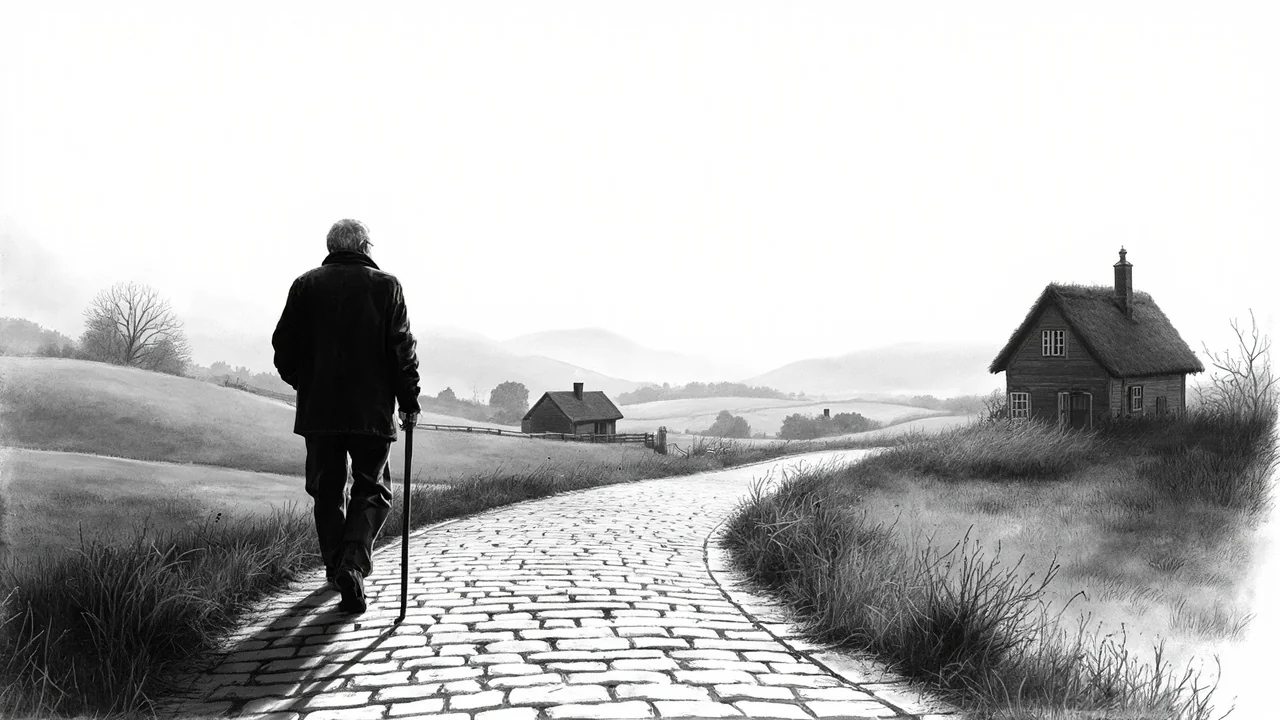
Denmark's centralized dementia care is leaving spouses isolated, with one elderly man now facing a costly and complicated 15-kilometer trip to see his wife of 60 years. "I miss her every day," says Niels Rovsing, his voice trembling with an emotion that leaves no doubt about what his wife Ebba means to him. His story exposes the human cost of municipal efficiency drives, where logistical consolidation creates barriers for the most vulnerable.
The Day Everything Changed
For seven years, Niels Rovsing has watched Alzheimer's disease reshape the woman he loves. "It is a vile disease, filled with doubt and suspicion. I wouldn't wish it on my worst enemy," he says. Their life together, which began 60 years ago at the Pavillonen cultural center in Grenaa, has been fundamentally altered. Recently, a policy change by Norddjurs Municipality altered it further. In 2024, the municipality decided to consolidate its specialized dementia care at Plejecenter Glesborg in the northern part of the municipality. For Ebba, this meant a move. For Niels, it meant the beginning of an isolating struggle.
Previously, Ebba lived at Plejecenter Fuglsanggården in Grenaa—a mere three kilometers from the yellow terraced house she shared with Niels. Despite his own health challenges, including severely impaired vision, he could manage that trip independently in just a few minutes on his electric bicycle. "When Ebba lived at Fuglsanggården, I could be there in five minutes and decide for myself when I came and went," Niels explains. That autonomy and spontaneity are now gone.
The Cost of Connection
The journey to Glesborg is 15 kilometers each way. Niels, who has tremor in his right hand and sees only three percent, cannot drive. He is dependent on flexible taxi services, known as flextrafik. Because his health requires pickup directly from his home address rather than a designated flex point, each one-way trip costs him 104 Danish kroner. With two visits per week, the transportation cost alone averages about 1,800 kroner per month—a significant financial burden on a fixed pension.
The process itself is a barrier. "Now it's more confusing with all the waiting and ordering of flextaxi," Niels says. His tremor and poor eyesight make operating a phone difficult, turning the simple act of booking a ride into a daunting task. He feels he has no one to turn to for consistent help. "I don't really have anyone," he states when asked if family can assist with travel or bookings. His children live at a distance. The question of asking a neighbor is dismissed with poignant pride: "I don't think I want to ask my neighbor to wait for me while I visit my wife."
A System Designed for Efficiency, Not People
Norddjurs Municipality's decision to centralize dementia services follows a common administrative logic: pooling resources and expertise in a single, modernized facility like Plejecenter Glesborg can theoretically improve care quality and operational efficiency. The policy looks sound on a spreadsheet. However, the implementation appears to have overlooked a critical component—the well-being of the relatives, who are often elderly and frail themselves, and whose frequent, familiar contact is a vital part of a dementia patient's emotional world.
For Niels Rovsing, the move has created a chasm between his daily life and his wife's. The casual, frequent visits that defined his role as a husband and caregiver have been replaced by scheduled, expensive, and exhausting expeditions. The emotional toll is compounded by the physical and financial strain. He is not just visiting a care home, he is navigating a complex bureaucratic and transportation system for the privilege of seeing his life partner.
The Unmeasured Impact
While municipalities track care standards and budget lines, the impact on family bonds is harder to quantify. The cost to Niels is more than 104 kroner per trip. It is the loss of spontaneity—the inability to pop over when he thinks Ebba might need a familiar face or when he simply misses her. It is the mental energy expended on logistics instead of emotional connection. It is the isolation of sitting at home, knowing your loved one is now a complicated journey away.
Other families in Norddjurs are likely facing similar challenges, experiencing what Niels describes as "major transportation difficulties" since the consolidation. Their stories remain untold, but their struggles point to a gap in Denmark's otherwise advanced welfare model: the infrastructure of care must include the infrastructure of connection. A specialized dementia unit is not an island, it is part of a network of human relationships that sustain its residents.