
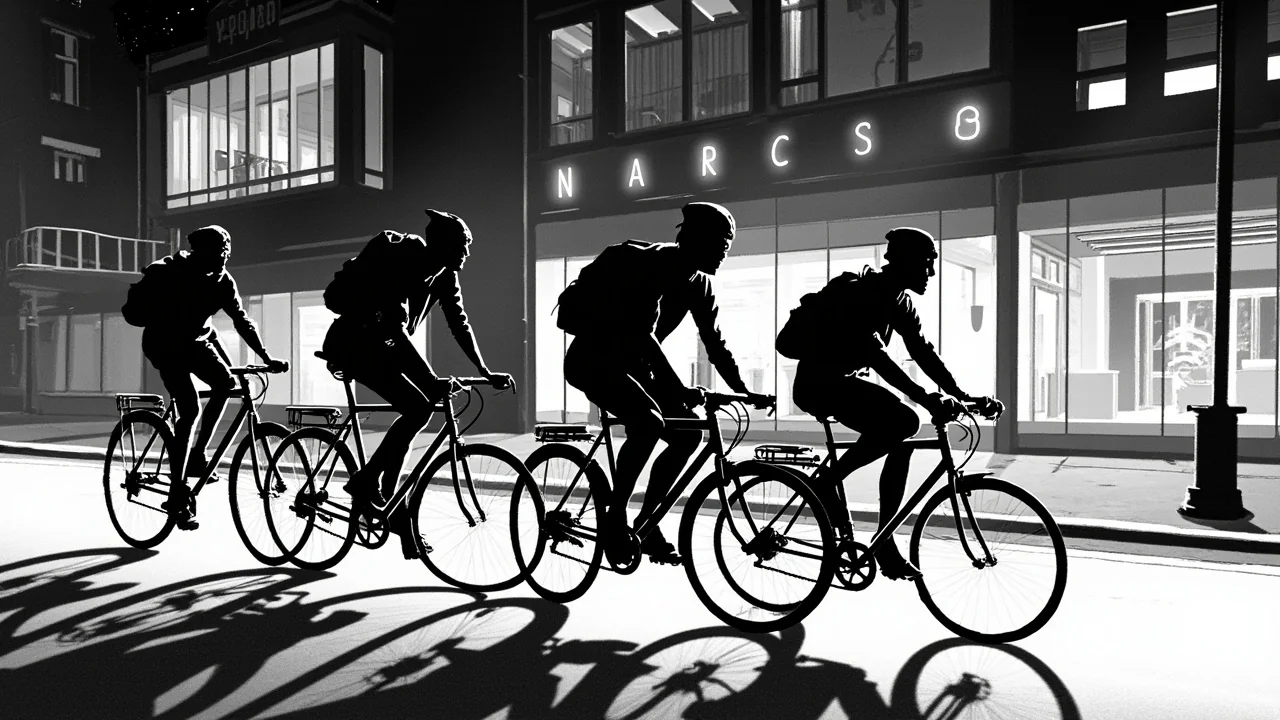
Denmark's traffic safety authorities are issuing a stark warning after a new study reveals that 11 percent of young people have recently ridden an illegal, high-speed electric bicycle. The survey, conducted by the Road Safety Council (Rådet for Sikker Trafik) in collaboration with Wilke, found that 327 out of 3,053 young Danes aged 15 to 24 admitted to riding a non-compliant e-bike within the last year. This widespread flouting of technical regulations presents a significant and growing safety challenge, combining youthful risk-taking with powerful, modified vehicles.
A Dangerous Speed Disparity
The data reveals a troubling gap between legal limits and actual behavior. Of the young respondents who specified their speed, the average reported velocity was approximately 45 kilometers per hour. This is nearly double the legal limit for a standard, compliant electric bicycle in Denmark, which is engineered to provide pedal assistance only up to 25 km/h before the motor cuts out. This substantial increase in speed drastically reduces reaction time and increases the severity of potential collisions, a fact that deeply concerns safety officials.
Jakob Bøving Arendt, the Managing Director of the Road Safety Council, did not mince words in his assessment. "It is very worrying," he stated. "The combination of being young and risk-willing and then riding an illegal e-bike that is not built for those speeds is risky. We have already seen serious accidents where it has gone wrong with illegal e-bikes." His comments underscore the tangible human cost behind the statistics, referencing a pattern of existing incidents that forecast potential future harm if the trend continues.
Understanding the Legal Framework
The regulations governing electric bicycles in Denmark are precise and are designed to keep them within a specific category of low-speed, pedal-assisted vehicles. According to the Road Safety Council's guidelines, a legal e-bike must adhere to several key technical specifications. First, it may only have a single motor with a maximum continuous rated power of 250 watts. Crucially, it must not be possible to adjust or tune this motor to exceed that power output. Second, the motor's assistance must cease once the bicycle reaches 25 km/h while pedaling. The system cannot be configured to deactivate at a higher speed. Some e-bikes feature a walk-assist function that allows propulsion up to 6 km/h without pedaling, but this is separate from the primary riding mode.
These rules exist to maintain a clear distinction between bicycles, which require no license or insurance, and more powerful mopeds or motorcycles, which are subject to stricter controls. Illegal e-bikes, often standard models that have been tampered with or 'chipped' to remove the speed limiter, or custom-built vehicles, blur this line dangerously. They operate at moped-like speeds but lack the corresponding safety construction, registration, and the rider training and helmet requirements that come with classified motor vehicles.
The Motivations and Market Forces
While the survey highlights the 'what,' the 'why' behind this trend is complex and multifaceted. For many young people, the appeal is straightforward: increased speed and convenience. An e-bike that can travel at 45 km/h significantly reduces commute times and requires less physical effort than a standard bicycle, offering a compelling alternative to public transport. The social and recreational aspect cannot be ignored either, the power and speed become a point of status or fun among peers.
The market availability of these modified bikes plays a critical role. The study's findings point to a supply chain that makes these vehicles accessible. They can be purchased online, imported, or modified by unscrupulous dealers or individuals with technical know-how. The onus is often placed on the consumer to ensure compliance, but the technical knowledge required to spot a non-compliant motor or a tampered speed governor is beyond most casual buyers, especially young ones. This creates an environment where illegal products can be sold under the guise of being legitimate 'high-performance' e-bikes.
Consequences Beyond the Road
The ramifications of riding an illegal e-bike extend beyond the immediate physical danger. In the event of an accident, insurance implications are severe. Standard personal liability or home insurance may not cover damages caused while operating an illegal vehicle, potentially leaving a young rider or their family financially responsible for extensive medical bills or property damage. Furthermore, if an accident investigation determines the bicycle was illegal, the rider could face significant legal liability and penalties.
From a societal perspective, the trend threatens to undermine broader public safety and cycling infrastructure goals. Denmark has invested heavily in creating safe cycling networks designed for traditional bicycle speeds. The introduction of silent, fast-moving vehicles that can appear unexpectedly poses a risk to all road users, including pedestrians and other cyclists. It could lead to public pressure for stricter regulations on all e-bikes, affecting the vast majority of law-abiding users who benefit from this sustainable form of transport.
A Call for Action and Awareness
The Road Safety Council's publication of this data is a clear call to action for multiple stakeholders. For parents, it is a prompt to engage in conversations with their teenagers about vehicle safety and the very real dangers of modified e-bikes. For educators and youth workers, it highlights a new area for safety education that has evolved with technology. For authorities, it signals a need for clearer public information campaigns and potentially sharper oversight of the market to prevent the sale of non-compliant vehicles.
Enforcement is another challenging frontier. Police checks for illegal e-bikes are not yet as routine as traffic stops for cars, but the growing awareness of the issue may lead to more targeted efforts. The technical nature of the violations makes enforcement difficult, requiring specific equipment or expertise to verify a motor's power output or software settings during a roadside inspection.
The study presents a snapshot of a risky behavior that has likely grown alongside the popularity of electric bicycles. Addressing it will require a coordinated effort focusing on education, market regulation, and peer-to-peer awareness among young people themselves. The goal is not to dampen the enthusiasm for green transport but to ensure that the rapid evolution of personal mobility does not outpace the frameworks designed to keep everyone safe. As these vehicles become more common, the question remains: how can innovation and safety be balanced to protect an entire generation of new riders?