
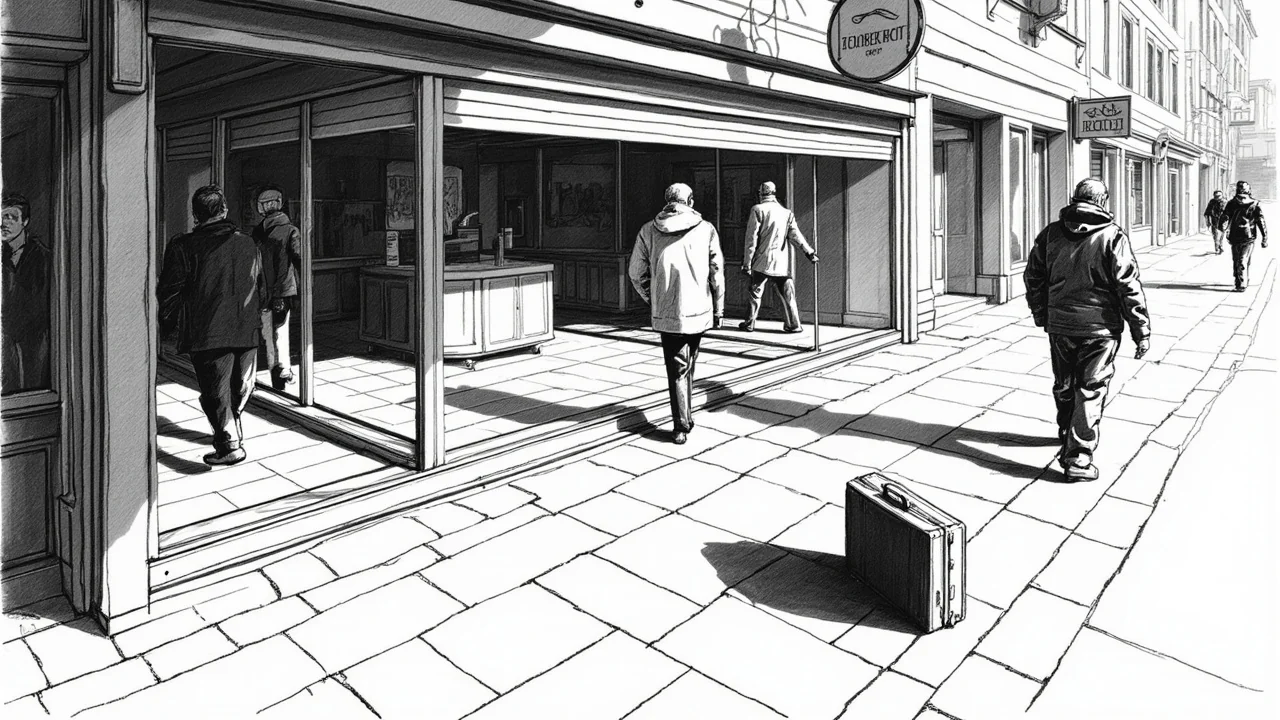
Denmark's third-largest city faced a major security alert after a barbershop owner discovered a suitcase with wires and a note bearing his name. The incident in central Odense triggered a massive police response, evacuations, and widespread disruption, raising urgent questions about public safety and the nature of the threat. Fyns Police deployed multiple patrols and emergency services, cordoning off a significant portion of the city center and calling in the military's bomb disposal unit.
Jens Jensen, owner of Jensen's Barbershop on Asylgade, made the chilling discovery early Tuesday morning. He found the suitcase placed at his shop's rear entrance. "I found a suitcase standing there at the back entrance, with my name on it," Jensen explained. "Something spilled out from it. A letter. So I took it inside and was about to open it, but then I could see there was a wire." At 9:24 AM, he called the police, who swiftly escorted him and his neighbors away from the scene.
A City Center Locked Down
The police response was immediate and substantial. Authorities flooded the area, establishing wide perimeters that left streets like Nørregade eerily empty. They issued a stark public warning: "Stay away!" For residents within the cordoned zone, police advised they could remain in their homes but should "stay away from windows and balconies/terraces/balconies." The military's ammunition clearance service arrived with its specialized vehicle, known colloquially as a 'rullemarie,' underscoring the perceived seriousness of the threat.
This large-scale disruption in the heart of Odense highlights the profound impact such incidents have on daily urban life. Businesses were forced to close, public transport was rerouted, and a general atmosphere of anxiety settled over the normally bustling area. The visual of a deserted city core, controlled by police tape and official vehicles, became a powerful symbol of vulnerability.
The Human Element of Fear
For Jensen, the personal nature of the threat is deeply unsettling. The note specifically addressed to him transforms a public security incident into a private nightmare. "It definitely looks like someone is out to get me, but who I don't know," he stated. "I have no conflicts with anyone." This statement points to the terrifying ambiguity victims face—a known enemy can be confronted, but an anonymous threat leaves only imagination and fear.
His experience reflects a broader societal anxiety where business owners and citizens can become unexpected targets. The barbershop, a local community hub, was suddenly the epicenter of a potential catastrophe. The psychological toll on Jensen and his neighbors, forced to abruptly flee their premises, will likely linger long after the police tape is removed.
Analyzing Denmark's Security Response
The Odense incident serves as a live test of Denmark's emergency protocols for potential terrorist or criminal bomb threats. The coordinated response between Fyns Police and the Danish Defence's bomb disposal unit follows established national procedures for dealing with suspicious objects. Denmark has invested significantly in its police and security services' capacity to handle such events, particularly following lessons learned from past incidents in Copenhagen and other European capitals.
Security experts note that the principle of "over-response" is standard in these scenarios. Treating every credible threat as real until proven otherwise is a necessary, if disruptive, strategy. The swift evacuation minimizes potential casualties, while the involvement of the military's experts ensures the safest possible handling of any explosive device. This protocol, while causing significant temporary disruption, is designed to protect human life above all else.
The Community and the Aftermath
As the immediate crisis subsides, the investigative phase begins. Police will meticulously examine the suitcase, its contents, and the note for forensic evidence. They will also investigate Jensen's personal and professional circles, despite his assertion of having no conflicts. The goal is to determine whether this was a targeted act of intimidation, a poorly conceived prank, or something else entirely.
The local community in Odense now faces the process of recovery. For other small business owners in the area, the event may prompt reviews of their own security measures. Municipal authorities often provide guidance on security for businesses following such shocks. The incident also sparks conversations about resilience and how cities can support commercial districts after traumatic events that scare away customers and disrupt the local economy.
A Broader Context of Urban Safety
While this specific threat appears targeted, it occurs against a backdrop of ongoing national discussions about security in Danish public spaces. Denmark's current threat level, assessed by the Security and Intelligence Service (PET), remains a focal point for public and political debate. Events in Odense resonate with citizens across the country, reminding them of the delicate balance between open, accessible urban life and necessary security precautions.
Such incidents also test public trust in authorities. Clear, timely communication from police, as seen in their direct warnings to stay away, is crucial for maintaining calm and compliance. The visible, professional response aims to reassure the public that systems are in place to manage these threats, even as the sight of bomb disposal units in a city center is inherently alarming.
As the investigation continues, residents of Odense are left to return to a normalcy that feels slightly altered. For Jensen, the barbershop owner, the question of "why" may never be fully answered. The suitcase with his name on it represents a breach of his personal and professional security, a violation that extends beyond the physical cordons. The episode underscores a modern reality: that public safety incidents are not just about logistics and response, but about the deep personal fear they implant in individuals and the lasting imprint they leave on a community's sense of security. The true measure of resilience will be how the city, and the man at the center of the scare, move forward from here.