
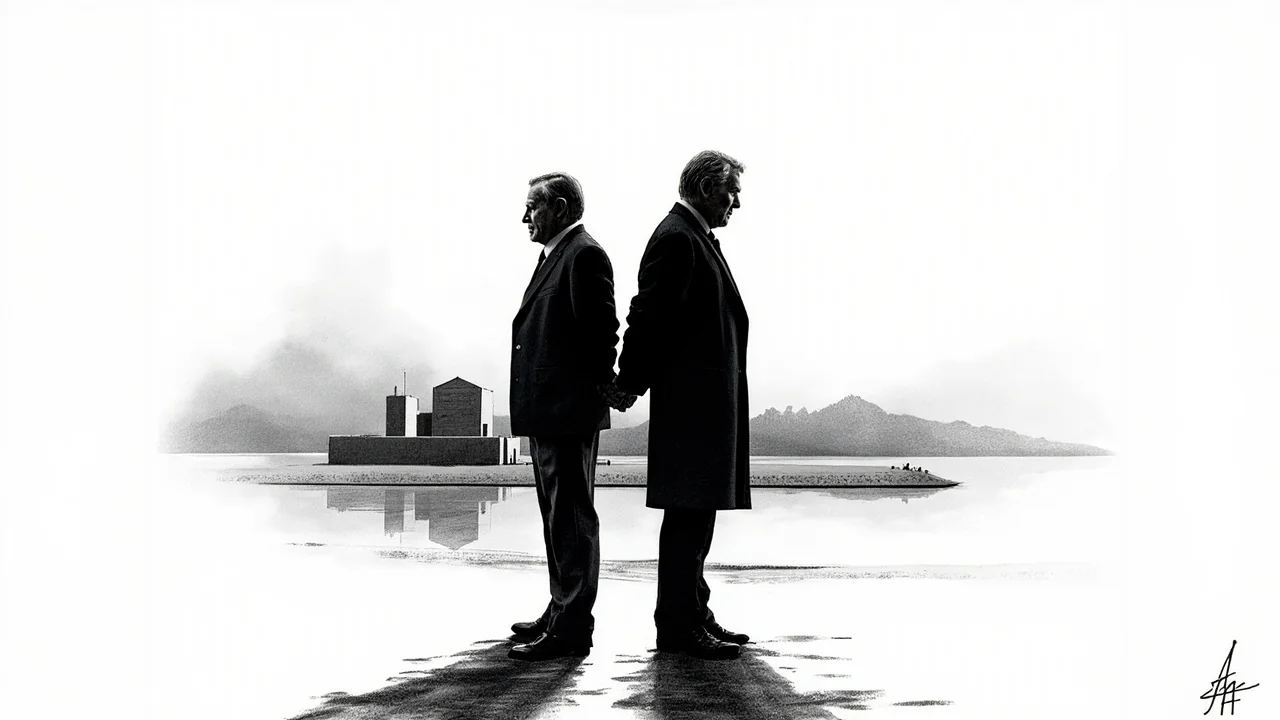
Denmark's political and legal worlds are watching a Copenhagen courtroom where a case of alleged honor violation pits two former allies from the Radical Left party against each other. What began as professional contact around the 2017 municipal elections evolved into a personal and intimate relationship before dissolving into mutual police reports and this current civil suit. The case unfolds against the backdrop of a party still grappling with internal culture reforms initiated after its own #MeToo scandal.
From Political Allies to Legal Adversaries
The male party member, protected by a court-ordered anonymity ban, testified on Wednesday in Copenhagen City Court. He described a relationship that shifted from professional to personal. 'It developed, as such things do. It was professional, then it became personal, and then it became intimate. I saw her as a good friend, where there were also several things at play,' he explained in his testimony. The woman, the defendant in this case, was a candidate for Copenhagen's Citizen Representation in 2017. She is currently a sick-listed nurse in North Jutland and was not present at Wednesday's hearing, which the judge allowed to proceed.
A Threat Allegation and a Dismissed Case
The core of their dispute lies in a starkly different recollection of a 2017 phone call. The woman maintains that during a conversation about the municipal election, the man explicitly threatened her. She alleges he said he would put her in handcuffs and rape her. Nearly four years passed before she reported these alleged threats to police in April 2021. Her decision came in the wake of intense internal turmoil within the Radical Left party. That turmoil saw the party's then-political leader, Morten Østergaard, leave politics in autumn 2020 following a separate misconduct case. An ensuing internal investigation produced a report on the party's culture, concluding one in five female respondents had felt violated within the party.
The woman stated she went to police to stop the man, whom she considered a perpetrator, from violating others. Police interviewed and formally charged the man in June 2021. However, the case was dropped by prosecutors just weeks later. They determined there was insufficient evidentiary basis to pursue a criminal case.
The Civil Case for Honor Violation
With the criminal track closed, the legal battle moved to a civil arena. The man is now pursuing a case for honor violation, arguing the woman damaged his reputation through a series of public statements. His lawsuit represents a attempt to seek legal recourse for what he views as defamatory claims after being cleared by the public prosecutor. The court must now weigh his right to protect his reputation against the context of the woman's allegations and the broader societal debate the case touches upon. The man has since left politics entirely, a detail that underscores the personal and professional fallout from the lengthy dispute.
A Party's Shadow and a Cultural Reckoning
This personal legal conflict cannot be separated from its political context. The Radical Left's 2020 crisis and the resulting culture report created an environment where individuals felt empowered to come forward with past grievances. The woman's decision to report to police in 2021 was directly linked to that party-wide debate. The case tests how internal party conflicts and serious personal allegations translate into the formal justice system. It also highlights the complex aftermath when criminal investigations conclude without charges, yet personal and social convictions remain deeply held.
The court's eventual ruling will determine whether the woman's public statements constituted an unlawful violation of the man's honor. However, it cannot resolve the underlying factual dispute about the 2017 phone call that started it all. That ambiguity lies at the heart of the matter, reflecting the challenging nature of adjudicating 'he said, she said' allegations that emerge from broken personal relationships, especially those forged within the intense crucible of political work. The outcome will be closely read for its implications on how similar conflicts might be handled in the future, both inside and outside of Denmark's political parties.
The Personal Cost of Political Strife
Beyond the legal definitions, the case lays bare profound personal costs. One participant has exited the political sphere. The other is currently on sick leave. Their conflict, spanning seven years from the initial 2017 election campaign to this 2024 trial, demonstrates how allegations can evolve and persist long after the events in question. The use of both the criminal system and the civil courts shows a determination by both parties to seek a formal judgment, having failed to find resolution privately or within their political community. This persistence suggests the deep personal impact on both individuals, for whom this legal process represents a final avenue for establishing their truth.
As the Copenhagen City Court continues to hear evidence, it navigates more than just defamation law. It is handling the lingering fallout of a political era, the personal wreckage of a failed relationship, and the unresolved tensions from a national party's cultural reckoning. The final judgment will deliver a legal answer, but the human and political dimensions of this story will likely resonate far longer, serving as a cautionary tale about the blurred lines between political camaraderie, personal intimacy, and irreconcilable conflict.