
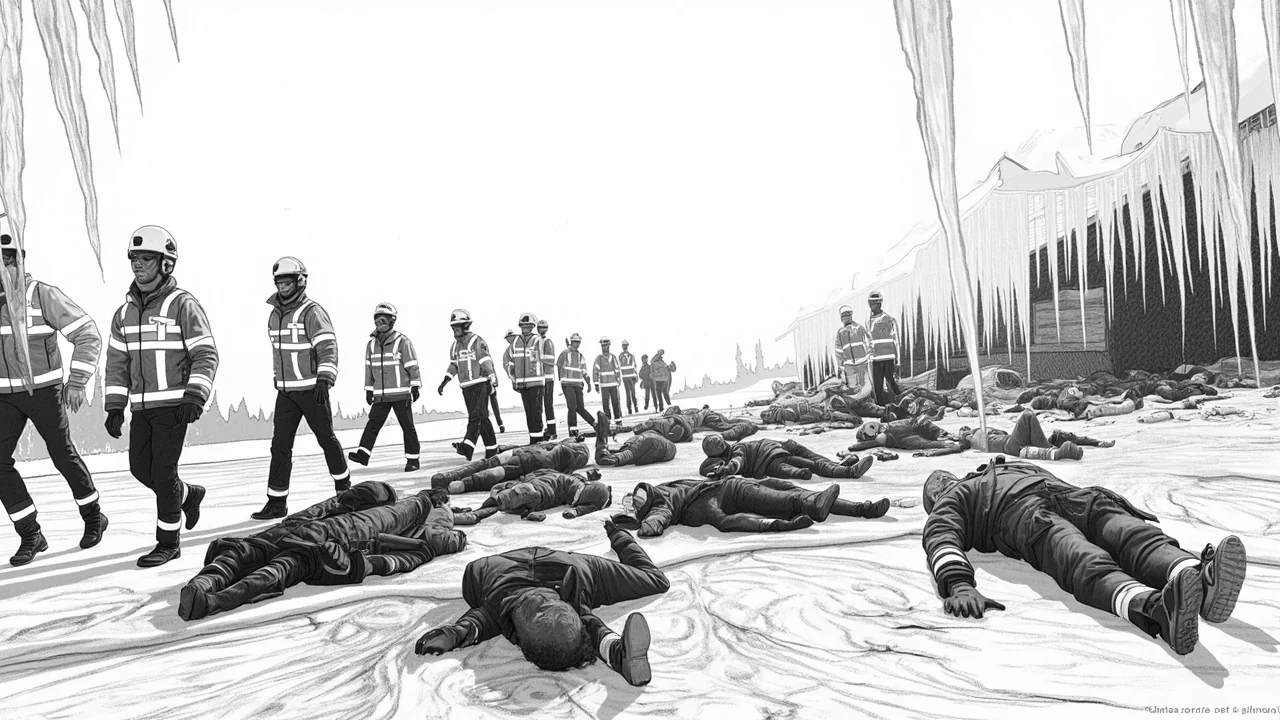
Denmark’s emergency rooms are grappling with an unusually high number of ice-related injuries as a sudden cold snap turns pavements into hazards. Odense University Hospital’s acute reception had already treated 20 patients by Tuesday morning, with another 16 en route, all victims of falls on treacherous ice. Chief Nurse Anne Bejlegård List describes a morning dominated by broken bones from simple slips, a sudden influx that underscores the vulnerability of daily life to winter’s whims.
“They have hurt themselves severely, and they have broken bones,” List said, detailing the consequences. “The typical fractures from icy conditions are broken ankles and wrists. And those are the injuries we have more of than usual today.” The injuries stem primarily from pedestrian falls on pavements and paths, but a significant number also involve electric scooters and e-bikes, modes of transport particularly unstable on invisible black ice. The hospital, while prepared for winter weather after official meteorological warnings, was still caught off guard by the sheer volume of casualties so early in the day.
A Predictable Yet Personal Crisis
This scene in Odense likely repeated itself across Danish municipalities, from Copenhagen to Aarhus, as the country woke up to a layer of ice. The situation presents a stark paradox for Denmark's highly organized society. Advanced weather forecasts from the Danish Meteorological Institute (DMI) provided clear warning, and public systems like hospitals were ready. Yet, the individual citizen, stepping out to commute or run errands, became the critical point of failure. “I think it has taken the ordinary Dane in society by surprise that it is as extremely slippery in some places as it is,” List observed, pinpointing the gap between systemic preparedness and personal awareness.
This annual phenomenon speaks to a broader narrative within Danish social policy, where collective welfare meets individual responsibility. The welfare system is designed to catch those who fall—literally, in this case—with universal healthcare providing immediate treatment. However, the state’s capacity is tested when preventable accidents surge, consuming medical resources and personnel time. Each ankle fracture or wrist injury represents not just personal pain but a strain on a system built for stability.
The Electric Mobility Dilemma
A notable detail in today’s casualty report is the involvement of electric scooters and e-bikes. Their popularity has transformed urban mobility, offering a green and convenient alternative. Yet, their two-wheeled design and often higher speeds make them acutely dangerous on icy surfaces. A loss of traction that might cause a pedestrian to slip can lead to a far more serious accident for a scooter rider. This creates a modern urban safety challenge, layering new technology onto an ancient weather problem. Municipalities that promote these eco-friendly options now face the parallel task of educating riders on their seasonal limitations.
Chief Nurse List’s advice was direct and practical, aimed at mitigating further harm. “Be careful when you walk,” she urged the public. “Especially when transitioning from roadway to pavement or from pavement to cobblestones.” Her second recommendation was more specific to modern habits: “And perhaps you should leave your electric scooter at home today and take the bus.” This simple guidance highlights the everyday risk assessments Danes must make, balancing convenience with safety.
Infrastructure and the Invisible Threat
The specific mention of transitions—between road types and surfaces—is crucial. Danish cities, celebrated for their walkability and cycling networks, contain countless seams in their infrastructure. A cleared bicycle lane might abut a frozen pavement; a treated main road could lead to an untreated side street. These micro-transitions are where the ice lurks, catching the unwary foot or wheel. It raises questions about municipal gritting strategies and the impossibility of making every pathway safe simultaneously. For newcomers to Denmark, navigating a Nordic winter is a learned skill, one that today’s events prove even long-time residents can momentarily forget.
From a social policy perspective, these icy mornings function as a stress test. They measure public responsiveness to warnings, the agility of healthcare services, and the resilience of daily routines. The economic cost is also tangible, encompassing not just healthcare expenses but lost productivity from injuries. While not on the scale of a pandemic, these seasonal spikes in accidents demand a coordinated response from authorities, employers advising on remote work, and media outlets broadcasting clear warnings.
A Community-Wide Responsibility
The chief nurse expects more patients throughout the day, a sobering forecast. The incident moves beyond individual misfortune to a communal issue. It calls for neighborhood awareness—perhaps salting the shared staircase or checking on elderly neighbors. It reinforces the Danish concept of ‘samfundssind’ (community spirit), where looking out for one another extends to preventing physical harm. In a nation that excels at designing for hygge indoors, the outdoor environment remains a formidable, if temporary, adversary.
As the day progresses, emergency staff across the country will continue their work, treating the painful results of a frozen morning. The story of these 36 patients in Odense is a yearly winter reminder wrapped in an unusually sharp package. It underscores that in a society often focused on large-scale integration and policy challenges, a fundamental layer of safety relies on millions of individual careful steps. The weather will warm, the ice will melt, but the question of how a prepared society handles a perfectly forecasted, yet deeply personal, crisis remains freshly posed. Will tomorrow see a more cautious populace, or will the routine of daily life again override the warnings?