
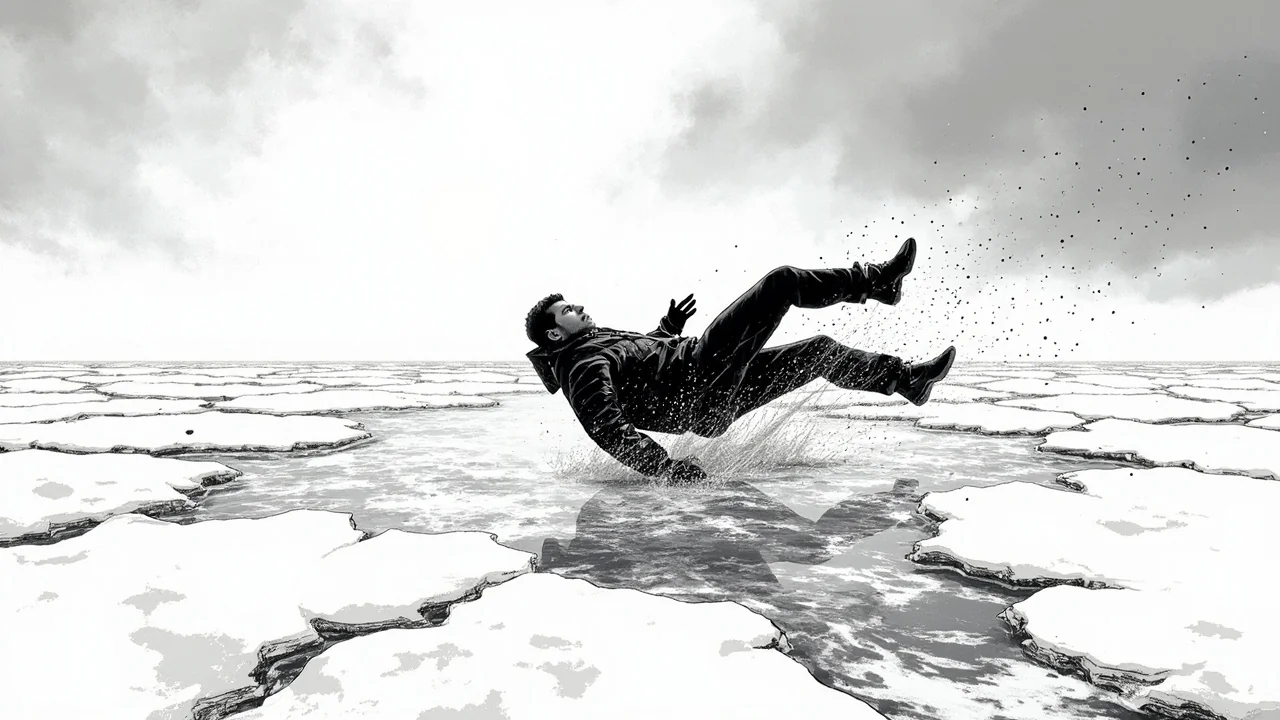
Denmark's recent cold snap has led to dangerous ice conditions and multiple police interventions across Zealand. A 22-year-old man from Dianalund fell through the ice on a lake near Sorø on Friday, requiring emergency hospital treatment for severe hypothermia. This incident highlights a recurring winter safety challenge as people ignore official warnings and venture onto unstable frozen surfaces.
South Zealand and Lolland-Falster Police reported the rescue in their daily bulletin, though the man's current condition was not disclosed. By Sunday, police were again responding to reports of people on the ice at Nørresø in Maribo and on Sorø Lake. Officers stopped a 60-year-old man and two 20-year-old men in these separate incidents, citing them for violating public order regulations.
The police district has issued a stark, repeated warning. "It can be tempting to move out onto the frozen lakes around the police district, but: Don't! That's all that needs to be said. It is far too dangerous," the police statement read. This message echoes across Danish police districts during periods of frost, yet every year similar preventable accidents occur.
A Recurring Winter Hazard
This incident near Sorø is not an isolated event but part of a predictable seasonal pattern. When temperatures drop below freezing for sustained periods, lakes and coastal inlets across Denmark begin to freeze. The sight of a smooth, white surface proves irresistibly tempting for some, despite the inherent and often invisible risks. Ice thickness can vary dramatically due to underwater currents, springs, or shifting snow cover, creating deadly weak spots.
Authorities stress that no ice is ever 100% safe. The Danish Emergency Management Agency (Beredskabsstyrelsen) and police consistently advise the public to stay off all natural ice unless it is officially approved for use, which is rare. Approved ice rinks are the only guaranteed safe option. The police's role shifts from crime prevention to public safety enforcement, a task that drains resources and puts first responders at risk during rescue operations.
The Thin Ice of Public Compliance
The decision to walk on frozen lakes sits at the intersection of personal risk assessment and trust in authority. Why do people ignore clear, direct warnings from police and rescue services? Some may overestimate local knowledge or physical ability, believing a quick trip is harmless. Others might follow a cultural tradition or childhood memory of skating on frozen ponds, not realizing current conditions are different.
From a social policy perspective, these incidents reveal a limit of the Danish welfare model's preventative approach. The state provides information and warnings through multiple channels, aiming to protect citizens from harm. However, it cannot physically restrain every individual from making a poor personal choice. The subsequent medical treatment for hypothermia and potential drowning injuries is then covered by the universal healthcare system, representing a public cost for a private decision.
Community safety campaigns run by municipalities and rescue services emphasize collective responsibility. They ask citizens not only to keep themselves safe but also to discourage others from taking risks, preventing traumatic incidents for would-be rescuers and bystanders. The social contract is tested when individual action necessitates a collective emergency response.
The High Cost of Cold Water Rescue
A rescue operation for someone who has fallen through ice is complex, dangerous, and expensive. It typically involves police, firefighters, ambulance personnel, and sometimes a helicopter from the Danish Air Force's rescue squadron. These are all public resources diverted from other potential emergencies. The rescuers themselves must operate on the very same unstable surface, often using special suits and equipment to avoid becoming victims themselves.
Hypothermia, the medical condition that afflicted the 22-year-old, progresses rapidly in near-freezing water. Body heat is lost 25 times faster in water than in air of the same temperature. This leads to loss of muscle control, confusion, and unconsciousness, making self-rescue nearly impossible. Even after a successful rescue, hospital treatment is intensive, often requiring slow, controlled rewarming in a specialized unit to prevent further complications.
The financial cost is borne by the public, but the human cost is broader. Such incidents traumatize the victim, their family, and the rescue teams. They also create a ripple effect of anxiety in local communities, where parents warn children and neighbors discuss the folly of the act. In a close-knit Danish society, the actions of one individual on a frozen lake become a shared topic of concern and conversation.
Learning from Near-Tragedies
Each winter incident provides a grim opportunity for public education. Police statements following the Sorø fall are blunt by design, aiming to cut through complacency with clear language: "Lad være!" or "Don't do it!" Safety experts argue this directness is necessary. They point out that aesthetic appreciation of winter landscapes should remain just that—observation from a safe distance on shore.
Municipalities in areas with large lakes, like those in South Zealand and Lolland-Falster, sometimes increase patrols or post additional signage during cold spells. However, the vast geography makes it impossible to monitor every potential access point. The responsibility ultimately falls on the individual, a concept deeply embedded in Danish social culture alongside the state's duty of care.
The two 20-year-olds and the 60-year-old man cited on Sunday will likely face fines for violating the public order act. This legal consequence serves as both punishment and a stronger deterrent than a verbal warning. It formalizes the societal rule that endangering oneself to the point of requiring emergency services is not a private matter but a public order offense.
A Question of Risk in a Safety-Conscious Society
Denmark consistently ranks as one of the world's safest countries, with high trust in institutions and comprehensive social safety nets. This context makes deliberate risk-taking on thin ice seem particularly paradoxical. It challenges the stereotype of the rule-following Dane and highlights a universal human trait: the underestimation of danger in pursuit of experience or thrill.
As climate change leads to more volatile winter weather with intermittent freezing and thawing, the risk of unstable ice may actually increase. Periods of frost might be shorter, leading to thinner, more deceptive ice cover. Public safety messaging will need to adapt, emphasizing that fluctuating temperatures make ice even more unpredictable and dangerous than during a consistently cold winter.
The 22-year-old from Dianalund is fortunate to be alive. His story, and the police's emphatic warning, serve as this winter's cautionary tale. It reminds everyone that the beauty of a frozen Danish landscape masks a lethal hazard. The collective sigh of relief after a successful rescue is tempered by the frustrating knowledge that it was entirely preventable. The ice will eventually melt, but the need for vigilance and personal responsibility remains a constant fixture of Danish winters.
Will this incident be the last of the season, or will the temptation of the ice continue to override common sense and official warnings? The police are not optimistic, and their simple, urgent plea stands: "Lad være!"