
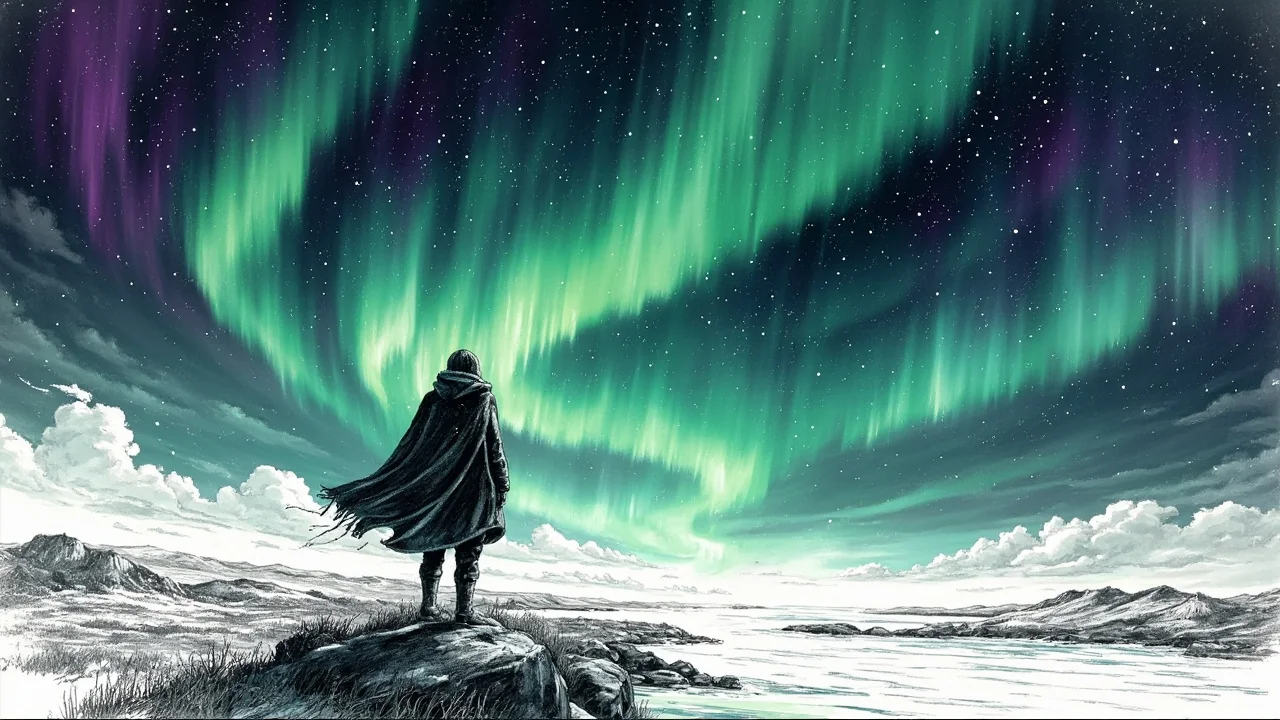
Denmark's northern lights illuminated the sky Monday night in a rare display visible from urban centers for the first time in recent memory. The aurora borealis, typically confined to northern Scandinavia, cast vibrant greens and reds across Danish heavens, captivating residents from rural fjords to light-polluted Copenhagen. This exceptional event marked one of the strongest auroral shows recorded in the country, challenging usual visibility patterns and sparking widespread awe.
A Celestial Surprise in the Danish Sky
Clear weather conditions on Monday evening set the stage for this unusual phenomenon. The northern lights, often elusive in Denmark due to its southern latitude, appeared with striking intensity, piercing through the darkness of the night. In Præstø Fjord, photographers captured the aurora reflecting on calm waters, while in Copenhagen, the lights managed to shimmer faintly against the city's glow. These images provided tangible proof of an event that defies typical expectations, offering a glimpse of Arctic beauty in temperate zones.
The rarity of such a sighting cannot be overstated. Northern lights are infrequent visitors to Danish skies, with most occurrences limited to remote countryside areas far from artificial light. Urban visibility, as witnessed in Copenhagen, is exceedingly rare, happening perhaps once every few years under optimal conditions. Monday night's display stood out for its breadth and clarity, allowing naked-eye observation even in environments usually hostile to stargazing. This deviation from the norm underscores the unique atmospheric circumstances at play.
Expert Commentary on the Phenomenon
A meteorologist highlighted the extraordinary nature of the event in a statement. "It is unusual with such strong northern lights over Denmark, and especially that it can be seen with the naked eye in cities, where there is a lot of light, happens rarely," he said. He added that he has apparently never seen such a potent auroral display in Denmark before, emphasizing its historical significance. This expert insight anchors the event in meteorological record, pointing to solar activity and atmospheric clarity as key factors.
The meteorologist's observations resonate with broader understandings of aurora borealis behavior. These lights result from solar particles colliding with Earth's magnetic field, a process that typically favors higher latitudes. For Denmark to experience such a vivid show, a combination of intense solar storms and crystal-clear skies was necessary. Monday night provided both, allowing the aurora to descend further south than usual. While scientific details are complex, the visual outcome was simple and stunning for Danish onlookers.
Photographic Evidence and Public Engagement
Photographers from media outlets documented the event extensively, with images from Præstø Fjord and Copenhagen circulating widely. The photos show not just the lights themselves but also their interaction with the landscape—over water, near landmarks, and amidst urban sprawl. This visual documentation serves as a crucial record, given the fleeting nature of auroral displays. It also enables broader public engagement, as those who missed the event can still appreciate its beauty through these captures.
Public reaction, though not detailed in the source material, can be inferred from the media coverage and sharing of images. Rare natural phenomena often unite communities in shared wonder, and this northern lights display likely prompted conversations about Denmark's place in the celestial scheme. The event underscores the importance of preserving dark skies, even in developed regions, to allow for such experiences. While light pollution remains a challenge, Monday night proved that under the right conditions, magic can still break through.
Contextualizing Danish Aurora Sightings
Historically, Denmark sees northern lights a handful of times each year, mostly in northern Jutland or during periods of high solar activity. However, sightings in central or southern regions, especially near cities, are exceptional. The last comparable event may have occurred years ago, though precise records are scarce. This inconsistency makes each occurrence memorable, with Monday night's display likely to be referenced in future discussions of Danish meteorological anomalies.
The conditions required for such visibility are stringent. Beyond solar activity, the absence of cloud cover is critical, as is minimal light interference. Monday night's clear sky across much of Denmark provided a perfect canvas, allowing the aurora to shine unimpeded. This alignment of factors is rare, explaining why even in a country familiar with auroral glimpses, this event felt unprecedented. It serves as a reminder of nature's unpredictability and its capacity to delight without warning.